Denene Millner sketches out the lines of a blueprint for a new and better American Dream, born of the persistence of racism, and need for success to mean more than wealth. It’s a beautiful sketch. But she ends suggesting some form of voluntary economic segregation. “Segregation made the black community self-reliant.” Is there an alternative?
Perhaps it lies in her focus on children, and the family. Could racism begin at home? Could home begin with family planning? Martin Luther King recognized the dangers of poor family planning and the growth of our population. What if we couple the solution, smaller families, to a public family planning ethic that treated the decision to bring every child into the world as an act of deliberate inclusivity, with everything that means for economic positioning, racial equality, and equity of opportunities in life.
Racism persists in part because we tolerate a cavemanish family planning model that treats the act of parents creating and raising children as somehow personal and private, as if it did not create the social world we all share. Doesn’t that treat future children, and the nonhuman world we colonize, as if they were our property, and ours alone to control? Rather than resegregate as Millner might be suggesting, shall we go to the source of our deepest social insufficiencies? Racists don’t fall from the sky – they are born and raised in the shadows and illusion of isolation. We “come together” as future generations enter. Do we want to come together in the way Dr. King envisioned? Better family planning is the key.
Best of all, Donald Trump is doing everything he can to prevent women from not having kids, by pushing back years of progress on access to family planning, and role modeling an unsustainably large and consumptive family.
Our species has, for most of its history, accepted the cultural push for larger families and higher birthrates because it benefited us, as a species. The caveman and patriarchal systems approach to family planning, “just have more,” had some merit. That all changed in roughly the Twentieth Century, when world leaders realized that population growth itself posed a grave threat to our species, and launched family planning interventions that cut worldwide fertility rates in half. Yes, that happened.
There was just one problem – these efforts were based on incomplete information. World leaders in the Twentieth Century did not account for climate change, and a dozen other unforeseen impacts on our social and natural environment, from the acidification of oceans to the massive extinction of other species. They did not account for advancements in the science of childhood development, which today show how family planning impacts the prospects a child has in life, for their entire life. They did not account for how, consistent with those impacts, family planning policies could exacerbate the massive gulf between rich and poor.
In short, the interventions did not go far enough, and certainly did not account for linkages between the issues above, like how better child development policies could have offset humans’ innate cognitive dissonance around slow-moving threats – like climate change.
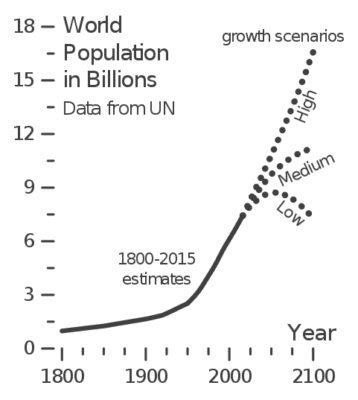
What does all of this mean? Today, as an already unsustainable world population skyrockets towards eleven billion, the men who are pushing women to have more kids are a manifest threat to all of us, and the wellbeing of our children. Their caveman approach to family planning is not just wrong. It’s dangerous. Instead, we should embrace the clear trend towards lower fertility rates as a form of human evolution, the move towards a sustainable population, families that can invest more resources in each child, and the creation of smaller – and hence more democratic – communities where each person has more of a voice and role in creating the rules under which they live.
Take action: If you belong to civil society organization, one that protects the environment, children and their futures, democracy and human rights, equality for women, etc. please politely encourage them to consider taking a public stance on the need for better family planning, and encouraging a model that promotes smaller and sustainable families where every child is guaranteed a fair start in life.
We all know that celebrities influence our purchasing habits, but as role models they also influence other choices, like how we plan our families. They help create culture – the images in our heads about what a family should look like, and how many children ideal families have. Celebrities have the potential to not just sell products, but push women to create more consumers and demand for those products – and businesses know this. That has massive consequences for society and our environment, with small changes in average family size today causing enormous differences in total world population in the future.
And that’s why the controversy and backlash surrounding reality television stars Chip and Joanna Gaines decision to have a fifth child matters. The decision they are modeling will help determine what our future holds, and the science is crystal clear: Family planning has the greatest long–term impact on climate change, economic inequality, and other things that define the quality of our and children’s lives. Some groups are promoting the Gaines family as effective role models for accelerating population growth, and urging other women to follow their lead. Conservative media sources are publishing fake news claiming the U.S. population is falling, when in fact it will grow by almost 100 million in the next 50 or so years.
Proponents of large families are willing to make a trade-off many of us may not be willing to make.
Religious, racial, and other motivations aside, the mainstream reason for today’s push for larger families is economic. Despite a world population headed for almost 10 billion people by 2050, many economists are pushing to accelerate that growth as a way to fuel economic growth, higher gross domestic product, greater returns on investments, etc., and evade specific demographic impacts like an older populace reliant on fewer younger workers to support them. The economic impacts of reduced fertility are highly controversial – with lots of debate between economists about what smaller families will actually do to economies, and what economic growth that actually benefits the average person would look like and take to create.
But even assuming smaller families reduce economic growth, are we really willing to exacerbate climate change, accelerate the extinction of other species, and further destroy our degraded environment just to make more money? An entire population of sea turtles is being now being turned female because of the climate change that human population is driving. Do we really want to worsen the environment children will inherit? If we care about nature, should we be pushing back against those promoting larger families? If we think about our daily lives, the overcrowded cities, endless traffic, stories of environmental collapse, and growing social divides, does it make any sense to say we just aren’t adding people quickly enough?
A recent survey by Having Kids suggests that people are ready, and it might be time, to push back against celebrities modeling poor family planning.
By Bdm25 – Own work, CC BY-SA 4.0
The Solution
The push for larger families, from taxes to celebrities, relies on an underlying and outdated family planning model, developed decades ago, that is all about what parents want. Under that model, parents should decide to have kids based on whatever makes the parents happy in the short-term, rather than planning their families around what kids need in the long-term. And as such, parents are left easy targets for politicians and businesses that profit from urging them to have more kids. The parent-first model does more than just destroy our and our kids’ environment – it is widening the gap between rich and poor, degrading our democracies, and bringing kids into abusive and neglectful homes.
Having Kids instead promotes a child-first Fair Start family planning model is that designed around what all kids need in the long-term. The model urges parents to wait to have their first child, urges them to work with the community to get the resources they and their child need for a fair start in life, and promotes smaller and more equitable families.
It’s called child-first family planning, and it starts by recognizing that all children have the fundamental human right to fair start in life, with the same opportunities that wealthy kids are getting, the same opportunities Donald Trump’s kids are getting. What loving parent wouldn’t want that for their child?
Kids have that right because systems of human rights and democracy begin with free and equal people coming together. That “coming together” happens – in the most important way – when we have children and bring them into society. Our family planning systems have to bring kids in as equals, on a level playing field, and each with the resources – high levels of things like education, health care, nutrition, love – to eventually make them truly free and emancipated people. Systems of human rights and democracy don’t begin to work until we ensure kids that right.
How does a child’s right to a fair start in life also protect the environment and restore nature?
Ensuring kids a fair start in life is a two-way street – parents have to work with their communities to create that start, before they have kids. If parents do that they will have fewer children (which is the most effective way to mitigate disastrous climate change), and will invest more in each child. That process in turn builds real democracy, or smaller communities of better-prepared people, living in a healthier and natural environment. Here is an example of one family moving towards child-centered family planning.
There is a natural confluence between cooperative family planning, smaller families, and higher investment in each child. That in turns leads to freedom: The freedom to do what you want that comes from a fair start in life, the freedom of a smaller, truly democratic and autonomous community where your voice matters, and the freedom of nature.
[et_pb_section admin_label=”section”]
[et_pb_row admin_label=”row”]
[et_pb_column type=”4_4″][et_pb_text admin_label=”Text”]On Universal Children’s Day, Having Kids called on President Trump and Congress to comply with their obligations under international law, and dump their two-pronged population growth policies that limit women’s access to things like contraception while increasing tax incentives to urge them to have more kids. As noted in our press release, the organization sent its open letter to Trump on behalf of Deanna Young, a concerned citizen whose rights Trump is violating.
Deanna Young, whose rights are at issue, had this to say: “The right to have children can’t be interpreted to hurt kids, or destroy our environment. This isn’t rocket science.”
Larger and thoughtlessly-planned families are the fastest way to exacerbate climate change and other environmental and social crises. Yet Trump and many in Congress are openly pushing for bigger families. Intentionally endangering our kids and future generations just to meet his shortsighted “more people equal more money” agenda is a violation international law.
Instead of a cutting off access to reproductive health services and a cash-for-babies scheme, Having Kids is calling for a child-first and truly human-rights basedFair Start family planning system. Recently, Republicans moved to modify tax-advantaged “529” educational savings accounts – used almost exclusively by the well-off – to allow fetuses to become beneficiaries. Instead, Having Kids is urging Trump and Congress to work with states to fully fund those accounts for all prospective parents and children through progressively-scaled contributions. These accounts would also require some cooperative contribution from parents (again, progressively scaled) before they have kids.
Tweet @RealDonaldTrump, and tell him that pro-natalist policies exacerbate climate change.
Some critics have gone apoplectic over recent calls to reconsider family planning models in light of the overwhelming impact large families have on climate change. The tactic these reactionaries use is old and obvious: Divide the world into Us versus Them, Left versus Right.
Tenuous and even absurd analogies try to create fear, like comparing family planning to killing extant people. For example: “Or maybe we should get down to business right away and begin by eliminating all of the ‘extra’ people currently milling about the globe, taxing the earth’s precious resources with their costly carbon dioxide emissions.”
Those opposed to even discussing changing the way we plan families often think about population from a different perspective: the impact family planning has on investments under an economic model where babies serve big business.
Instead of pushing women to have kids just to keep the investor class rich, we can and should focus on our shared values:
You value children’s wellbeing and care about the conditions into which they are born and will grow up.
You value democracy and you participate in the democratic process of deciding, as a community, the rules under which you will live.
You value nature and you are concerned about your impact on the environment.
Wellbeing, democracy, and nature are things we all value enough to act on. We won’t be divided into Left and Right. We won’t be scared by boogeyman stories in a ploy to keep us from protecting and furthering those values. These families are like you and me. They care about kids, community, and nature. Together, we are building a world that can benefit all. Join us and help make the future better than today. Please learn more at HavingKids.org.
At Having Kids:
We promote and protect every child’s right to a fair start in life by replacing unsustainable, parent-centered family planning models with the human rights-based and child-centered Fair Start family planning model. The model suggests a shift in family planning from a subjective focus on just the parents, to an objective focus that considers the interests of the potential child, the parents, and the community.
It’s all about this: Smaller families working together to give every child a fair start in life.
Today many families are adopting the Fair Start family planning model. First, they try to give their child a fair start in life by having a smaller family where they can invest more in their child. Often they also foster or adopt one of the many children eagerly waiting for parents rather than creating additional need. Second, they publicly role model their choices. Finally, these families join public advocacy campaigns to shift resources from extractive centers of power like governments, corporations, and wealthy families in order to democratically empower children and future citizens by incentivizing better family planning by all parents. Why? All parents know that the quality of their own child’s life will depend on how other parents decide to have and raise their kids.
A recent article in TheNew York Times bemoans the fact that as a reaction to the economic downturn, Greek women are not having “enough” children. But isn’t financial insecurity a good reason to forgo having children? Doesn’t every child deserve to be born into a financially secure situation so they can have a fair start? The article raises those questions — and more.
Why is a nation’s current population size the baseline to judge what its population should be? Most developed countries are already well over their carrying capacity.Why are all of the personal stories in the article about women? Sure, sales may be down at fertility clinics. That isn’t necessarily a bad thing, just one symptom of the inevitable hangover of the Ponzi scheme of growth economics.
Fundamentally, isn’t having smaller families an easier and fairer solution?
Greece could solve its demographic problems by relaxing immigration restrictions and accommodating the elderly back into the economy. That might be preferable to arguing that all women must be mothers and encouraging larger families in periods of economic instability.
It is time to start thinking in terms of everyone’s well-being — including a fair start for all children — rather than mindlessly pursuing economic growth regardless of the consequences.
Recently, an author chastised several celebrities for refusing to leave their immense fortunes to their children. That sort of thinking is pervasive today, with proponents justifying the vast and ever-deepening divide between rich and poor kids.
Those willing to accept inequality among children often say something like this: “Parents who work hard should be able to give their own children the benefit of that hard work.” But whether income always correlates with hard work in today’s world is, at best, questionable. Even if it does, though, and inequality among adults is justified, there is no justification for inequality among children.
What’s the solution? We must first make a commitment to a fair start for every child. If we want families with more resources and those with less to be able to offer all children a fair start in life, we need to prioritize communities that work together to ensure equality and fairness.
In order to make that happen, Having Kids is redefining our approach to planning families. We’re moving from isolationist parent-centric models to a holistic child-centric model, and you can be a part of this change.