Under this new approach Congress would have no authority to reject your legislation, or better yet to reject a more radical version of it that ensures true equity, not nominal equality. This is an argument that transcends reliance on written constitutions or even international law.
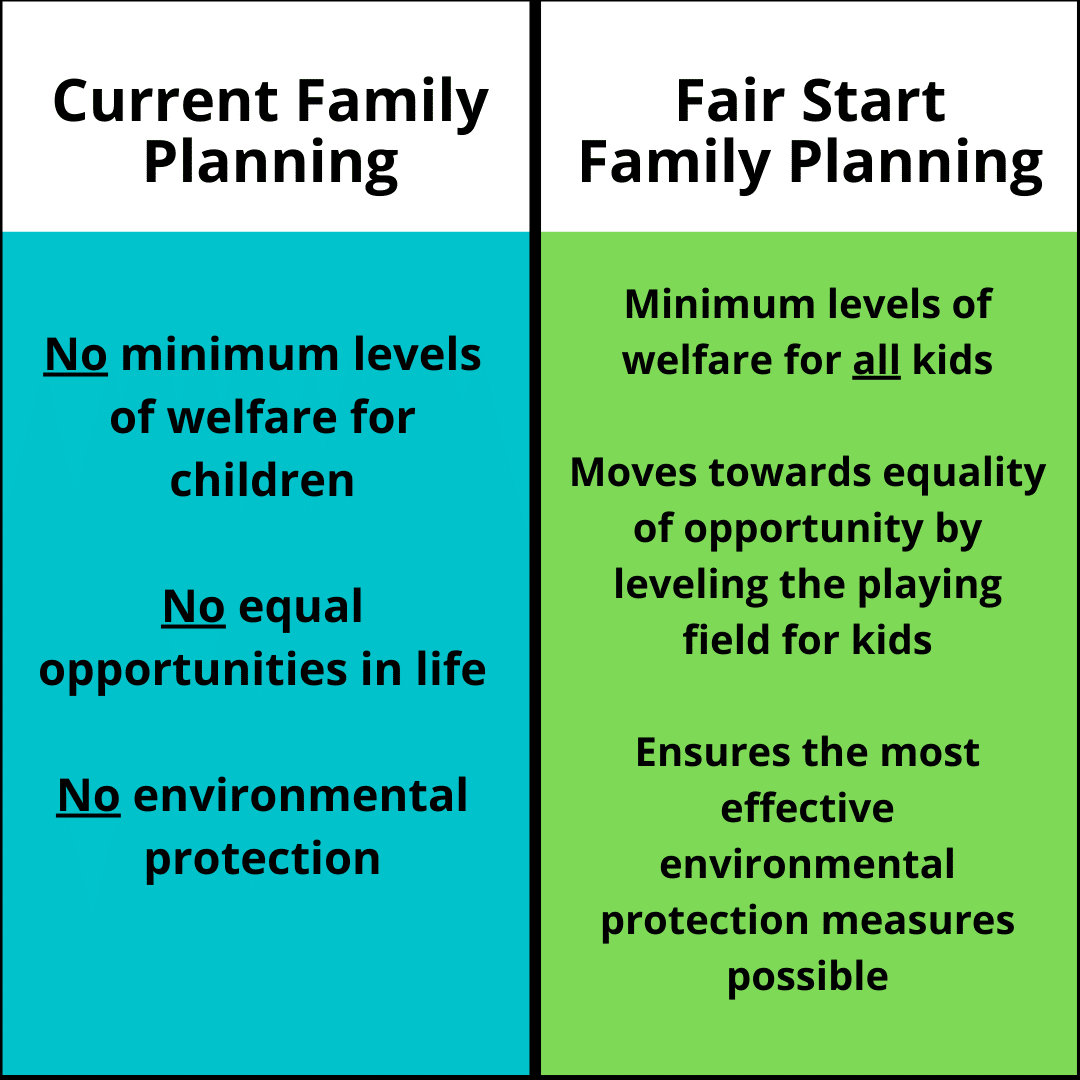
This is the argument: Nations are not magically constituted in the past, but either constituting inclusive democracies or not, depending on the laws and policies that surround having children. If those laws and policies ensure minimum levels of welfare in the birth and development, at least begin to ensure equality of opportunity, restore the climate and biodiversity using ecocentric approaches, and treat the addition of each new person to our nation as inverse to the absolute self-determination of people already here, those laws and policies are constituting legitimate societies.
If we wish to maximize relative self-determination, where else would we find that value but family reforms? There is nowhere else.
An easy proxy for all of this might be the Children’s Rights Convention – and pegging family planning to it to ensure birth and development conditions consistent with it. We can also think of it in terms of a new vision of Roe v. Wade.
If nations do not do this, they are constituting something other than democracy.
This new model – where we take human rights and their ability to limit governmental authority – could present a difficult choice. It will mean abandoning the privacy model of family planning based on the Cairo Consensus as a failure that helped ensure the climate crisis and massive inequity, though it was the model we all relied upon. And it’s a pro-growth model many of your wealthiest funders made a lot of money on.
The alternative would be for everyday citizens, like the our members, to simply wait for Congress to mitigate the climate crisis, and protect and ensure the development of the children who will comprise our future, while watching Congress operate in total attenuation from its constituents, and amid widening inequity that empowers some at cost to others.
Free people would not be willing to do that. We are not willing to do that.
There is an argument that he has no such authority, an argument that transcends reliance on written constitutions or even international law.
This is the argument: Nations are not magically constituted in the past, but either constituting inclusive democracies or not, depending on the laws and policies that surround having children. If those laws and policies ensure minimum levels of welfare, at least begin to ensure equality of opportunity, restore the climate and biodiversity using ecocentric approaches, and treat the addition of each new person as inverse to absolute self-determination, they are constituting legitimate societies.
If we wish to maximize relative self-determination, where else would we find that value but family reforms? There is nowhere else.
An easy proxy for all of this might be the Children’s Rights Convention – and pegging family planning to it to ensure birth and development conditions consistent with it
If nations do not do this, they are constituting something other than democracy.
Moreover, these truly constitutive laws and policies must override all conflicting interests, at least if we take freedom and democracy seriously. They come first. And we certainly imagine people like Judge Kacsmaryk value freedom, and value the people who died fighting in the name of it.
In the case of contraceptive access the application of such primary laws and policies is clear. We need universal access, and courts have no authority to prevent it.
This new model – where we take human rights and their ability to limit governmental authority seriously – could present a difficult choice for your organizations. It will mean abandoning the privacy model of family planning based on the Cairo Consensus as a failure that helped ensure the climate crisis and massive inequity, though it was the model we all long relied upon. That model also – by ensuring growth – made some of your key funders (and we know one of them well) a lot of money.
But the upside would be a better vision of and argument for reproductive freedom, and one that does not rely on a system of government that long ago undercut it’s own authority to rule. And if we choose the override model, there are incremental ways short of all out revolution to guarantee that we constitute legitimate – by which we mean simply inclusive – democracies.
The alternative would be for everyday citizens, like the our members, to simply wait for courts and Congress to mitigate the climate crisis, and protect and ensure the development of the children who will comprise our future, while watching Congress operate in total attenuation from its constituents, and amid widening inequity that empowers some at cost to others.
Free people would not be willing to do that. We are not willing to do that.
Ask most people to define racism and they will default to blaming individuals for discriminatory preferences. But could there be something larger driving racism? Imagine how a group of people would interact if some of those people had a tenth or even less of the wealth of the rest, and through that inequity, had a comparable lack of ability to set the group’s norms, whether in the context of politics, law, in settings of employment, etc. Would that impact – via power relations – how the group members interact?
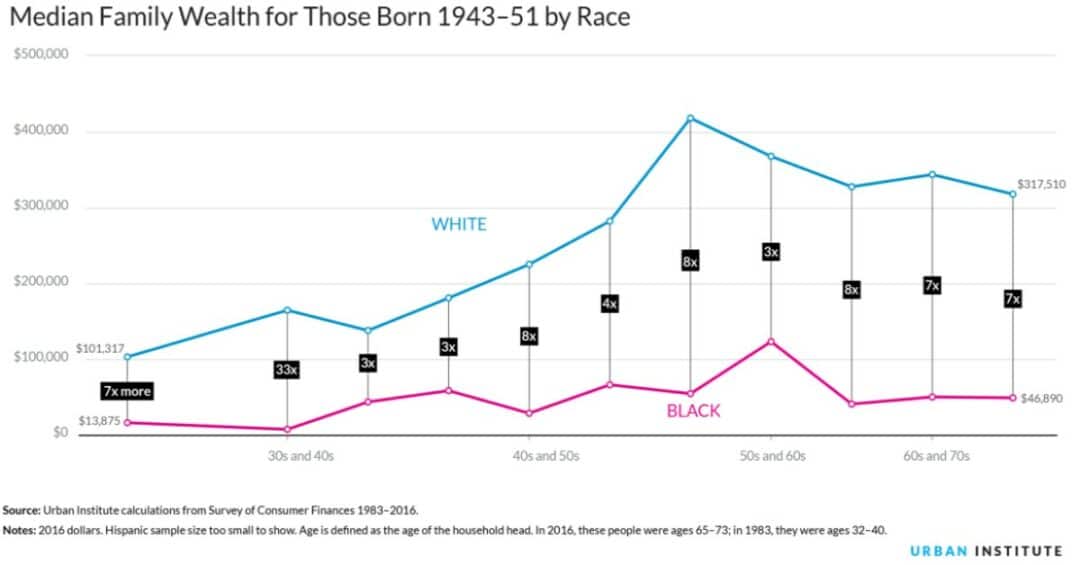
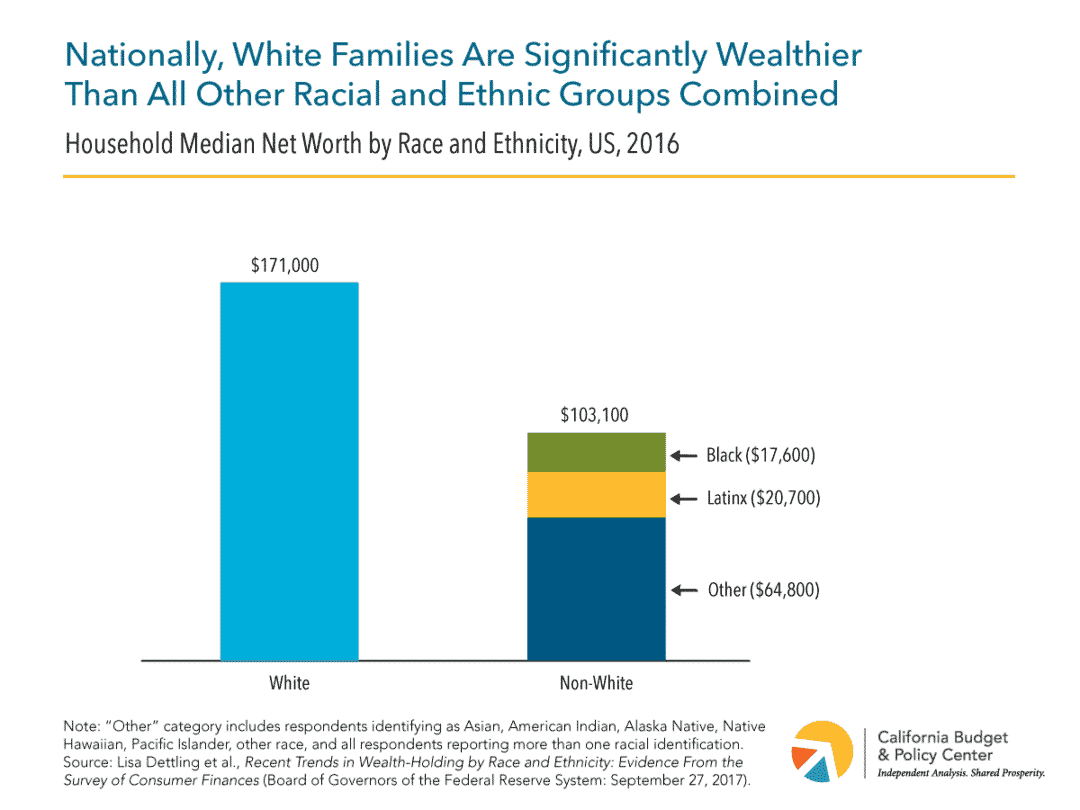
There’s no need to imagine such a thing. Persons of color generally have, because of massive and historic birth inequity, less money – and hence less power – than white people.
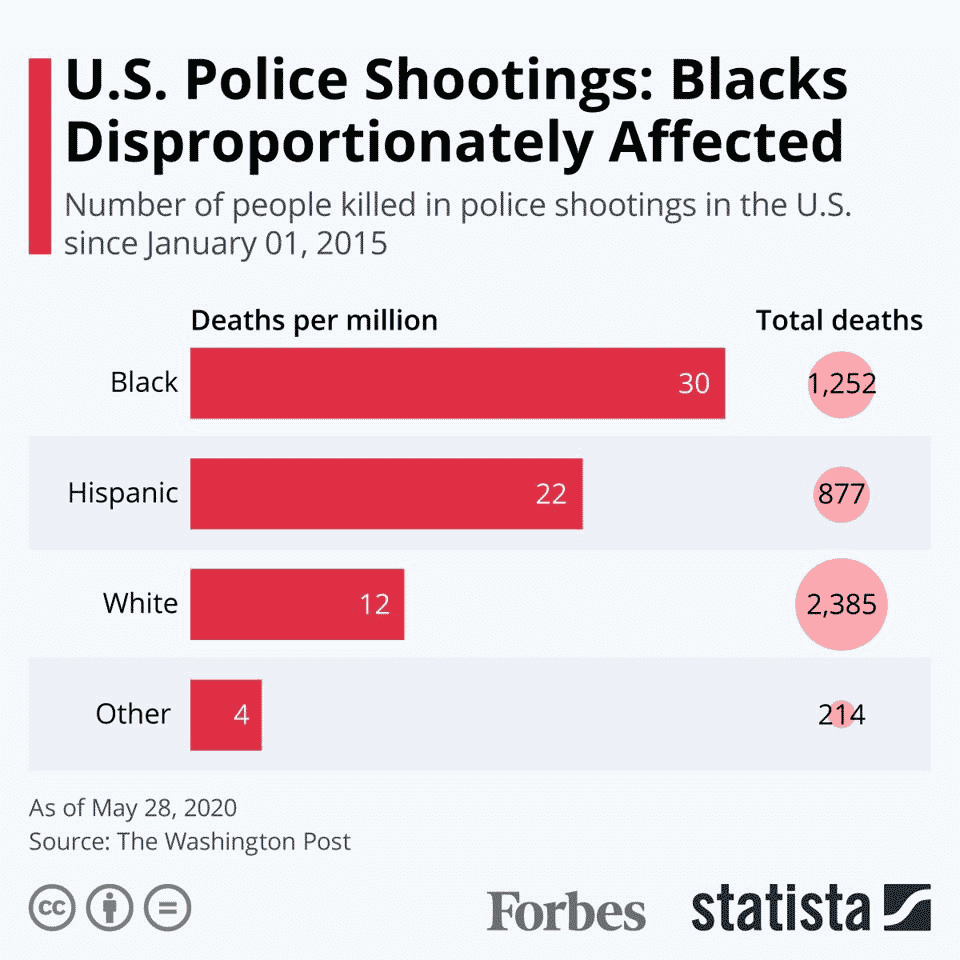
The role of birth inequity should in no way be seen to diminish other drivers of racism, including the personal animus that does exist, and which has been shown to drive police brutality and other forms of violence inflicted upon the black community. Those forms of violence, and the need to defund the police committing them, as well as other drivers, remain key.
Regardless, the assumption that being born poor is ok may drive much of what we see as racism, and we can certainly understand why concentrations of wealth and power would rather blame it on individual preferences. And they may feel secure because the possibility of true birth equity – or equal opportunities in life – has largely been hidden behind a dominant norm that treats the act of having children as a personal or private matter that entails no or miniscule obligations from the wealthy to those having children who will be born poor.
Fair Start board member Seeta Begui recently marched for reproductive rights in Florida. Go Seeta!
Check out the photos below:
Many have chosen to remain childfree because of the impact that creating more people puts on animals raised for food, wildlife, the environment, and concern for the world that will be left to the next generation. The ability to choose has now been significantly limited, and for many, eliminated entirely. But we can push back.
Let’s take a clear position on the right to plan families as being instrumental to animal and environmental advocacy, and to mutual liberation. Planning is a human right. Help us improve and protect it.
TAKE ACTION: There are dozens of ways to make reproductive rights the centerpiece of freedom and democracy, including elevating every child’s right to a Fair Start in life.
Human rights override the authority of governments, and the first human right is the right to an ecosocial Fair Start in life. Today the Supreme Court made clear the United States government will not protect our right to be free from the climate crisis, or our children’s right to nature. Regardless those rights give us an overriding right to directly target the people who fundamentally violated them – people like the Raymond family.
The American Revolution was born on the idea of defeating tyranny. This is the same thing. This is a matter of defending ourselves and others.
Are we going to let men like Lee Raymond hurt our children while the government does nothing? Brave people will not.
Take action: Urge Lee Raymond to pay what he and his family owe in the form of family planning reparations that will most effectively offset the harms he and others have caused future generations.
Kimberly Atkins Stohr, The Emancipator’s senior columnist, a senior opinion writer and columnist at The Boston Globe, and author of “We Can Solve the Racial Wealth Gap” series highlights the black and white financial gap in the U.S. She suggests that a number of solutions are needed to reimagine reparations and dismantle systemic racism that fuels the racial wealth gap. We agree. And those solutions must include policies to ensure equity right from birth if we hope to effectively close that gap, because without a fair start in life, children will be playing a lifelong game of catch up.
How did we end up in a world with massive wealth in the hands of a few and ecosystems crashing as our climates degrade? The answer is surprising. Rather than invest in early childhood development, at the crucial phase in the middle of the Twentieth Century, world leaders chose population growth and the creation of mass consumers, cheap labor and large bases of taxpayers.
Because legitimate governance derives from people, who derive from the norms that create them, there are no such things as just societies, political legitimacy and freedom without the sort of Fair Start reforms discussed in this site. Without them we are always coming from an unjust place.
Zero Baseline (or “Fair Start”) Modeling (ZBM) corrects critical errors in all theories of social organization (from states, to corporations, to families etc.) that center around how we derive legitimacy, and political obligation, in the process of organizing. These errors retard personal sovereignty, or relative states of self-determination, and hence freedom. While there are several errors that drove the development of the ZBM, they can be summed up as the “constitutive fallacy,” or the belief that legitimacy and obligation can be fundamentally derived from anything other than the norms that determine our creation, and hence determine our initial relations and forms of organization.
The ZBM is a proposed creation norm to correct the fallacy and to legitimate forms of social organization. It operates primarily by 1) treating social contract theories of political obligation as inherently intergenerational (such that we are constituting states rather than having been constituted in the past), 2) prioritizing relative self-determination (relative to zero, or the absence of human influence, including 300ppm and lower climate crises baselines required to meet restorative/ecocentric/rewilding standards of environmental protection) as a value, but one that should diminish as members are added to the contract and the sovereigns displace one another, and 3) expanding our conception of power to include any form human influence or affect, like climate emission and bad parenting. The ZBM thus serves 1) as an interpretation of the moral and legal right to have children – one focused on collectively giving all children an ecosocial fair start in life as a means of limiting and decentralizing human power so that it can be subjected to norms, and 2) a formula by which to assess optimal world population.
The following discussion will situate the ZBM in the relevant literature, detail some of the costs of the constitutive fallacy, and finally present the ZBM in more detail as a basis to move social organization from top-down relations based on coercion, or incentive, towards bottom-up relations based on inclusive systems of relative self-determination derived from child development.
Situating the ZBM in the Literature
The ZBM combines work from several theorists and overlapping subjects, most obviously:
Hans Kelsen’s work on the basic norm,
deontological population ethics,
social contract, natural law, and Rousseau’s democratic theory,
the intergenerational justice work of Lukas Meyer, Axel Gosseries and David Archard,
theories of political obligation, constitutional identity, baselining, as well as personal and political autonomy,
the work of Joel Feinberg on children’s right to an open future,
related work from Sarah Conly, Christine Overall, Onora O’Neill on the right to have children,
And the practical realm of family law and reproductive rights.
That said, the ZBM is unique because it corrects the constitutive fallacy where it appears in the work above, like the common presumption that the claimant is who they should be, were created justly, and as such operate from the position of a justifiable social organization. Instead of political obligation theories like “fair play,” or relying on the harm principle for measuring liberty, the ZBM reserves legitimacy for states of affairs in which people were created fairly. Unlike many theories on the right to have children, the ZBM rejects procreative autonomy, and even places autonomy in the form of choosing not to have children subsequent to collective obligations not to have them if they would fall below minimum thresholds of civic quality necessary for a democracy.
The failure to develop and implement a just creation norm, like the ZBM, has created significant social and ecological costs. The following will discuss some of these costs, before moving onto a more detailed discussion of the model as a solution, and as a baseline to seek restorative justice.
The Underlying Errors
The errors – almost all conceptual – underlying the fallacy include, among others: 1) Treating things like national constitutions, or even rules of recognition, as the fundamental norms or grundnorms, when in fact the norms that determine our creation would have preceded these forms. 2) Using abstracted conceptions of the person focused on adulthood, and rationality, that are insufficiently dynamic to account for the key early stages and drivers of personal development, and the cumulative and collective impact of that development. And specifically for liberalism, 3) the failure from Locke to Rawls to account for how (the harm principle aside) the creation of persons controls their relative states of self-determination (e.g., vote dilution), and how this failure to account disenfranchises the majority of constituents, or future persons, who along with nonhumans are the most numerous and vulnerable category of moral entities.
The underlying errors also include using 4) limited conceptions of human power (and the borders of that power), e.g. that are focused on coercion, as opposed to using a conception that includes all human influence or affect, 5) myopic conceptions of autonomy that are self-contradicting, e.g. procreative autonomy and which presume we are whom we should be rather than the products of unjust creation norms, and in 6) in population ethics, using a concept of persons focused on quantity, when the concept of population inevitably at least five incommensurable and primarily qualitative values discussed below.
The Costs of the Errors
There are many costs that flow from the fallacy and underlying errors. Because the fallacy enabled in 20th Century a misinterpretation of the right to have children that focused on procreative autonomy and parental subjective desire rather than the objective needs of future children, population growth exploded past optimal levels, and continues to do so, backed by pronatal policies. That continued explosion drives the climate crisis and other ecocides, child poverty, massive inequity, and the degradation of systems of human rights and democracy. Because of the fallacy – which ironically seeded subjectivism, unlimited power (parental) and “might makes right,” at the fundament of human rights – neoliberal, colonial and patriarchal systems were able to use future generations and the nonhuman world as resources to fuel economic growth.
They used the misinterpretation to enable that growth (and subjectivism more generally) over systems of early childhood and civic development. This had the result of physically constituting economies, or shopping malls, rather than the antecedent systems of democracy, or town halls, that regulate economies. Often this process used religion as the driver, in violation of separation principles. The trend continues today, as falling fertility rates – a phenomena with twenty times the long-run impact reducing climate emissions – are treated by the dominant discourse an economic “baby bust.”
The Solution to the Constitutive Fallacy: ZBM
If the constitutive fallacy involves skipping the step of creation in determining the justifiability and legitimacy of relations, the solution involves a norm that literally creates normativity, or the inclusion of relatively self-determining and reasonable agents into social organizations that reflect their constituents. In other words, if we want just systems we must begin with a just creator or creation norm, one who gives all children a Fair Start in life. That will in turn allow us to maintain the constant and antecedent “we,” or group of free and equal people, necessary to constantly reconstitute participatory democracies that empower their members to actually control the rules under which they live.
The Fair Start grundnorm or ZBM (the constituting norm) is comprised of four interdependent evaluative requirements, or objective values that act as necessary conditions that enable true human subjectivity and choice: To minimize the loss of political autonomy in a human-rights-based democracy, and hence maximize consent, integration, and justified political obligation, would require, as a matter of lexical primacy, that (1) each new entrant be of a minimum constitutive quality or capable of constituting with others, (2) that there be a maximum number of members constituting the human-rights-based democracy, (3) that they enter relative to each other so that they exclude equally, and (4) that they are capable, given their quality, quantity, and relativity, of reconstituting their legalities relative to (or approaching) some level of nonpolity, or nature, that represents their capacity to convert power into law.
The existence of these four variables are inevitable in the act of procreating. The grundnorm thus necessitates backdating the standards, e.g., requiring conditions of entry that ensure constitutive quality and emancipation, rather than ignoring entry and subsequently excluding persons as insufficient in some way.
The values that comprise the grundnorm, which try to maximize obligation and autonomy through entry, role, and exit are the following: Treating procreation as the improved continuation of the parent’s life (“improved continuity,” or IC), a minimum level of welfare at entry, the nexus or zero-baseline point at which the values are first determined, fairly defined by the welfareof other entrants (> MW(F)). A qualitative threshold of a minimum quality of equitable individual sovereignty defined by the standard for emancipation, or reason (> E). A quantitative threshold of a maximum number of individual sovereigns defined by a minimum of individual sovereign roles, or capacities, in their democracy (< R). And finally, a quantitative threshold of a maximum number of individual sovereigns defined by nature (< N), the nexus or zero-baseline point or balance point at which the values are last determined.
To constitute is to maximize relative self-determination by approaching – given that constituting is dynamic – the zero baseline, or beginning to make people count or count, on a simple scale of 0, 1, 2 . . . 0
The thresholds above can be set using existing legal standards we claim to already adhere to, like basic parental fitness, the Children’s Rights Convention, biodiversity and wilderness restoration targets, education benchmarks, federalism and representative ratios, redistribution polices that attempt to create equality of opportunity, etc. The model will show that, by our own standards existing in law today, we are not who we should be or who we claim to be, but the products of a truly original sin.
The model above represents the implied and justified antecedent “we” in any normative claim, assuming the fundamental value of relative self-determination, or the grouping of persons from which the claimant is operating and in which they matter. At its base, democracy involves the capacity to influence, which in turn begins with the existence of the person. If we take democracy (or individual sovereignty, from the appropriate and more compelling individualized perspective) seriously, we must focus on the creation of individuals and thereby unravel the age-old legal conundrums of balancing community and autonomy, unified independence, and ordered liberty.
Taking Action
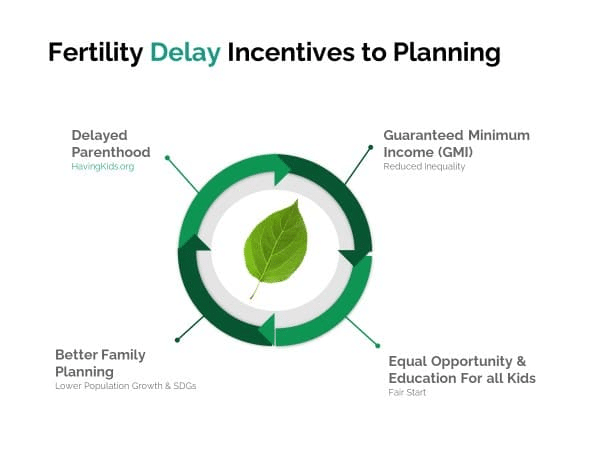
Beyond theory, the ZBM is the subject of a growing social movement demanding a shift from preconstitutional, parent-focused, and subjective family planning systems to a future child focused Fair Start system that – as grundnorm – should be treated as the fundamental and overriding human right. The vision and mission of the work involve bending the world population arc downwards, using a universal policy of families working together to plan for and equitably invest more in each child. The goal is to create a future of truly democratic communities surrounded by nature, constituted of free and equal people who each have a meaningful role in making the rules under which they live, and where each was empowered by the conditions in which they were born and raised.
The movement uses a simplified application of the ZBM, and includes dozens of legal, policy, institutional, cultural and direct action interventions supporters can use to further the change. The interventions include, among other things, international law reforms, celebrity appeals and Fair Start family modeling, tax measures, litigation, contraceptive funding, demands for climate compensation relative to the zero baseline, corporate divestment campaigns, and fact checking and reporting on claims relevant to the modeling.
Because intergenerational justice makes us who we should be, it is inevitably the first and overriding obligation, or that which first constitutes just communities and enables our consent to the power others would have over us.
Therefore no system, law or policy is legitimate if it does not first promote minimum levels of wellbeing and equity at birth for children, as well as their development for, and inclusion into as adults, self-determining democracies situated in biodiverse and regenerative environments where each of their voices will be politically influential. Any law, policy or system that does not first do these interconnected things – providing children an eco-social Fair Start in life – violates human rights, prevents consensual/inclusive governance, promotes preconstitutional systems of oppression, and is a threat to freedom.
Myths: The right to have children, as a personal and private matter, allows parents unlimited discretion to have children. Some are born wealthy and others poor, as a matter of magical fortune, rather than human decision-making.
Truth: The idea that the right to have children is self-determining of parents more than other-determining of children is a misinterpretation of the right foisted on us by colonially-minded patriarchs designed to evade our equity-building collective obligation to children, and to maintain population growth as a means of exploiting future generations as consumers, cheap future labors, and compliant taxpayer. Like all rights the right to have children is limited, collective in nature, and base on the needs of future children whose interests are inherently greater than parental interests. Applying those limits – to level the playing field for all kids – can have ten to twenty times the mitigating impact on the crises we face today, including climate, inequity, and child poverty, and would protect the most numerous and vulnerable categories of entities: Future generations and nonhuman entities.
Myth: Social justice organizations in the fields of equality, human rights, child welfare, environmental and animal protection accounted for the impacts of family planning policies on their missions.
Fact: Most organizations ignored the impacts of poor family planning and population growth on their missions, and instead mislead supporters, donors, and the general public, something that enabled many of the crises we face today.
Myth: Intergenerational concepts are too vague to apply in law, policy and practical ethics.
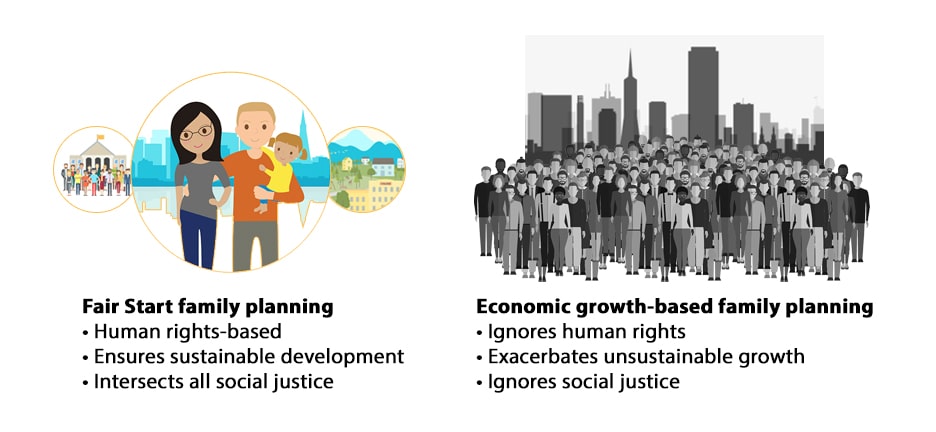
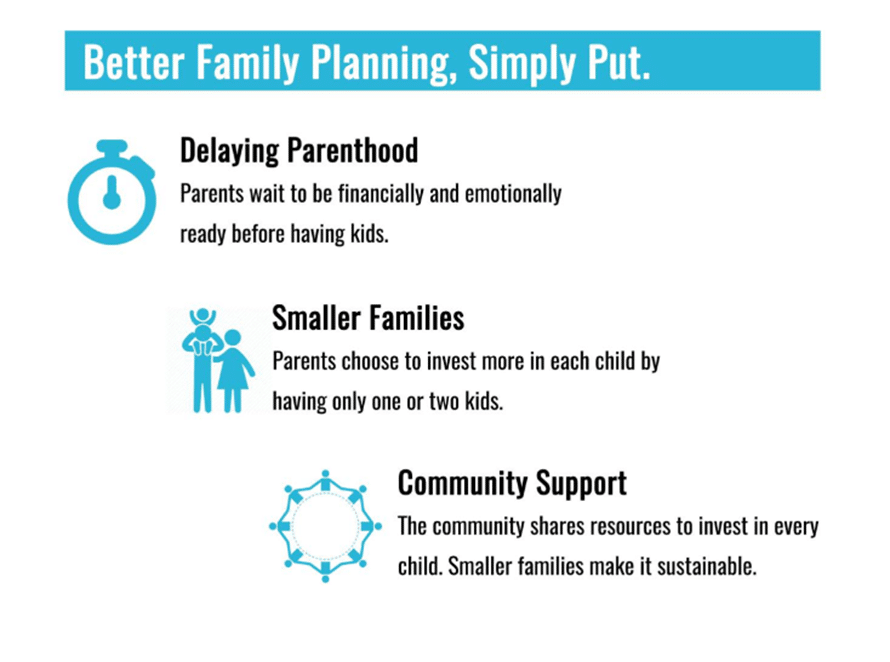
Truth: Every normative claim uses implied or express pronouns (“pregnant pronouns”) that – because they refer to people – implicate Fair Start and can be modified to promote it. If a claim involves people, it involves a position on Fair Start, which can be achieved in most parts of the world through enacting specific thresholds for 1) parental readiness before having kids, 2) distributions to give all kids a fair start in life, and 3) smaller and sustainable families. Together these moves represent relative self-determination, or the limitation and decentralization of power.
Myth: The written constitutions of nations, subject to some international law constraints, are the dominant set of rules under which we must live.
Truth: The most fundamental and overriding law is that which creates us, or physically constitutes – through procreation and parenting – our communities. That law overrides things like property rights, which would interfere with Fair Start. That law is what most accounts for our lived experience, and should, if we believe that governance derives from sovereign people. Moreover, power is not simply centered in the violence of the state, but includes subtle things like bad parenting and climate emissions, and its borders are represented by actual groups of people, not artificial lines on maps. Those borders can be divided into free people, and people who refuse to further children’s rights to an eco-social Fair Start in life that would allow them to constitute just democratic communities, or precons. The fight for freedom lies at that border.
Myth: The things people value, and the market demand they create, are naturally occurring and justify free markets over democracy.
Truth: Valuation, demand and population growth were created by poor and unsustainable family planning that ensured no minimum levels of welfare for children, abysmal levels of education, extreme inequity ensuring cheap labor, and bloated nation-states where the average person had no real voice in political outcomes. Businesses today profit from a system that mass produced consumers instead of developing capable, and truly free, citizens.