Category: Family Planning & Child Rights

  • Mass Shootings – Putting Children First Can Help Stop Them

    Mass Shootings – Putting Children First Can Help Stop Them

    Unspeakable acts.

    Thoughts and prayers.

    “Now is not the time” deflections.

    Destroyed families.

    Fading headlines.

    Repeat.

    But what is especially insulting, is the accusation that fed up, heartbroken and frustrated communities are politicizing attacks on children. These events are a uniquely American problem; there have been eighteen school shootings in the United States, this year alone.

    In the 19 years since the Columbine shooting our leaders have made their priority clear: Short-term profits and economic growth, rather than the thinking-head and caring act of investing in kids. We have consistently failed to invest in early child hood development – which is a known and reliable solution to many problems like juvenile criminality.

    Children unquestionably deserve to be safe from other kids when they go to school. If our elected leaders refuse to recognize that, then it is up to us to put someone in their seat who will.

    What kind of nation are we if we aren’t putting children first?  

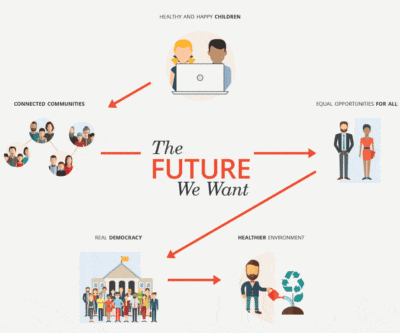
    Infographic titled The Future We Want with arrows pointing to icons representing connected communities, healthy and happy children, equal opportunities for all, real democracy, and a healthier environment.


  • Grey’s Tackles The Question of Maternal Mortality, But We Already Know the Answer

    Grey’s Tackles The Question of Maternal Mortality, But We Already Know the Answer

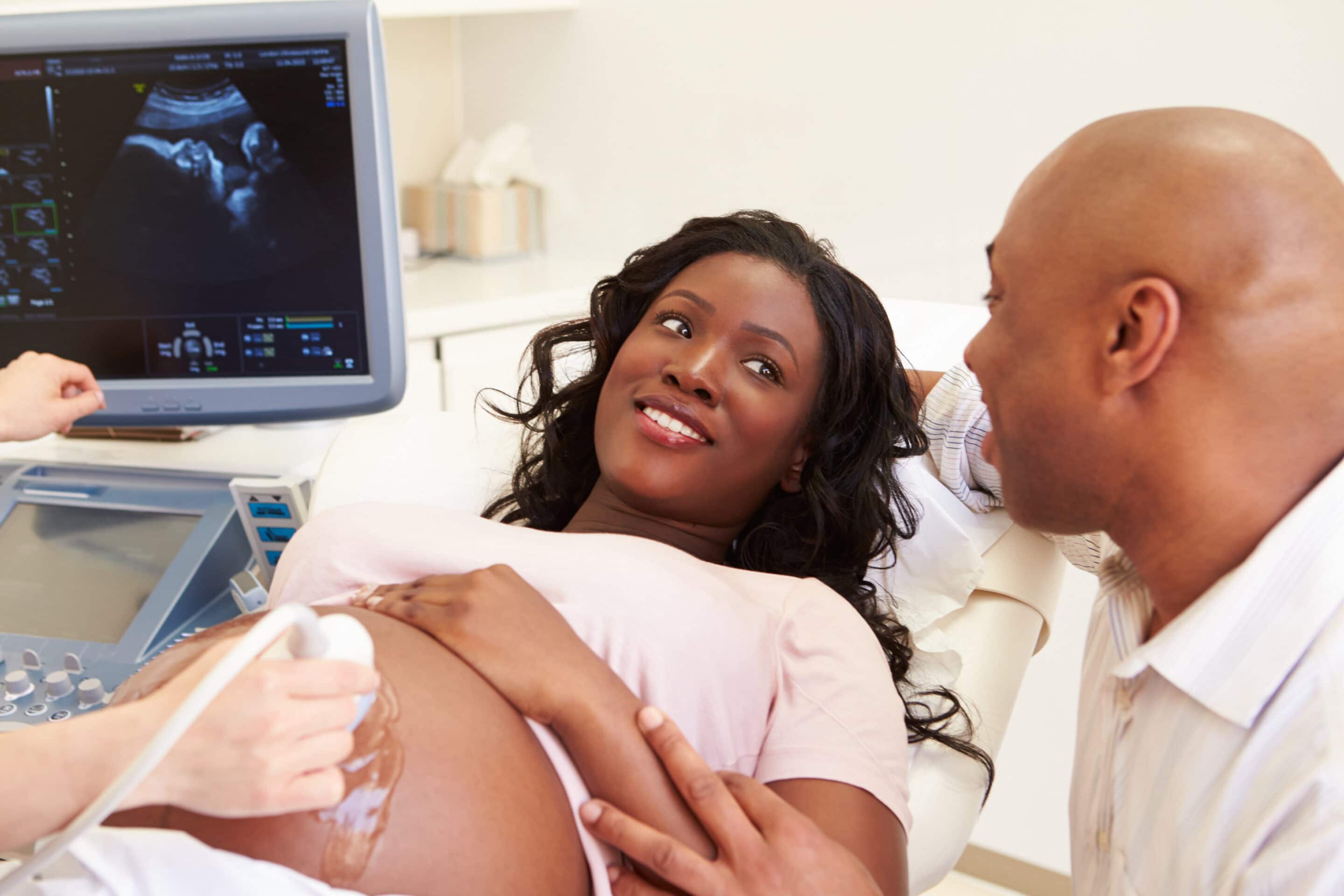
    If you’re up to date on what’s happening lately on Grey’s Anatomy, you know that the doctors have been preparing for a research competition. On last week’s episode, Pediatric Surgeon Arizona Robbins decided that her project would address the cause of the maternal mortality rate in the United States. As we shared last week, the U.S. now has the highest rate of maternal mortality in the developed world, and it’s on the rise.

    In the United States, 26.4 per 100,000 live births results in maternal death, compared to 4.2 per 100,000 in Italy, 9.2 per 100,000 in the U.K., 5.6 per 100,000 in Spain, 5.5 per 100,000 in and Australia, 9 per 100,000 in Germany and Portugal, 7.8 per 100,000 in France, 7.3 per 100,000 in Canada and 6.7 per 100,000 in the Netherlands.

    Having Kids can save the Grey’s writers some time. We know the cause of these staggering numbers: cuts to Medicaid and Planned Parenthood and the stripping of the Affordable Care Act have hurt expectant mothers, especially women of color.

    According to the WHO, the top contributors to maternal deaths are inconsistent obstetric practice in hospitals, insufficient care for the increasing number of women with chronic conditions such as diabetes and obesity, and the general lack of good data – and related analysis – on maternal health outcomes.

    According to Dr. Priya Agrawal, “Women who lack health insurance are three to four times more likely to die from pregnancy-related complications than women who have health insurance.” And Medicaid at last count covered 51% of all births in the United States. Slashing support for healthcare is killing mothers as in no other developed country. The majority of these deaths are preventable.

    We know that the healthcare crisis is complex. But we can take steps to reverse this unacceptable trend with a renewed commitment to access to affordable family planning and prenatal care, putting mothers and children before politics. And the best way to refocus our priorities is by putting children first in all policy making to give every child a fair start.

    Line graph showing obesity rates by country from 1990 to 2015. The U.S.A. line rises sharply to 26.4, while other countries show lower and mostly stable rates, ranging from 3.8 to 9.2 in 2015.

    Notes

    “Global, regional, and national levels of maternal mortality, 1990–2015: a systematic analysis for the Global Burden of Disease Study 2015,” The Lancet. Only data for 1990, 2000 and 2015 was made available in the journal.

    Source: The Lancet
    Credit: Rob Weychert/ProPublica

  • Thirteen Tortured Kids: Watch the Abuse Continue or Take Action?

    Thirteen Tortured Kids: Watch the Abuse Continue or Take Action?

    David and Louise Turpin beat, choked, starved and shackled their own children, year after year, hidden in the plain view of their own community. The children will suffer permanent physical and cognitive damage, some of whom weigh half of what they should, having been taunted with food as punishment, punishment they would be given no matter what they did.

    What’s the worst part? This will happen again and again, to children around the county, because while we will watch these cases like voyeurs, we will do nothing to stop it. Child abuse and neglect in the United States is everywhere, and it will continue. Why? Our current system tries to prevent mistreatment by waiting for it to happen, punishing the parents and hoping other abusers will take note, and waiting for the next case. Children remain invisible until they are harmed and become visible to the state. That is why we don’t find it insane to talk openly about how citizens can detect if people in their community are torturing their children, when it might be saner to ask why someone who tortures a child has kids at all.

    The Turpin case should remind us of this simple fact: Once the abuse happens we have failed. There is no way to undo that harm, for the kids, and for the community that will absorb its impacts.

    This after-the-fact approach to child protection begins at the source of child-parent relations, with a parent-centered family planning model that treats the act of having and raising kids as a hidden, personal, and private matter left to the parents, irrespective of the impact on the children and the community. The Turpins lived that model, one of using children for self-gratification, and even had plans to use their massive family to launch their own reality show like the Duggar family. The Turpins, like many massive families that have kids out of questionable motives (including religious ones), love their kids the way a factory owner loves its products – for the benefits they bring. For these dysfunctional families, family planning is all about the parents, not the child or the impact of the family on the community.

    The good news is that many are starting to question that model, and focus more on preventing harm than reacting to it. Here’s how:

    Courts around the country have at times issued court orders preventing some parents from having more kids. These orders have often been upheld, against challenge, as constitutional and reasonable limits on the right to have children. These brave courts are pushing a norm change that would move us from the old parent-centered and property family planning model to a child-first model focused on assuring children a minimum level of well-being at birth, and the community all the benefits that assurance would bring. This isn’t requiring parents to have a license to have kids – but it is thinking ahead. What’s a good analogy for what these courts are doing? Imagine the norm of free speech had no limits – if speaking freely included the right to incite riots, use subliminal advertising, create and display child pornography. Court are beginning to build nuance and responsibility into the right to have children where, unlike free speech norms and thanks to parents like the Turpins, it is conspicuously absent.

    These courts are establishing this simple principle: Children should not be born into abusive and neglectful situations. Until we can say that, as our shared belief, we will maintain a system that does not value children and the community, but focuses myopically and senselessly on the parents and their exclusive rights of property and control. We will maintain a right to harm others. People do not like giving up their right to control others, but until we can change family planning norms, cases like the Turpins will continue.

    Changing family planning norms, from one where parents ignore the impact they have on others to one based on shared values, will improve the world in many ways beyond preventing child abuse. Moving towards smaller and sustainable families, because parents have begun to act out of concern for the environment their children will inherit and need, is the most effective way to mitigate climate change and create the smaller and more resilient populace required for people to thrive in a more challenging future. It is also a model built around this simple fact: The fewer children parents have, the more time, resources, and energy they can invest in their child, demonstrating their love through action. And that increased investment creates real outcomes.

    Moving to a child-first model also helps women around the world, because the old parent-centered model – applied in the power dynamic of tyrannical patriarchy – has simply become a husband and male-centered model where women are seen as perpetual mothers. Changing family planning models also carries the promise of revering the massive gap between rich and poor by focusing on its genesis, and using cooperative family planning to peg the commonly accepted principle that everyone deserves equal opportunities in life to the less acceptable process of serious resource reallocation.

    It’s no surprise that this change in norms is facing reactionary pushback. Many, including those that see themselves as progressive, will not want to cede their parental control and will oppose moves like legislation that would authorize courts to prevent child abusers like the Turpins from having more kids. They will think child-centered planning will negatively impact underprivileged families, when in fact establishing and implementing a child’s right to a fair start in life provides the moral basis for cooperative resource reallocation in a way that could eliminate poverty. Moreover, model court orders could be limited to the most egregious cases of abuse and neglect only, exclude any form of coercion including jail time and fines (instead using a form of nudge theory), but instead rely on their expressive force and any appropriate non-coercive interventions, like the appointment of guardians ad litem for future children. These orders could also be designed to account for the principles of affirmative action, and structural inequities of race, class, gender, national origin, etc.

    More commonly, right wing extremists and climate change deniers will resist the change the way they resist all encroachments on that which they few as their private property. Many of them are already defending the child-as property systems that enabled the Turpins.

    But failure to take action, through the state, is a reinforcement of parent-centered thinking, and not an option for those who really want to protect children. How can you act to further this change in family planning norms that will prevent child abuse, improve our environment, and target the massive gap between rich and poor? First, you can use your voice, speak out, and break the taboo: Say openly that the right to have kids comes with responsibilities, to the children, the community and the environment. Second, you can promote and help pass legislation that would authorize courts to prevent abusers like the Turpins from having more kids, and move us towards child-first family planning by changing our child welfare system from being reactive to being proactive. Why take public action? Many progressives think that by going child-free, or having one well-cared for child, they have done their part. But the worst possible result would be for the most thoughtful and caring people, the best parents, to exit the process entirely and reinforce the old model of family planning, the model of isolated decision-making and walled off children.

    Third, you can act locally and urge your community to adopt family planning measures, and support for smaller and sustainable families, as part of their climate action plans. Fourth, you can advocate for a federal tax system that proactively promotes equitable family planning rather than reactively offering measly and pronatal child tax credits that ignore every child’s right to a fair start in life.

    Let’s not gawk at the story of the Turpins. Let’s take action to prevent cases like this from happening again, by starting at the source and reforming our family planning systems. We will not be valuing and protecting the most vulnerable among us – children, animals, and the environment, until we do.

  • Is Climate Change Stopping the Most Responsible People From Having Kids?

    Is Climate Change Stopping the Most Responsible People From Having Kids?

    Recently, a New York Times article featured Americans who are choosing not to have kids because they don’t want to expose them to the future dangers of climate change. In addition, some noted that the act of having kids itself has massive environmental consequences. Unfortunately, media sources that deny the existence of climate change and see reduced fertility rates as a threat to American economic growth and dominance quickly ganged up on them. They seem to prefer large families, even celebrating one couple who is expecting their fourteenth child.

    What’s wrong with this picture? Should climate change be a reason for the people most concerned about the future and concerned with others’ welfare, to stop having kids, while people who refuse to accept the science of climate change have huge families? Do we want a future filled with people who care the least about it? Don’t we want all parents to be thoughtful and caring?

    A few things that can’t be denied

    • Better family planning has done more to protect our environment than any other change in human history, both in terms of reducing emissions and creating a smaller, better prepared human population.
    • Despite the success of family planning, current trends suggest that by 2050 there will be 3x as many humans on Earth as there were in 1960.
    • Human activity often has a negative impact on the planet including ocean acidification, mass extinctions, and climate change that even our Department of Defense now admits.
    • Having children today should be a decision that guarantees all children a certain level of wellbeing at birth, includes equity when setting that level, and recognizes the importance of delaying first pregnancies to achieve better outcomes for children.

    What can be done?

    People are ready for better family planning and are ready to push back against irresponsible parenting. Climate change should lead us to better outcomes, not worse. Take action now.

  • Let’s plan for all our futures

    Let’s plan for all our futures

    How can we protect animals without family planning? How can we protect our environment without accounting for the number of people impacting it? How can we maintain systems of human rights and democracy without the creation and development of the moral people that must comprise such systems?

    It is clear that we will never realize the aspirations of human, environmental, and animal rights without reforming our family systems. Family planning is currently driven by policies that ignore the environment and the substantial investment required for the well being of each child, in order to produce as many workers, consumers, and taxpayers as possible.

    The good news is that people are pushing back by choosing smaller families, reducing fertility rates, and investing more resources in each child. Making this trend the new normal could help restore animals’ habitats and our environment, as well as create smaller and more functional democracies where everyone has a voice. We can crystalize and institutionalize this by changing from dysfunctional systems of family planning to the child-first Fair Start model. If you support animal protection, environmental, or human rights organizations, urge them to include family planning as part of their mission.

    Rights-based systems can prevail – but not without reforming family planning. Please take action today.

  • Is the economy affected by large families?

    Is the economy affected by large families?

    What about having kids so corporations can look forward to more customers? No? Well you might be surprised at who thinks you should. Several publications in the last month, including the liberally-minded New York Times have voiced concern that smaller families and women waiting longer to parent “could depress the economy.” They argue that fewer people means less economic growth.

    Well, truth be told – there’s not too much to worry about in terms of national growth. The United State is projected to grow by another one hundred million people in the next 50 or so years.

    The much more pressing questions are:

    • How much faster will our climate change with 100 million more Americans?
    • How will we make sure our children are in loving families, and not victims of parents like the Turpins who are accused of torturing their thirteen children, producing children in part to model large-family celebrities that gave them hope of starting their own reality show?
    • What will our day to day life and our democracy look like 50 years from now?

    Time to push back against the people pushing for larger families? Many of our supporters think so.

    Join the pushback at HavingKids.org.


  • Take Action: Thirteen Kids Tortured in Perris House of Horrors

    Take Action: Thirteen Kids Tortured in Perris House of Horrors

    Having Kids is calling on Governor Brown, as well as the California Bureau of Children’s Justice, to investigate the “house of horrors” in Perris, California where parents apparently shackled and tortured up to thirteen children over an untold number of years. Under law, the state was ultimately responsible for the children, and Having Kids is asking the Governor to investigate the responsible agencies in Riverside County for having failed to protect these children.   

    Read the letter here. 

    To prevent this from happening again, Having Kids is also asking the Governor to work with California legislators to pass legislation that authorizes courts, in specialized cases, to issue orders preventing abusive and neglectful parents from having additional children. (For details, please see fairstartmovement.org/theproblem/ and fairstartmovement.org/solution-fair-start-orders/)

    Why would we allow the culture of family planning and familial privacy that caused this disaster to continue?

    Anne Green, Executive Director of Having Kids, had this to say: “Will such a law help the Turpin children? No. But it will mean beginning to take family planning and parenting seriously, so as to prevent more victims like the Turpin children.”

    “It will reflect the simple and irrefutable principle that parents known to abuse and neglect children should not have more. If California takes its responsibility to protect children seriously, it will learn from the disaster of the Turpins and make necessary changes.”

    In just the past year, national statistics estimate 1,670 to 1,740 children died from abuse and neglect, despite underreporting. This means at least four children die every day from child abuse. The recent opioid crisis in the U.S. has only accelerated the problem, with new foster care cases involving parents using drugs hitting the highest point in more than three decades of record-keeping, accounting for 92,000 children entering the system in 2016, according to data by the U.S. Department of Health and Human Services.

    Take action: Write Governor Brown and ask him to act on our letter as soon as possible.

  • Child-first vs. Parent-first Family Planning

    Child-first vs. Parent-first Family Planning

    Having Kids promotes a child-first family planning model. What does that mean? Put simply, it means planning families around what kids need in the long-term, rather than simply around what parents want in the short-term. For example, teenagers may want to have kids because they think it’s trendy. But because kids themselves don’t make great parents, a child-first family planning approach would prioritize minimizing teen pregnancy. An adult couple may want to have five or six kids because of family tradition or religion. But given the impact each person places on the environment, including degrading our atmosphere and changing our climate, parents engaged in child-first family planning would be encouraged to rethink that decision. Only the child-first model promotes fundamental values like fairness, equality, and democracy.

    Right now, parent-first family planning is the dominant model in most places. It treats the idea of having as many kids as parents want – whenever and wherever – as the personal and private decision of the parents. It’s all about the parents. Because of that model, many think it’s OK that some kids come into the world with a massive head start, in a position to dominate others because of their parents’ wealth. This model opens the door for some to push for policies that encourage women to have more kids in order to fuel economic growth and nationalism. Because of the parent-first model, many think there’s no such thing as a time when one is “ready” to have kids – why would there be if the point of having kids is to find personal fulfillment?

    The parent-first model encourages people who are not ready to be good parents to have kids, pushes people to have kids who will later come to regret it, and pushes more and more kids through a completely broken system that can’t provide even basic things like health insurance. That model is filling our already crowded world with millions more people. Line graph showing world population from 1950 to projections for 2100, with observed data, median forecast, prediction intervals, and sample trajectories. Population could range from 8 to 15 billion by 2100.

    One of the ugliest aspects of the parent-first family planning model is the push by many economists for larger families – literally paying parents to have kids – in order to create workers to pay for their parents’ retirement. That approach prioritizes parents’ investment and retirement accounts over a safe and healthy environment, minimum standards at birth for every child, and a fair start in life.

    Changing to a child-first family planning model is not as hard as it seems. Right now there are serious proposals in Washington to create simple cash-payments to families of children in need, and in some cases payments for all kids, via what are called “baby bonds,” or $20,000 accounts available to all children when they turn 18. Could these proposals be amended to become cooperative family planning measures instead, where the funds are made contingent on some modest form of family planning and co-payment? By having parents contribute five percent of the amount before they have their first child, for example, we could improve the welfare of those in need even more. Improving child welfare is vital, but it doesn’t really work if we don’t think ahead enough to act before a child is born.

    The future, for us and for our kids, is being defined by the family planning decisions happening around us. The best thing we can do to improve the future is to change from a family planning model focused on what parents want in the short-term, to one that focuses on what children need in the long-term.

    Join the conversation at Having Kids.

  • Television Shows Are Pushing Women to Have More Kids. Why, and Can You Help Stop It?

    Television Shows Are Pushing Women to Have More Kids. Why, and Can You Help Stop It?

    [et_pb_section bb_built=”1″ admin_label=”section”][et_pb_row admin_label=”row”][et_pb_column type=”4_4″][et_pb_text admin_label=”Text”]

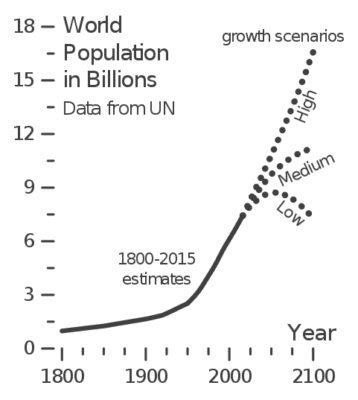
    We all know that celebrities influence our purchasing habits, but as role models they also influence other choices, like how we plan our families. They help create culture – the images in our heads about what a family should look like, and how many children ideal families have. Celebrities have the potential to not just sell products, but push women to create more consumers and demand for those products – and businesses know this. That has massive consequences for society and our environment, with small changes in average family size today causing enormous differences in total world population in the future.

    And that’s why the controversy and backlash surrounding reality television stars Chip and Joanna Gaines decision to have a fifth child matters. The decision they are modeling will help determine what our future holds, and the science is crystal clear: Family planning has the greatest long–term impact on climate change, economic inequality, and other things that define the quality of our and children’s lives. Some groups are promoting the Gaines family as effective role models for accelerating population growth, and urging other women to follow their lead. Conservative media sources are publishing fake news claiming the U.S. population is falling, when in fact it will grow by almost 100 million in the next 50 or so years.

    The timing of the Gaines announcement, as well as the advertising of other shows promoting giant families like the notorious Radford family in Britain, comes after Trump and his supporters pushed through tax incentives expressly designed to promote larger families, with Paul Ryan specifically urging women to have more kids. The push for more kids comes while Congress is refusing to fund children’s health insurance, and after recent studies show infants in the U.S. are dying at an alarming rate from lack of care. More kids, less care?

    The Problem

    Proponents of large families are willing to make a trade-off many of us may not be willing to make.

    Religious, racial, and other motivations aside, the mainstream reason for today’s push for larger families is economic. Despite a world population headed for almost 10 billion people by 2050, many economists are pushing to accelerate that growth as a way to fuel economic growth, higher gross domestic product, greater returns on investments, etc., and evade specific demographic impacts like an older populace reliant on fewer younger workers to support them. The economic impacts of reduced fertility are highly controversial – with lots of debate between economists about what smaller families will actually do to economies, and what economic growth that actually benefits the average person would look like and take to create.

    But even assuming smaller families reduce economic growth, are we really willing to exacerbate climate change, accelerate the extinction of other species, and further destroy our degraded environment just to make more money? An entire population of sea turtles is being now being turned female because of the climate change that human population is driving. Do we really want to worsen the environment children will inherit? If we care about nature, should we be pushing back against those promoting larger families? If we think about our daily lives, the overcrowded cities, endless traffic, stories of environmental collapse, and growing social divides, does it make any sense to say we just aren’t adding people quickly enough?

    A recent survey by Having Kids suggests that people are ready, and it might be time, to push back against celebrities modeling poor family planning.

    A line graph shows world population (in billions) from 1800 to 2100, steeply rising after 2000 with three future growth scenarios: high, medium, and low. Data is from the UN, with estimates for 1800-2015.
    By Bdm25 – Own work, CC BY-SA 4.0

    The Solution

    The push for larger families, from taxes to celebrities, relies on an underlying and outdated family planning model, developed decades ago, that is all about what parents want. Under that model, parents should decide to have kids based on whatever makes the parents happy in the short-term, rather than planning their families around what kids need in the long-term. And as such, parents are left easy targets for politicians and businesses that profit from urging them to have more kids. The parent-first model does more than just destroy our and our kids’ environment – it is widening the gap between rich and poor, degrading our democracies, and bringing kids into abusive and neglectful homes.

    Having Kids instead promotes a child-first Fair Start family planning model is that designed around what all kids need in the long-term. The model urges parents to wait to have their first child, urges them to work with the community to get the resources they and their child need for a fair start in life, and promotes smaller and more equitable families.

    Parents are beginning to adopt the Fair Start model, and pushing back against the trend of celebrities modeling larger families. You can too, and speak out for a better future for all.

    Learn more at HavingKids.org. Your future depends on better family planning for all. Protect yourself and the ones you love.


    [/et_pb_text][/et_pb_column][/et_pb_row][/et_pb_section]