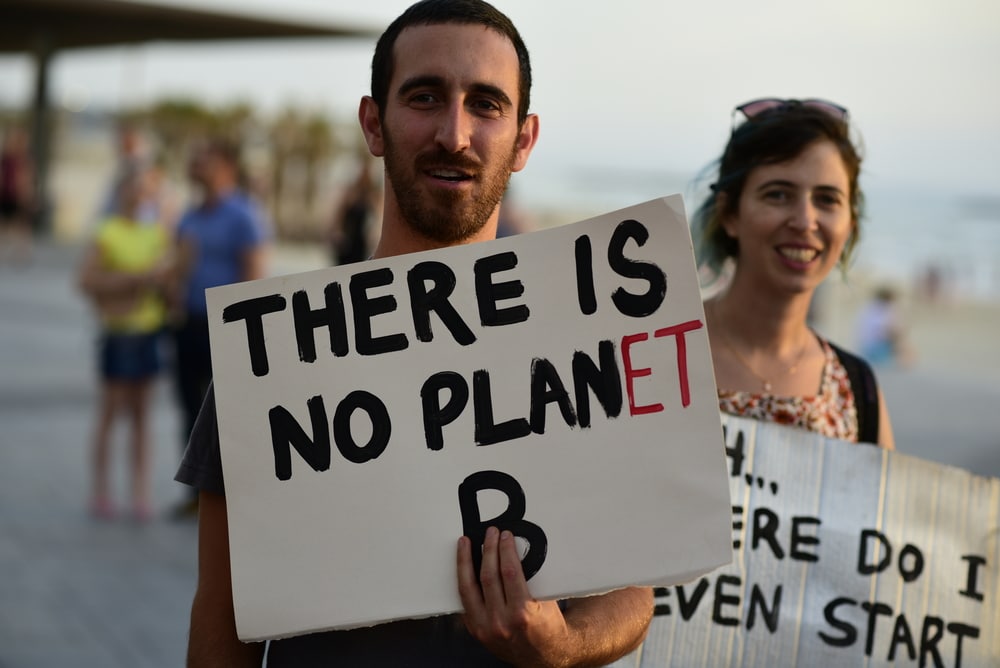
Are Stossel and Fox News ok with the 41% of U.S. kids living in or near poverty and the life long harm caused by disadvantages early in life?
HOW INEQUALITY HURTS KIDS
There’s no question – inequality is harmful to kids. Studies have documented examples of rising inequality decreasing child welfare:
Here are the facts on childhood inequality:
Inequality affects kids for life. Unequal opportunities translate into unequal lifelong outcomes by the time children reach the age of five. 3
Children who grow up poor are more likely to be poor as adults. Furthermore, the likelihood increases with each year of poverty that is experienced. – PBS Frontline
The impacts of inequality are more damaging the longer it is experienced. The longer a child is poor, the greater the risk of poverty in adulthood, and of experiencing lifelong health problems and involvement in the criminal justice system. 4
The longer you grow up in poverty, the harder it is to graduate. PBS Frontline
The growing divide between low-income children and their peers reduces opportunities for low-income children throughout their lives. 6
The child poverty rate for blacks and Hispanics is more than double the rate for whites and Asians. Higher unemployment rates and lower earnings contribute to the gap. – National Geographic
We all believe in fairness, whether liberal or conservative. But some fail to recognize that the playing field is not level. The reality is that socioeconomic status is inherited.
The rich are getting richer, and it gets passed onto their kids.
Kids born poor stay poor, and social mobility is declining.
Although overall poverty is declining, poverty is increasing among infants, especially for black and Hispanic children. Social mobility is declining and the condition of those in severe poverty is worsening. That is why a more equitable system to ensure a fair start is as important as ever.
Source: Stanford Center on Poverty and Inequality
“The proportion of U.S. children who go on to earn more than their parents has dropped sharply since 1940, when the rate topped 90 percent.” – Equality of Opportunity Project
The bottom line? Inequality harms kids and it’s getting worse.
As 2020 candidates propose solutions to inequality, will the response from the right be to deny that inequality is a problem? Inequality must be addressed to give kids a fair start. Fair Start family planning offers a real social contract that brings reasonable people on left and right together.
This can be accomplished with a cooperative family planning framework. Fair Start family planning brings us together to invest in all kids, to improve equity and create a better society.
TAKE ACTION We can do something about inequality. Help get a guaranteed minimum income (GMI) for kids in Washington D.C., where inequality is higher than any other state in the U.S. GMI that is tied to family planning is even more effective. Ask D.C. Mayor Bowser, @MayorBowser to pursue GMI tied to family planning to give kids a fair start.
What can you do to protect yourself and the ones you love?
Understand that you have a fundamental human right to resources to ensure your child a fair start in life. Choosing to have a smaller family is, without comparison, the best way to mitigate the threats of climate change. The right to nature and a fair start in life is the first and supreme human right. If you are willing to plan responsibly, you have a moral claim against those that are able to pay – including the government and wealthy individuals.
Having Kids means caring for the future, and that means taking effective action now. Let’s change to conversation from what parents want to what kids need.
Most of the world’s legal systems, and the cultures they shape, treat family planning like this: It is each individual’s personal or private right to decide how many children they want to have, the conditions in which those children will be born, and the opportunities in life those children will have. It’s a model focused exclusively on what would-be parents want in the here and now. That approach to planning our families derives from acognitive dissonance called temporal myopia that leads us to ignore the long-term consequences of our actions. There is also nothing inclusive about that system. Nothing about it deliberately includes future children in their community, in any meaningful way that would ensure their voice is heard. It is less than ideal, for lots of reasons.
It isolates parents from their communities, creating a wall between the two.
It prevents both communities and parents from working together to ensure that when children are born they get what every child needs. That includes even basic things like basic nutrition, health care, and a loving home. These basic needs are expressly or implicitlyguaranteed by the Children’s Rights Convention. But because of the way we plan families, where the community is alleviated of its obligations in the planning process – many children never get them. Downstream solutions, like state protective interventions, are an insufficient band-aid.The Turpin family – and the long-term torture of the thirteen children – provides a jarring example. They abused over a dozen kids under the nose of their community, for years. That is isolation parenting. The Turpins not alone. Roughly 700,000 children are abused in the U.S. annually.
The isolating way we plan our families also ensures (and was designed to ensure) massive inequality.Poor kids become poor adults, and rich kids become rich adults, with the latter inheriting both obvious and subtle benefits they never earned. Racial and ethnic disparities that have persisted are a consequence of that. Elites, in turn, create policies that ensure larger families and population growth, bringing more and more children into the world to fuel a system of workers, consumers, and taxpayers that benefit a small percentage of people at the top in what many have recognized as aPonzi scheme pyramid. The United States was founded on opposition to birth-based hierarchies, like the British monarchy. How is it then thatwe are controlled by someone like Donald Trump, who was born in a such dominant positioning to others? Isn’t that odd? It’s not if you begin to examine and question the way we plan families, and how it perpetuates inequality and injustice.
The isolation model of family planning did something else, something at the most fundamental levels of society. It ensured that our societies, and the legal constitutions upon which they are based, would be positioned to treat both future children and non-humans – the most vulnerable entities in the world – as property.In the almost universally-accepted isolation model, would-be parents would have total control over future children (think the Turpins again here), and over the nonhuman world, which is treated as a human resource to be colonized and used. The nexus, between the human and nonhuman world, is property to be taken and controlled. If we don’t reform family planning systems, we never address that fundamental problem. In contrast, more ethical systems, replace the contradiction of procreative autonomy with more accurate values. With a better family planning model we can liberate both future children, as well as animals and their habitat, at the same time, and stop the former from being used to colonize the latter.
It’s time to change the isolating parent-focused model to one that includes the needs of future children and the community, and integrates the two together.
What’s that? It’s simple: Smaller families sharing resources to give every child a fair start in life. This child-centered model fixes several mistakes in the parent-focused model, and centers family planning around inclusivity and equity. It is nonpartisan at the most fundamental level, derived from fundamental and widely shared values, and it is designed to capitalize on falling fertility rates, steering them into better qualitative outcomes. Fair start family planning is fairness and inclusivity, on caffeine.
There is resistance, of course. Those at the top of the pyramid, and the politicians that represent them, are leaning on women to have more and more kids in order to create consumer demand, a class of cheap future labor, and a larger tax base. That is exactly whyTrump and his family were behind barely-noticed reforms to theChild Tax Credit in 2018 that were expressly designed tourge women to have more kids. Let’s be clear what this means. Congress will pay you for each kid you have, regardless of whether you neglect and abuse those kids, or simply have them in to totally failing state systems out of which charities are struggling to pull kids every day. Why? Kids equal economic growth, and that equals money for elites. People who oppose family planning reform are godsends for companieslike Unilever that will profit from the growth to come.
What is one way elites, who benefit from the constant flow of consumers, cheap future labor, and compliant taxpayers produced by poor family planning, keep the system in place? They fear-monger by intentionally conflating better family planning with many of the horrible reproductive rights violations of the past, like eugenics. They elide thecomplex intersectionality at the heart of family planning. But do you really think Fox News cares about equity? They and manyother reactionary entitiescreate endless propaganda to keep discussions of family planning taboo, and this lever for real social change hidden.
Doing effective social justice work means considering where people come from, the conditions in which they are born and raised, and whether the process that brought them into the world and provided for them is just. That is step one. If you don’t work on reforming family planning systems you are missing what could be the most influential factor in your work, others will be busy controlling that process, and what they do will have nothing to do with justice.
We applaud candidates like Washington Governor Jay Inslee and Texas Rep. Beto O’Rourke for presenting ambitious climate plans. Gov. Inslee has proposed a transition to 100% renewable energy. Rep. O’Rourke proposes net zero emissions by 2050 along with trillions in new investments.
Yes, these are important steps in mitigating the climate crisis. What’s missing though? Like other proposals coming forward by 2020 candidates, they are forgetting to start at the source of the problem. The fact is, anthropogenicclimate impact starts with people. Is it time to change who we are, and will be?
We urge the 2020 candidates to consider policies that would promote smaller and more equitable families. Not only is that the best way to reduce a variety of harmful emissions, but it reduces other anthropogenic effects. And (perhaps most importantly), it creates a population – in quantity and of a resilient quality – that can still thrive in a degraded future environment. No other change is as fundamental, interpersonal or effective.
Better family planning is the most effective solution to the greatest threats that face us and our children. What can we do?
Speak out: Break the taboo against talking about the need for better family planning policies. Talk to the organizations you support, to parents, and people considering becoming parents about thefacts about climate impact. It’s your future too. Empower yourself and change the world around you.
Put direct pressure on wealthy people and corporations to fund Fair Start family planning: Children are the future, and every kid deserves a fair start in life. Wealthy politicians – who have to defend themselves in public – should be able to explain themselves on this issue. What standard of living do they provide their own kids? Other children don’t deserve the same? Why not?
Less than most effective is not an option. Speak out, and put pressure on politicians to include better family planning reforms in their climate change proposals.
This is true whether in the case of measles, the yearly flu epidemic, or others cases like the Zika virus and Ebola. As we become a more crowded planet – with 11 billion of us projected by the end of the century, the risk of disease outbreaks intensifies. “Increased population densities and unhealthy living conditions in urban slums can ease the transmission of infections,” as Population Action International stated.
Add to that, the connectedness of our world which allows for a near-instant global spread of infectious diseases. As author and professor, Lewis Dartnell from the University of Westminster warned, “…the modern world of densely-packed cities and intercontinental airplanes provide the perfect conditions for new diseases to spread to huge numbers of people before any sort of effective quarantine could be implemented. Even if perhaps only 20% of the global population became sick at the same time, enough vital services and infrastructure could grind to a halt that our whole technological, deeply-interlinked, civilisation could collapse.”
Here’s a challenge: Scan the dozens of news stories each day about the new measles epidemic and look for any reporters who connect the issue to crowding or need for family planning. It’s as if there is no connection between the growth of population and spread of disease.
Ignoring the role of crowding in the things that happen around you is threat to you, your kids, and your future. Family planning defines the world around us. We can do better. Start at the source. Learn more here.
Why would the usually thoughtful New York Times, which seems to appreciate the dangers of climate change and other environmental crises, publish an article lamenting Japan’s population decline?
“Like Japan itself, the imperial family has a demographic problem. Just as Japan’s population is shrinking and aging, so is the royal family’s.”
Here’s the problem. Even though we may value those things, we have a moral blind spot when it comes to family planning. We assume that because we grew up in ever expanding nation-states with constant economic growth, that way must continue.
Is it time to get serious about preventing child abuse, rather than responding after the harm has occurred? We know that some people are not ready to become parents. Yet, we stand by and wait for a problem before we act. The truth is that some people – like AJ’s parents – are just not ready. How do we identify parents that might not be ready? Convictions for prior abuse and neglect are a good start. Having Kids has developed model legislation designed to break the myth that everyone is ready to be a parent, and to target child abuse before it begins.
Contact the Governor of Illinois, where AJ died, at 312-814-2121 and ask him to consider calling for Fair Start legislation. You can also start at the top, and urge the United Nations Secretary General to speak out on the need for a universal Fair Start family planning system. It’s time to get serious about preventing child abuse.
The idea is simple: The District can reach many of its goals at once by promoting smaller families so that communities and families can invest more in each child. The policy is centered around every child’s right to a fair start in life, and is designed to address the greatest threats facing the District and nation, including inequality and climate change. Can Washington D.C. make a difference by itself? It can for its residents. But it can also lead by example and set a trend – a line of dominoes – for the rest of the nation with the most effective and sustainable path forward.
The policy urges the District to adopt a stable community model, where the financial resources formerly required to support growth could be directed to other beneficial investments. Rather than focusing on unsustainable economic growth that excludes the most vulnerable citizens from participating, the Having Kids GMI proposal shrinks the wealth gap by ensuring a level playing field from the beginning of life. Specifically, it contemplates (1) household resources per capita, (2) level of access to public services such as health and education, and (3) above all, the relationship between a child’s fair start in life and prospects for success.
Having Kids is calling on United Nations Secretary-General Antonio Guterres to issue a new U.N. family planning statement, recommending a focus on delaying having kids and sustainable families, and calling for a new standard of equity and sustainability for all family planning policies. The group will hold an event in front of the U.N. on Monday.
Simply stated, the current family planning model used by the United Nations is the fundamental source of the problem, ensuring unsustainable population growth in a way that degrades equality, democracy, and our environment. This archaic model was developed before we learned what we know today about climate change, the disproportionate impact of early childhood development on human well-being, the way birth conditions and early childhood can exacerbate inequality, etc. Many better models have been proposed, including one by leading political theorist Sarah Conly, and Having Kids’ own model, the Fair Start approach (detailed here). To begin the process Having Kids has asked public figures to take action and speak out, but the United Nations should lead.
“This is an opportunity for the United Nations to do what it was founded to do, and protect the world from dire threats through the promotion of human rights,” said Erika Mathews, the Executive Director of Having Kids.