Want to take action to support this effort, and ensure all children a Fair Start in life? Right now the Senate is debating legislation that seeks to fund child care, and alleviate poverty.
But it:
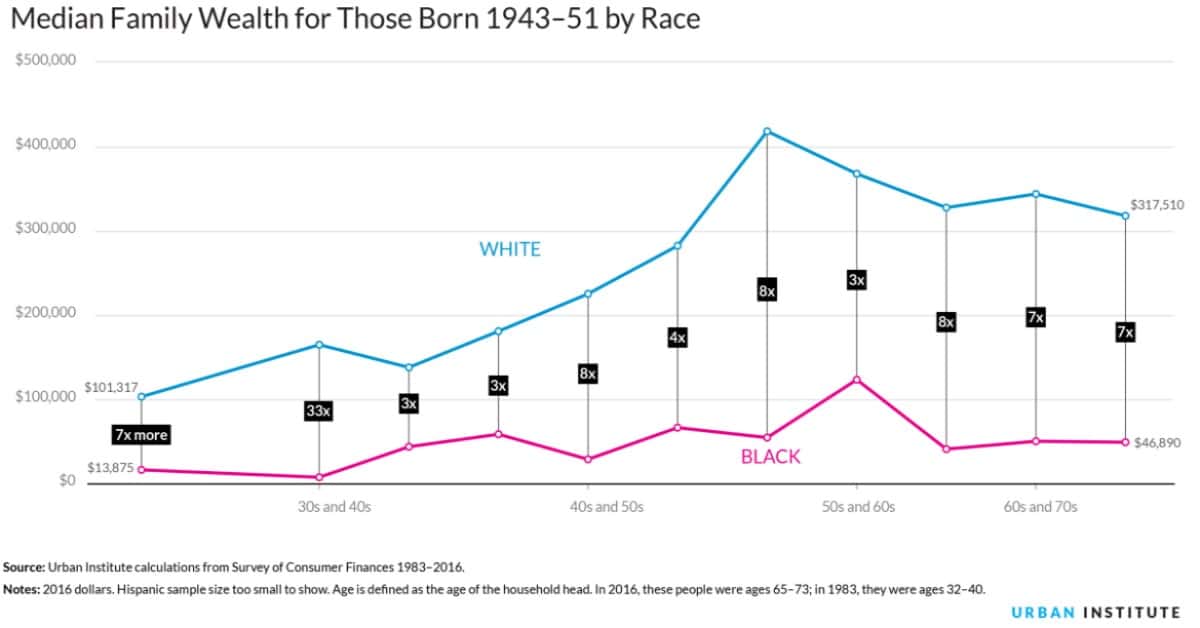
Does nothing to seriously address the 1/10th wealth gap between black and white families in the U.S.
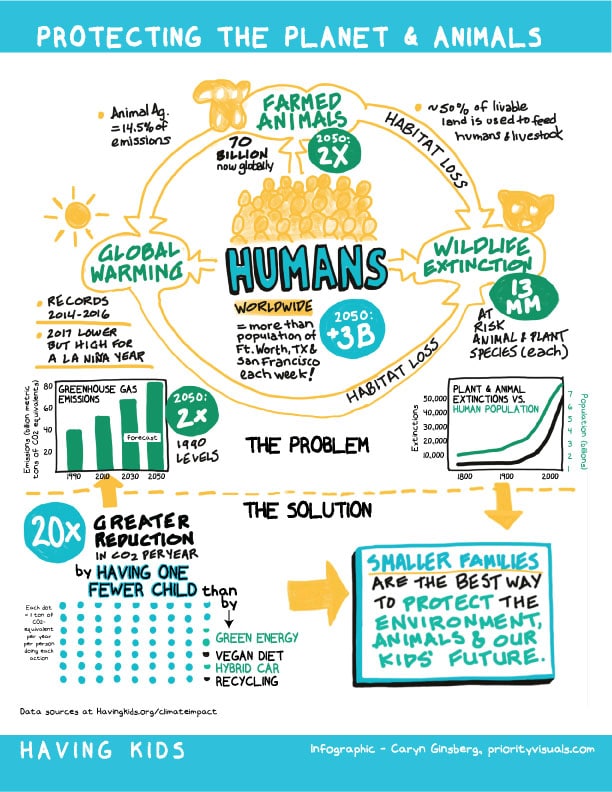
Does nothing to promote smaller and more sustainable families, which is a move with 20x more impact on the climate crisis than many alternatives.
Does nothing to end child abuse – instead, it will exacerbate it with a one-size-fits-all approach to family planning incentives.
When supporters of President Trump stormed the Capitol Building in January, business leaders, and prominent members of both political parties, condemned the act as a direct assault on democracy. The deadly attack was wrong for many reasons, but not because the Capitol represents a functional democracy.
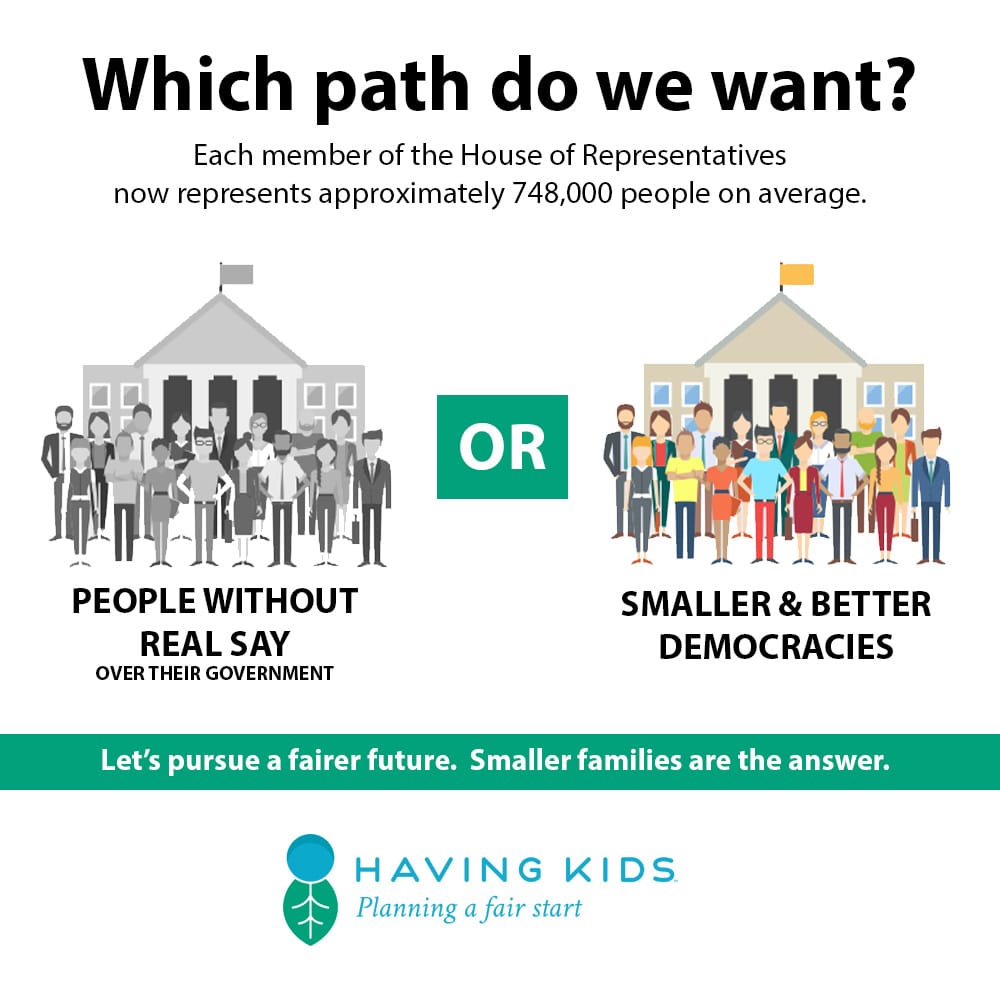
It’s hard to understand why anyone believes Congress – a handful of people – could democratically represent the diverse and changing interests of the hundreds of millions of people that live in the United States. If democracy is characterized by self-rule or the decentralization of power, what Congress purports to do instead is run a large republic where powerful interests disproportionately control outcomes, rather than engage in the true democracy simply characterized by an extremely decentralized system of local control where each person’s voice matters and is heard.
We react strongly to the spectacle of what happened at the Capitol in part because it is sensational. Decades of corporate lobbyists invading the Capitol and slowly degrading the way it represents each person equally – and especially those most vulnerable – is less sensational. It’s not better – in many ways it’s worse and more impactful – but our brains don’t process it the same way. (In the linked TED talk Peter Singer focuses on our welfare and our cognitive limits, but the same lesson could be applied to self-determination and democracy).
While contrasts have been drawn between the police response to the attack versus the response to the George Floyd riots, we can also look to the disproportionate response police had to the Occupy movement, especially in Wall Street’s back yard. We may not be surprised then when the captains of corporate America swiftly condemned the attack on the Capitol. Violence reminds us that there is a form of power other than money.
If we really wish to ensure justice and to prevent further bloodshed, perhaps we should focus on making each voice heard and matter – whether it is the sort dying to end the constant killings of deeply disenfranchised black men by police, or the sort of voice intent on protesting the federal governance of our massive and deeply unequal population as undemocratic. If we don’t, these voices will raise their level of conflict, and violence.
How could we possibly increase each person’s role in governance? Traditionally our moderately federalized system pushes population growth as a means of expanding national power, then based on constitutional rules, it counts up everyone and apportions their representatives. Instead of exploiting future generations as a means of growth, what if we changed the way we have and raise kids to equitably invest more in them and in ways designed to give each a voice in hyper-decentralized future governance? Instead of assuming that the written Constitution magically ensures our representation, we could physically decentralize both private and public concentrations of power by taking resources and investing them in a smaller future population developed for self-rule. While that process must prioritize eliminating racial inequity, it is inherently nonpartisan.
In this way, we could begin to constitute democracies out of people, more than out of words, and build communities around our role in planning them, more than around racial or class identities. We could incentivize early fostering and adoption of children in need using the funds – like child tax credits – that currently incentivize having larger families. We could also do it by redistributing wealth from the top of the economic pyramid through enhanced “baby bond” legislation meant to ensure birth equity and tie future children’s needs to better family planning. Giving a voice – in this way – can mean giving what both margins, left and right, want respectively, albeit over the span of a few generations: Greater equity for the former, and greater autonomy for the latter.
The best part? If developing future generations to engage in equal self-rule is something that logically precedes the political processes we are accustomed to, we don’t need the government to begin the decentralization of private and public power. We can instead join as liberals and conservatives to target the power of both big business and big government, which in divided political camps we respectively object to, based on the simple truths that every child deserves to get a fair start – both ecologically and socially – in life, and that every child deserves to eventually matter in the processes that govern their day to day lives.
What matters more than the people with whom we and our kids share the world, and will in the future?
Cal however could be making a simple, but crucial, error: She might be assuming that replacement is the baseline for determining family planning policies and ideal fertility rates. Given that current and anticipated population levels are unsustainable – something the climate crisis reminds us of every day – replacement is not ideal.
Moving towards it is the fundamental policy focus for sustainable development. Moving quickly will prove ten to twenty times more effective at eliminating poverty, inequity, and ecological crises, as well as restoring democracy, than downstream and after-the-fact alternatives. Optimal, not unsustainable replacement, is our collective endeavor.
As part of this process, the slow return of nature is the long-expected consequence of decades of unified international efforts to avert the disasters that flow from overpopulation. We should welcome the change as a symbol of success. It is part of saving our own species.
TAKE ACTION: BY NOT ENSURING ALL KIDS AN ECO-SOCIAL FAIR START IN LIFE THE UNITED NATIONS SECRETARY GENERAL @ANTONIOGUTTERES IS IGNORING HUMAN RIGHTS. URGE HIM TO CHANGE COURSE.
South Korea is in the midst of making demographic history, with the country’s population itself declining. While other countries have seen the same process unfold, South Korea is unique in that the fall is part of one of the best family planning policy reforms the world has seen. The positive impact on the climate crisis, and on improving each citizen’s role in the democratic process, is astounding. South Korea is showing that nations can break the suicidal collective action problem of a permanent birth and population growth race, to instead help move the world towards an optimal and sustainable world population level.
The State Pushing Women to Have Kids
Forces at the top of the population exploitation pyramid Nobel Laureate Stephen Chu once pointed out are fighting back, sounding alarms about South Korea heralding the end of the world. They do not care about the impact falling populations have on values like welfare, nature, and equity. They care that the pyramid – atop which they live – is changing and the free money of unsustainable population growth might be disappearing. These forces said the same about falling population in Japan years ago and impacts on quality of life – and were wrong.
What can we do in this fight for human rights and the future?
It’s time to change the discourse. This is not about numbers. This is about people, and the first human right – the right to a fair start in life. It’s time to find the wealthy entities and their mouthpieces in the media pushing unsustainable growth, the people driving the exploitation rather than investment in future generations.
It’s time to take the resources they took, the wealth, and instead invest it in future generations. We have the right to take what is necessary for the Fair Start right by all means effective because it comes before – and overrides – property rights. We are before we do. The wealthy collected their power in violation of that right; they never paid the costs they should have. It’s time for them to pay now.
Step one in this transition?
The United Nations and Secretary General Antonio Guterres are obligated by the international bill of human rights to support Fair Start, and our just demands, prior to our engaging targets at the top of the wealth pyramid. They are obligated to speak truth with us to the power at the top, and support the just actions to come.
We Should Level the Playing Field for All Kids. Full Stop.
President Joe Biden has put forth a massive child care and tax proposal to keep child care centers open, help low-income families with child care, and offer tax relief on the cost of having kids.
There is just one problem: It’s not really meant to eliminate the massive wealth gap between minority and white families in the United States. Because of slavery and historical injustice, black families have one tenth the wealth of white families. White families also possess more than 4 times the income of Hispanic/Latino families. The impacts are especially hard on kids, rippling forward into future generations in never ending cycles that make a mockery of any legitimate form of social contract. It’s time to get real.
How could Biden’s plan help end the cycle?
1) Cut all benefits to wealthy families who don’t need the funding.
2) Use those savings as cash incentives to power up family planning and early childhood investment systems in the United States to
d) Back programs like Smart Beginnings up in time to focus on family planning, and based upon redistribution of wealth in ways that give all kids a Fair Start in life.
Opponents to these changes will want to use President Biden’s plan to reinforce inequality and incentivize unsustainable population growth, using babies to grow the economy. Names like Ivanka Trump, Marco Rubio, Mitt Romney, and growth-minded people at Vox like Matthew Yglesias want to use child care, and especially child tax credits, as incentives for women to have kids to reverse falling birth rates. That’s short-sighted, and ignores every child’s right to a socially and ecologically #fairstart in life. It’s certainly not antiracist. It divides us.
In this way we can proceed from fundamental values, and achieve the personal autonomy the political right values, by applying the equity the political left values – but specifically prioritizing children. We can take power away from big business and big government, the entities the left and right respectively oppose, and invest it in future generations. Learn more here.
That’s truly uniting, and being antiracist, at the same time.
The biggest impact of all? Changing the way we plan families.
Make a difference today by sharing your “why” for taking part in the Fair Start movement, and we might use your video in our campaigns:
• Record a 10- to 30-second video clip of you sharing why we need to rethink family planning policy to finally end child abuse and advocate for smaller families to protect our planet and wildlife.• Share your video on social media by using the hashtag #FairStartStories
Whatever rhetoric comes from President-elect Joe Biden, the country remains more divided because of the election, with studies showing a growing divide and distrust between red and blue communities and increasing openness to violence on both sides. The impact of the second wave of Covid-19 on businesses, the continued killing of black men and women by police, and a former president soon unhindered by office, will not help.
Biden is pursuing a business-as-usual approach to funding childcare that makes the situation worse long-term. This policy does not address the root of the problem: family planning. It does not ensure a minimum threshold under which children should not be born, does not address the way unsustainable family size drives the climate and other crises, and does not create inclusive communities.
Why are your tax dollars being paid out without these safeguards?
It’s a cliché to say that children, who are the future, can unite us. But novel policies that could change the way we plan for, have, and raise kids make the possibility of coming together real and meaningful beyond empty clichés. Those policies begin by our realizing that being truly inclusive starts by deliberately including children in communities through more cooperative family planning systems that eliminate marginalization, and focus as a priority on giving every child a fair start in life.
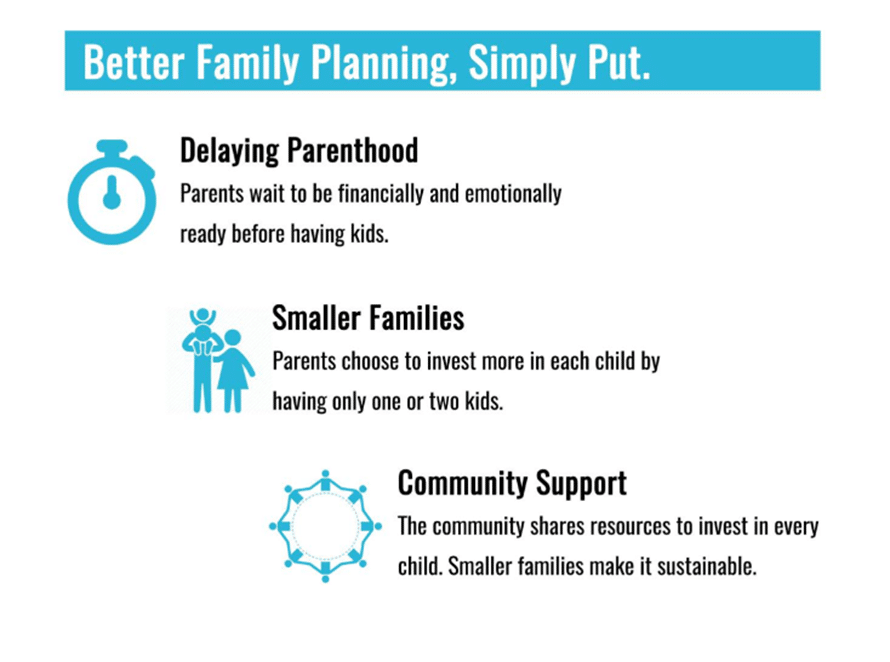
Those policies would also have to promote smaller families that create more democratic communities where everyone’s voice matters. This would be a stark reversal of our current family tax policies that promote quantity over quality, ignore fair starts in life, and promote the antithesis of inclusivity.
The best part? Such #fairstart policies should appeal to both liberals and conservatives, because they promote the traditionally liberal value of equity while also promoting the traditionally conservative value of autonomy by investing more in kids in ways that make them self-sufficient and capable citizens. Together, these values create a vision of free and equal people engaged in the self-rule the founders of the nation envisioned, or the ideal of town halls, rather than a vision of economic growth that through overcrowding and lack of a common core excludes people from public institutions.
Moreover, new family planning policies like these would have a massive impact on the climate crisis that threatens all of us, with an exponentially greater impact than many downstream alternatives. Family planning reform is the only truly fundamental type of reform, and given the climate crisis, fundamental reform is what we need.
Children can unite us, but to make that statement mean something, we have to start at the beginning, with the way we plan families. We have to start with a vision of a future of smaller, sustainable, and truly democratic communities where we invest more in kids and where all have a meaningful voice.
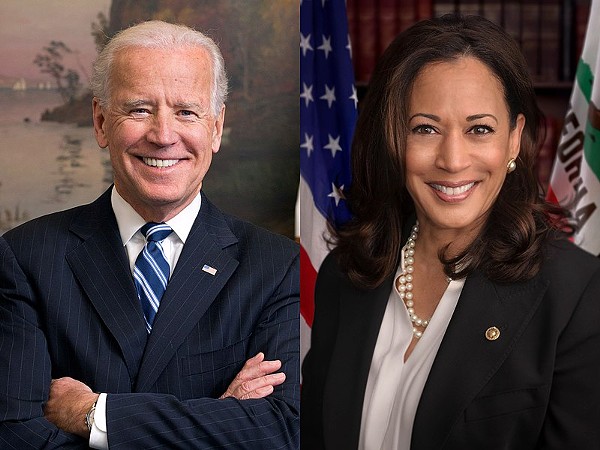
Take Action: Urge Kamala Harris to use her position to educate Biden and to promote child-centric Fair Start family planning reforms. Copy and paste this message in your communications with her.
While many nations’ constitutions are clear in protecting the property rights of the wealthy, they are less clear in protecting the nature we and future generations need to thrive. That’s a mistake.
Given that humans need nature to survive, we have a right to nature’s restoration and protection. A lawsuit in the United States is making that case, and will be heard in 2021.
Solving the baseline problem will allow us to trace these calamities — like the unfolding death of the Great Barrier Reef — and help us back to an ultimate source, and, perhaps, to a solution. We can no longer use a baseline for environmental policy that treats nature or the nonhuman world as a human resource. This is the baseline most environmentalists use, and the one that created the Anthropocene era in which we find the world today. A much higher baseline would view nature as something that ought to be a nonhuman habitat or the homes of sentient species who have a right to survive and thrive. This would be a restorative baseline, and the one more consistent with animal liberation. Such a baseline would be most protective against things like climate change and the pandemics it drives. A policy based on this baseline would revolve around ensuring our children have the only environment proven — over millennia‚ that allows humans and all species to thrive. It would seek to eliminate the way the absence of nature in our lives is degrading our psyches.”
Humans are shortsighted by nature. We experience something like the climate crisis or Covid-19, and our usual reaction is to look for an immediate solution like emissions technology or a vaccine. But sometimes solving problems – especially global and interconnected ones – takes stepping back and seeing the larger picture.
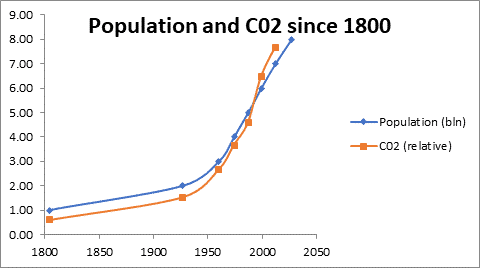
This choice has resulted in a world population that is still skyrocketing towards potentially eleven billion people by 2100. The hands off approach has done little to alleviate poverty and inequity, and has become the fundamental driver behind the climate crisis and every other anthropogenic impact. What’s worse? The hands off approach – pushed by men who controlled their households – did not comply with human rights requirements, which require balancing parents’ right to have kids with an obligation to provide the things all future children need. The human-rights approach to planning families requires that we collectively plan in ways that give all kids a socially and ecologically fair start in life.
The exploit-rather-than invest approach set the stage for the risk and impact of Covid-19, and is setting the stage for the next pandemic, which could be larger in scale. How?
Civic qualities that are largely contingent on the conditions of our birth and early development, like our overall health and risk of comorbidities, as well as empathy deficits which are reflected in the refusal of many to engage in easy and life-saving public health measures like practicing social distancing and wearing masks, substantially contribute to the impact of pandemics like Covid-19.
The economic disparities we inherit at birth lead to massive disparities in how pandemics impact different communities, and hence determine the average impact of things like Covid-19.
Our growing population is degrading our natural ecologies, which sets the stage for future and worse pandemics.
The distribution and efficacy of vaccines is being stymied by population size, the refusal of many to participate, and underlying health conditions that can be traced to family planning systems.
What does all of this mean?
Part of the response to Covid-19 has to be reforming family planning policies to fulfill human rights obligations, and give every child a Fair Start in life. Given that Fair Start family planning is the first and overriding human right and obligation, we may fulfill it by taking resources from both public and private concentrations of wealth and power, and using them to incentivize better and more cooperative family planning, or smaller families working together to invest more time, love, and resources in every child.