Category: Educational Guides & Resources

  • What the Occupy Movement Should Have Said

    What the Occupy Movement Should Have Said

    Thanksgiving is not about turkey and football. For thoughtful and caring people, it goes much further, and is tied to the American ideal of democracy.

    In 1896, Abraham Lincoln made the Thanksgiving proclamation to a weary country, divided by civil war, with the fate of the democracy in peril. Many believe that the purpose of the Mayflower Compact was to protect the liberty of dissenters from the tyranny of those in power. These and many other points in history remind us why Thanksgiving is a good opportunity to reflect on democracy. One recent attempt to reset our system to the ideal was the Occupy Movement. It has been described as:

    [A]n international progressive, socio-political movement against social and economic inequality and the lack of real democracy around the world. It aimed primarily to advance social and economic justice and new forms of democracy. The movement had many different scopes; local groups often had different focuses, but among the movement’s prime concerns were how large corporations (and the global financial system) control the world in a way that disproportionately benefited a minority, undermined democracy, and was unstable.

    The movement has been criticized for lack of a centralizing vision, and specific demands for changes in policy. Could it have taken a longer-term view of change, one related to family planning?

    Democracy relies on a fundamental premise: That societies form, and remain legitimate, through the consensual coming together of free and equal people. The reason is simple. How else would you justify the authority of the state, and government?

    Here’s the thing. For many centuries that premise was thought to apply to the people alive at the time, adults who could choose – as free and equals – to enter and leave societies and nations as they pleased. But that static view of freedom and equality is riddled with problems. The idea of “coming together as free and equals” works much better if we think of it in terms of planning for future generations, and what it would mean if we apply it to them. Thanks to modern contraception, reduced infant mortality, the (too slow) recession of religious and other forms of oppressive patriarchal families, and about a dozen other things, we can now do that. We can make democracy inter-generational, and realize it in ways it’s not easy to imagine in today’s world, where democracy is virtually meaningless.

    The child-first Fair Start family planning model does just that.

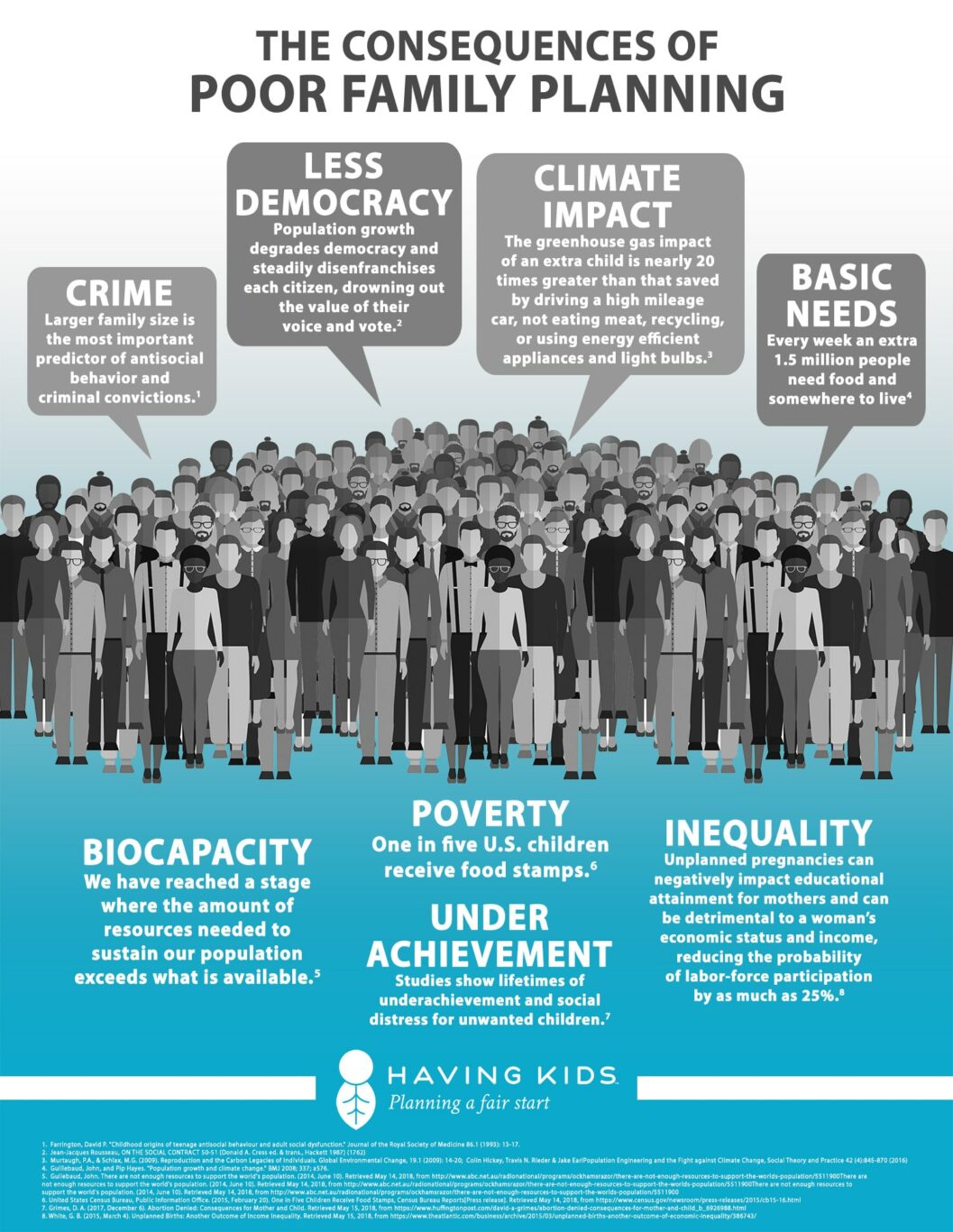
    It’s simple: Parents plan a fair start in life for their kids. Communities, in exchange, help fund that start – proportional to need. Parents and communities both promote an ethic of smaller families to make the whole thing work, and to free us from crowded societies where the average person’s voice is lost in the crowd and does not matter, where people live in fear of one another, where they are not raised to run their own democracies, and where the freedom and security of nature is disappearing every day, etc.

    Occupy started something. Fair Start family planning can finish it. Learn more, and join us.

  • Inequality and Children: Why A Head Start for Some, Hurts All Kids

    Inequality and Children: Why A Head Start for Some, Hurts All Kids

    Bloomberg recently posted a story about a summer camp for the ultra-rich, that teaches them how to get richer.

    What?

    Why should a select few get to have their hands held to jump to the front of the line? Children born with a head start are handed opportunities, access, guidance, trust funds, and connections that allow them to easily generate wealth in adulthood. The doors are opened to them to simply walk through. Compare that with the rest of Americans who struggle to find affordable housing, healthcare and fair paying jobs, and are often burdened with student loan debt.

    But inheriting a massive head start in life from wealth and privilege is not simply unfair. It degrades democracy. Because as the rich getting richer at the expense of a shrinking middle class, powerful interests wield their power to influence policy and keep our economy working only for themselves.

    Furthermore, we know that the economic inequality created by such policies is closely tied to poverty and crime, and results in a number of negative health and development outcomes for children. As inequality increases, child welfare decreases. And that is the direction we are going. How is that progress? Our standard of living should improve over time, not worsen.

    So then, how can we create more fairness and take a serious approach in attacking inequality? The answer is not simply a redistribution of wealth from a system flawed at its foundation. It’s looking at our values as Americans, as humanitarians, and recognizing that children deserve to be born with a fair start. That means safe neighborhoods, healthcare, a quality, equitable education, and nutrition. It also means having parents that are able to give them the time and attention that they need to thrive and be successful.

    This can be accomplished with a cooperative family planning framework. Fair Start family planning brings us together to invest in all kids, to improve equity and create a better society.

    Who would argue against a level playing field?

    TAKE ACTION: Ask him to respond to Having Kids’ questions. Fairness for children starts with those questions. Add your name here.

  • Why Can’t We Prevent Horrific Child Abuse?

    Why Can’t We Prevent Horrific Child Abuse?

    These are just a few of the incidents of child abuse and neglect reported around the country in the past few weeks.

    How many more cases go undetected? The reality is that between 3-5 children die every day in the United States from neglect and abuse.

    It’s time to stop this. And the best way to do that is  by creating a culture, derived from smart policies, that prevents abusive and neglectful parent from ever having kids. It’s time to get proactive, rather than reactive.

    Who would oppose this? Lots of politicians and big businesses make money off of our current family planning system, which pushes as many kids as possible into the world because doing so ensures a growing supply of hungry consumers, and a future filled with cheap labor and lots of taxpayers. They are to blame, and should be held accountable.

    Having Kids is promoting fundamental change through our Fair Start order campaign. It’s simple: If you’ve been convicted of a serious case of child abuse and cannot care for children, you will be ordered not to have additional children until the situation changes.

    These orders are a fair and constitutional way to change the way we plan our families. It’s called the child-first Fair Start model. 

    Let’s get ahead of the problem. Take action now and support Fair Start order legislation in your state.


  • How Not to Think About Demographic Transition

    How Not to Think About Demographic Transition

    Why is something news? Many journalists would say that things which impact large numbers of people should be reported upon. Late last week many news outlets covered a story about how the trend towards smaller families means the “extinction of the middle child.”

    How this change in family structures will impact peoples’ lives, comprehensively, is beyond uncertain, if It could be ascertained at all. What is certain is that smaller families are the best way to limit what is now a manifest pattern of climate change degrading well-being on earth and threatening our kids’ future. Smaller families are also a great way to mitigate the real extinction at hand – that of other species.

    We may have an emotional reaction to changes in things we are used to, things like the concept of middle children. But focusing on that – and not mentioning climate change in stories about family size – is negligent.

    So what’s the next move? Today the demographic transition to smaller families is thought of almost exclusively in quantitative terms. But it’s impossible to change family size without having qualitative impacts, and opportunities. With smaller families we can more easily work together to plan for and invest more in each child, perhaps even enough to give every child a fair start in life relative to other members of their generation.

    Let’s talk about what matters. Take action today.

  • Bucking Tradition: Why One Family Chose To Stop At Two

    Bucking Tradition: Why One Family Chose To Stop At Two

    The Brenn family speaks out to protect their kids’ future, and stop at two. In their own words:

    “My husband and I both come from large families. The fact that we were ‘stopping at two’ still seemed an almost radical concept for many of our loved ones. This is why we’re speaking out. A smaller family really shouldn’t be a radical concept anymore.

    The decision to have ‘only’ two children was not one we took lightly.

    Our kiddos are fun, challenging, full of energy, and fill our lives with love and joy. Sure there are times (ok maybe once or twice) when we thought it would be fun to have a whole football team of kids. BUT…we want the best for them now and in their futures. That is one of the reasons we decided it was best for us to “stop at two”.

    We also want to give each of them the time, love, resources, and attention they need and deserve. Additionally, we want to have time and energy left over to invest in our art and our community as we try to make the world they will live in a better place. Most importantly, we are well aware that given current fertility rates, the world is on course to add BILLIONS more people to our planet! It’s hard to even imagine. Such an increase in population will exacerbate climate change, mass extinction of other species, acidification of the oceans, mounting social pressures and conflicts, etc. Naturally, we want to avoid that our children would live in such a world.

    So no… a smaller family should not be a radical concept.

    Our choosing a smaller family where we do as much as we can to help our kids become good people and part of a thriving community,  won’t be effective, however, if other parents aren’t willing to do the same.

    Parents need to work together to build the future their kids deserve. They can’t do it alone.”

    This is a simple fact: Better family planning, where smaller families invest more in each child, is the best way to help kids and protect the environment.

    Will you speak out? Contact us at Info@HavingKids.org if so.

  • What Do School Shootings Have To Do With Family Planning?

    What Do School Shootings Have To Do With Family Planning?

    Social commentator David Leonhardt is right when he says the teenagers recently killed in Florida “had the misfortune of growing up — of trying to grow up — in a country that didn’t care enough about their lives.”

    He’s also right when he connects the shooting to the seemingly unrelated issue of infant mortality rates in the United States.

    But he might have taken the next logical step, and connected our disvaluing children back to the source – to the dominant parent-first family planning model in the United States, one that allows politicians to openly promote the use of tax incentives to urge women to have more children, children who will serve as workers, consumers and taxpayers to inflate our economy. How can we value children when we will bring them into the world for those reasons, irrespective of the conditions in which they will be born, of whether they will get a fair start in life relative to their peers, and regardless of the impact our collective family planning decisions have on the environment they will inherit?

    The problem Mr. Leonhardt recognizes begins further back in time – in the way we choose to bring children into the world. How do we change that? We can move away from a family planning model that puts parents before kids, towards one that is child first. That change can also begin at the local level. Start the change in your community today.

  • What Does It Mean to Get a Fair Start In Life?

    What Does It Mean to Get a Fair Start In Life?

    Should every kid born get a college savings account? Is that fair?
    There are great arguments that they should. Don’t all kids deserve equal opportunities in life?
    But could such programs be more effective if connected back to family planning? It’s not like kids, with all their needs, just fall from the sky. We can plan for them. Could the amounts proposed be increased substantially and in proportion to parents contributing sliding-scale percentages themselves, before having their first child?
    The real question is how to fund the transition to true equality. Is there a more important use of society’s resources than investing in its future? As such, do we have a right to those resources – a right that overrides any other claim to them, much the way governments can simply take property for purposes of national defense and other pressing needs? Given the twin threats of climate change and inequality posed by our current failing system of family planning – too many kids and not enough prep, isn’t this a form of national defense if we think long-term?
    Let’s think ahead, and plan for kids before they enter the world.
  • What You Said About Large Families, Irresponsible Parenting

    What You Said About Large Families, Irresponsible Parenting

    By now, you’ve seen the viral video of a polar bear starving on Canada’s Baffin Island, a symbol of the impacts of the climate change. The underlying driver of anthropogenic climate change is poor family planning. That’s why, as numerous studies have shown, the best way for the average person to mitigate climate change is by choosing smaller families.

    So it’s pretty simple. If we are not brave enough to deal with unsustainable family planning models that have driven climate change, we are not doing what is required to in the long run to protect animals like the bear on Baffin Island. Poor family planning is the underlying problem and the root cause.

    Six adults sit in a row outdoors, dressed formally. The words Unsustainable and We need to do better appear above them, with HavingKids.org in yellow text at the bottom right. As much as we would like to think otherwise, and as much as they would protest to the contrary, celebrities and other public figures serve as role models. This impacts everything from product purchases to lifestyle choices, including family planning. Very large swaths of the populace are extremely invested in the lives and choices of their favorite celebrities.

    Having Kids saw this in the strong and often furious reaction to our Open Letter to the Royals. We were told to mind our own business, that more royal rich white people were a good thing, and that we worry about other populations.

    But public figures create space for conversations. They make the abstract real and relevant, and we want the voices of people like you that that care about the planet, the future, to be heard. The future belongs to all of us. 

    When former celebrities Tori Spelling and Dean McDermott went chasing publicity by having another child, even Tori’s mom said enough was enough. We wondered what the public thought. Here are the results of our poll:

    “Given that the world population is set to grow by another 2½ billion people by 2050, and that larger families are biggest drivers of climate change, should Dean McDermott and Tori Spelling continue to have children?”

    No: 96%  Yes: 4%

    “If they should not, would there be any public or government interventions, like tax disincentives, that should be used to discourage them?”

    Yes: 88%  No: 12%

    “Does your right, and the right of future generations, to have a healthy natural environment and biodiversity outweigh current individuals’ right to have as many kids as they want?”

    Yes: 90%  No: 10%

    These results support common sense and are the basis for the Having Kids Model. Kids are not props, and should not be brought into existence unless their right to a fair start in life will be met.

    If you agree it is important to stand up for children and want more child-first advocacy, please be a part of Having Kids.

  • How Do You Simultaneously Restore Nature, Protect Kids, and Build Real Equality and Democracy?

    How Do You Simultaneously Restore Nature, Protect Kids, and Build Real Equality and Democracy?

    It’s called child-first family planning, and it starts by recognizing that all children have the fundamental human right to fair start in life, with the same opportunities that wealthy kids are getting, the same opportunities Donald Trump’s kids are getting. What loving parent wouldn’t want that for their child?

    Kids have that right because systems of human rights and democracy begin with free and equal people coming together. That “coming together” happens – in the most important way – when we have children and bring them into society. Our family planning systems have to bring kids in as equals, on a level playing field, and each with the resources – high levels of things like education, health care, nutrition, love – to eventually make them truly free and emancipated people. Systems of human rights and democracy don’t begin to work until we ensure kids that right.

    How does a child’s right to a fair start in life also protect the environment and restore nature?

    Ensuring kids a fair start in life is a two-way street – parents have to work with their communities to create that start, before they have kids. If parents do that they will have fewer children (which is the most effective way to mitigate disastrous climate change), and will invest more in each child. That process in turn builds real democracy, or smaller communities of better-prepared people, living in a healthier and natural environment. Here is an example of one family moving towards child-centered family planning.

    There is a natural confluence between cooperative family planning, smaller families, and higher investment in each child. That in turns leads to freedom: The freedom to do what you want that comes from a fair start in life, the freedom of a smaller, truly democratic and autonomous community where your voice matters, and the freedom of nature.

    Having Kids is pushing for children’s right to a fair start in life, against our current family planning systems, which treat kids like widgets in an economic model. You can push for child-first family planning too, and restore nature, protect kids, and build real equality and democracy, all at the same time.