Category: Climate, Environment & Animal Protection

  • UNFPA Must Address Climate Change. Take Action.

    UNFPA Must Address Climate Change. Take Action.

    Today, given a recent study showing that the loss of ice in Antarctica has tripled in a decade as a result of the climate change crisis, Having Kids called upon the United Nations Population Fund (UNFPA) to abandon its outdated family planning modeling in favor of the sustainable Fair Start model. Family planning is the most effective way to address climate change and other environmental threats.

    This is our message to the UNFPA Executive Director Natalia Kanem: 

    Dr. Kanem:

    We respectfully request that you consider reforming the family planning model at the heart of the United Nations Population Fund’s work. The UNFPA currently uses an outdated family planning model that was developed before the manifestation of climate change, key developments in the science of early childhood development, and the massive and growing gap between rich and poor that exists today. That outdated model should be reformed to account for these things, and many other problems it exacerbates.

    The current model adopted by the UNFPA recognizes the fundamental human right of parents to decide the number, spacing, and timing of their children. It treats parents as if they were isolated from one another and their community in the act of planning, and does not include the rights of future persons, animals and their environment, the role of family planning in further democracy, etc. That model has no basis in binding sources of international law, and is unethical.

    How does that model account for parents that choose to have massive families, degrade the environment we all share, and put us all at risk? How does it account for parents’ obligation to not flout the Children’s Rights Convention, or even basic standards of fitness, by bringing children into existence below legally mandated thresholds? How does it account for the obligation parents and their community share to give every child a fair start in life, with opportunities equal to their peers? The UNFPA’s current model is isolationist, and by focusing on parents, violates the fundamental human rights of future children and communities.

    We offer the child-first Fair Start family planning model as a sustainable alternative to the UNFPA’s isolationist model. The Fair Start model is cooperative rather than isolationist, is based u[on binding sources of international law, and provides a clear human rights-based solution to the problems discussed above and a path forward. It is also reflected in the worldwide trend towards smaller families that can invest more in each child and ensure a safer future.

    Take action, and ask Dr. Kanem to consider our request by tweeting her at @Atayeshe.


  • Having Kids Asks Guardian to Issue Correction on Climate Gaffe

    Having Kids Asks Guardian to Issue Correction on Climate Gaffe

    The Guardian recently ran a story claiming that eliminating meat and dairy is the single biggest way to reduce impact on the environment. While going vegan is crucial for our planet, the claim in the article is not quite accurate. Today Having Kids is calling for a correction.

    As the Guardian itself recently reported, multiple studies have shown that choosing smaller families easily has the most impact on environmental crises like climate change. Moreover, those studies did not assess vital and obvious knock-on benefits of smaller families, like better cognitive outcomes for children, opportunities for empathy-building through early childhood development, and increased social cooperation and compliance with environmental norms.

    Population Impact

    From Paul Hawken’s book Drawdown to previous studies on climate change population size has been shown to be the primary driver of climate disruption. That’s also the case for the downstream impacts of climate change like ocean acidification, and for other forms of ecocide, like the loss of biodiversity / mass extinction of other species. Thus, sustainable family planning is the most significant act that we can take to reduce our impact.

    Are Vegans Exempt?

    Dietary changes should not replace better family planning. It should be included as a necessary condition of sustainability. If you want to be a true vegan, change your diet and plan smaller families for the goal of reducing the number of animals used for food and restoration of the nonhuman world. We should do our best to live sustainably through our consumption choices as well as through our reproductive choices.

    Ending the Taboo

    Discussing family planning is difficult because we have a cognitive distortion called temporal myopia. The push for pro-natalism has been ingrained in us over generations since the beginning of time. But today the size of the families we plan will determine our survival on the planet. It’s time to look beyond our selves. We must confront our own self-centered wishes to put our children’s future first.

    Our climate change trajectory is largely the product of past failures to deal with known variables like population and family planning policy. We should not repeat those mistakes, and the media has a grave responsibility in this regard.

    Fertility Rate Vs. the Economy

    Leaders and economists constantly push policies that support having more children to create future consumers and endlessly growth the economy. We see ourselves as consumers, rather than as citizens, which explains why dietary change is the common approach for people who care about animals. But why are we seeking infinite growth? What about a more stable, sustainable economy with a smaller gap between rich and poor and better opportunities for everyone?

    The Trend Toward Smaller Families

    Today there is also a marked trend towards smaller families, driven by several factors that range from cultural to financial. When thinking of policy changes, why not capitalize on, rather than ignore, this existing trend? From fully-funded LARC programming, to reforming child protection systems, to equity-based family tax systems, there are existing and effective vectors for real population policy change that can capitalize on the trend towards sustainable families.

    Family Planning for a Better Future

    Family planning is the unifying and primary driver behind all anthropogenic impacts. To fix our relationship with the nonhuman world, we will have to start at the source. Family planning is also our chance to create more equitable as well as sustainable societies. We can replace increasingly crowded, consumption-oriented economies with more connected communities that live in balance with nature. Family planning must be where we start in any discussion on how to reduce impact – at the source of who we are, and will become.

    The Guardian should issue a correction today. Ask the Guardian to do so at guardian.readers@theguardian.com, and to run a sufficient article explaining the correction highlighting the importance of better family planning.

    Ashley Berke, Spokesperson for Having Kids


  • Having Kids Announces Sustainable Families Campaign

    Having Kids Announces Sustainable Families Campaign

    Having Kids is urging families to come together in support of a new family planning model that puts children first and to speak out about their choices. The Sustainable Families campaign promotes smaller and more sustainable families, and a move towards cooperative family planning designed to give every child a fair start in life.

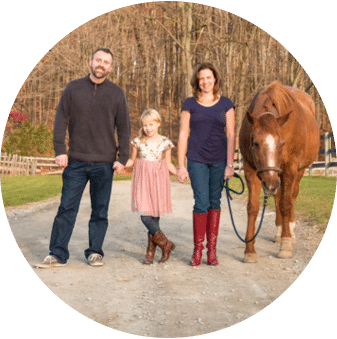
    Erika Mathews and her partner have chosen a smaller and more sustainable family, where they can invest more time, love, and energy in their daughter, as well as in their community. Erika and her family are leading by example, and building a better future for all.

    The Phelps-Mathews Family
    The Phelps-Mathews Family

    The facts are clear:

    Having Kids has come under fire recently for promoting better family planning. The debate over family planning models pits traditional forms of family planning, where some benefit from a growing population, massive inequality and dysfunctional democracies, against everyday families who take a child-first and values-centered approach to having kids. The two models would create vastly different futures, based on whether we use kids to fuel our economy or invest in them.

    “Family planning, more than anything else, determines the future,” said Anne Green, Executive Director of Having Kids. “Parents often say they will do anything to protect their kids. If that’s the case they should join us and speak out.”

    Interested in becoming a Sustainable Family and speaking out? Write us today at Info@HavingKids.org.

  • Effective Environmentalism? Make Sure Future Generations Are Better People Than We Have Been

    Effective Environmentalism? Make Sure Future Generations Are Better People Than We Have Been

    Today, on Earth Day 2018, you might hear a familiar expression: “Be the change you wish to see in the world.” It’s an amorphous and difficult thing to live up to. But if we temporalize our thinking and relate the expression to family planning, it can become deeply meaningful and actionable. Who do we want future generations to be, literally, in terms of their quantity and quality? There are plenty of studies that show the quantity of future generations is a key determinant when it comes to things like mitigating climate change. But of course the quality of future generations matters as well – will they care about and care for the environment, or consume it into degradation, as we and prior generations have done?

    While most environmental, child welfare, human rights and other progressive organizations are silent on the issue of family planning, a whole faction of industrialists and politicians is pushing for larger families as a means to create a glut of cheap labor and voracious consumers in the future. Yes, Elon Musk, we heard you. They know who they want future generations to be: People who will make them money.

    How do we confront that threat?

    Human rights are designed to protect the vulnerable from the powerful. Future generations are vulnerable to the sort of exploitation the faction of industrialists and politicians described above are intent upon. Having Kids is pushing back against them with something called child-first Fair Start family planning. It’s a human rights-based family planning model designed to ensure future generations a fair start in life, functional democracies (not simply growth economies) where their voices will be heard and matter, and a clean and safe environment in which they can thrive. Its core moves are  1) to shift public thinking about family planning as something we do in isolation from others to something that is cooperative, 2) to use the benchmark of fair starts in life as something around which to orient that cooperation, and 3) to recognize the simple fact that smaller families mean a healthier environment and the ability to invest more time and love in each child.

    Fair Start family planning is not designed to create future generations who will just make rich people richer.

    For Earth Day, make being the change you wish to see in the world mean even more. Take action here. 

  • Earth Day: Challenge Environmental Organizations to Address Family Planning

    Earth Day: Challenge Environmental Organizations to Address Family Planning

    Meet Tricia and Mickey Bhotiwihok.

    A man, woman, and two young girls stand in front of a tall grandfather clock with a red patterned wall as the background. The woman holds the youngest child, while the older girl stands in the center, smiling.Last year, on the heels of announcements that Prince William and Kate Middleton were having a third child, Los Angelinos Mickey and Tricia set a different example. Like Having Kids’ other Featured Families, Mickey and Tricia chose a smaller family, two children in their case. They understand that choosing a smaller family is the best way to protect their kids’ future and the environment at the same time. It’s a win-win. But only if we all work together.

    Tricia and Mickey are leading by example and steering the world towards a better future. We all benefit from what they’ve done.

    Here are the facts:

    For Earth Day, Having Kids is issuing this challenge:

    We are urging environmental and animal protection organizations to adopt a public position on family planning, simply one that furthers their mission, before Earth Day 2020.

    Want to take action? If you are a member of environmental and/or animal protection organizations politely encourage those organizations to meet the Having Kids Earth Day Challenge.

  • Earth Day: Speak Up And Act On Better Family Planning

    Earth Day: Speak Up And Act On Better Family Planning

    Earth Day is this Sunday. Time to start talking about better family planning for everyone.

    Nicholas Kristof, writing for the New York Times, recently examined where humans’ and animals’ interest seem to collide, but eventually flow into alignment. But he missed the biggest confluence of all, the significant drop in average fertility rates around the world. Smaller families have allowed more investment in and development of each child, a pronounced period economic growth, and perhaps our best chance to stave off the worst effects of climate change and the many related environmental catastrophes.

    Recent studies show that air pollution contributed to the deaths of six million people in 2016 alone. The number of deaths would have been reduced if world leaders had done a better job on family planning, had used modeling that reduced overall emissions and consumption, and at the same time had invested more in each person from the start, to make them more resilient. Inaction on family planning helped cause these deaths. When will that change? When will the United Nations Secretary General, for example, take the action we need?

    Smaller families that invest more in each child are the beginning of, and central to, any version of an environmental and animal protection ethic. Better family planning is a fair and win-win balance between what we need and animals need, between the human and nonhuman worlds. Better family planning helps humans and animals at the same time – more so than any of Kristof’s examples.

    For Earth Day, speak up and take action for better family planning now.

  • Climate Change Deniers Pushing Larger Families

    Climate Change Deniers Pushing Larger Families

    There’s just one problem. The entire critique can be summarized as follows: Long-term and short-term savings are not the same thing. Yes, that’s true – so what? How would that fact undercut policy prescriptions, which generally use both? Is this article advocating being shortsighted?

    At the end, the author reveals a bit more about why she’d want to critique those studies and the idea of promoting smaller families: Making the shift to smaller families would mean fewer workers in the future, would rob kids of the benefit of many siblings, invite immigration in the future to add to the labor force. What would promoting smaller families mean about how we value children? The author values economic growth driven by using future children as cheap labor over protecting the environment and restoring nature, values the aesthetic of large families (even though studies have debunked the claim that kids fare better with many siblings), does not value immigrants, and values the act of having kids, which is not the same as valuing children. To truly value children, we must ensure they are only born in situations that give them  the resources they need to have a safe and healthy future.

    By launching an attack on the science that shows smaller families are perhaps the best way to respond to climate change, the author declares her position. Yes, policy choices, in the end, come down to values. At Having Kids, we value ensuring that all children are born into a basic level of well being and are given a fair start; that all children can enjoy the natural world and live in a true democracy. Those values, together, support a child-first Fair Start family planning model. Learn more here.


  • Is Climate Change Stopping the Most Responsible People From Having Kids?

    Is Climate Change Stopping the Most Responsible People From Having Kids?

    Recently, a New York Times article featured Americans who are choosing not to have kids because they don’t want to expose them to the future dangers of climate change. In addition, some noted that the act of having kids itself has massive environmental consequences. Unfortunately, media sources that deny the existence of climate change and see reduced fertility rates as a threat to American economic growth and dominance quickly ganged up on them. They seem to prefer large families, even celebrating one couple who is expecting their fourteenth child.

    What’s wrong with this picture? Should climate change be a reason for the people most concerned about the future and concerned with others’ welfare, to stop having kids, while people who refuse to accept the science of climate change have huge families? Do we want a future filled with people who care the least about it? Don’t we want all parents to be thoughtful and caring?

    A few things that can’t be denied

    • Better family planning has done more to protect our environment than any other change in human history, both in terms of reducing emissions and creating a smaller, better prepared human population.
    • Despite the success of family planning, current trends suggest that by 2050 there will be 3x as many humans on Earth as there were in 1960.
    • Human activity often has a negative impact on the planet including ocean acidification, mass extinctions, and climate change that even our Department of Defense now admits.
    • Having children today should be a decision that guarantees all children a certain level of wellbeing at birth, includes equity when setting that level, and recognizes the importance of delaying first pregnancies to achieve better outcomes for children.

    What can be done?

    People are ready for better family planning and are ready to push back against irresponsible parenting. Climate change should lead us to better outcomes, not worse. Take action now.

  • How Do You Simultaneously Restore Nature, Protect Kids, and Build Real Equality and Democracy?

    How Do You Simultaneously Restore Nature, Protect Kids, and Build Real Equality and Democracy?

    It’s called child-first family planning, and it starts by recognizing that all children have the fundamental human right to fair start in life, with the same opportunities that wealthy kids are getting, the same opportunities Donald Trump’s kids are getting. What loving parent wouldn’t want that for their child?

    Kids have that right because systems of human rights and democracy begin with free and equal people coming together. That “coming together” happens – in the most important way – when we have children and bring them into society. Our family planning systems have to bring kids in as equals, on a level playing field, and each with the resources – high levels of things like education, health care, nutrition, love – to eventually make them truly free and emancipated people. Systems of human rights and democracy don’t begin to work until we ensure kids that right.

    How does a child’s right to a fair start in life also protect the environment and restore nature?

    Ensuring kids a fair start in life is a two-way street – parents have to work with their communities to create that start, before they have kids. If parents do that they will have fewer children (which is the most effective way to mitigate disastrous climate change), and will invest more in each child. That process in turn builds real democracy, or smaller communities of better-prepared people, living in a healthier and natural environment. Here is an example of one family moving towards child-centered family planning.

    There is a natural confluence between cooperative family planning, smaller families, and higher investment in each child. That in turns leads to freedom: The freedom to do what you want that comes from a fair start in life, the freedom of a smaller, truly democratic and autonomous community where your voice matters, and the freedom of nature.

    Having Kids is pushing for children’s right to a fair start in life, against our current family planning systems, which treat kids like widgets in an economic model. You can push for child-first family planning too, and restore nature, protect kids, and build real equality and democracy, all at the same time.