Category: Conservation & Environmental Justice

  • Urge Grist to Talk About Sustainable Family Planning

    Urge Grist to Talk About Sustainable Family Planning

    [et_pb_section fb_built=”1″ admin_label=”section” _builder_version=”3.22″][et_pb_row admin_label=”row” _builder_version=”3.25″ background_size=”initial” background_position=”top_left” background_repeat=”repeat”][et_pb_column type=”4_4″ _builder_version=”3.25″ custom_padding=”|||” custom_padding__hover=”|||”][et_pb_text admin_label=”Text” _builder_version=”4.7.7″ background_size=”initial” background_position=”top_left” background_repeat=”repeat” hover_enabled=”0″ sticky_enabled=”0″]

    It’s great that Grist, the environmentally minded media outlet, is recognizing that media isn’t doing their jobs when they spend a lot more time covering news of the royal baby than climate change. But is it time for Grist to aggressively report on better family planning policies as the most comprehensive and effective way to mitigate the variety of harms climate change is causing?  

    Environmentalists have long treated family planning as a taboo subject. It’s glaringly absent from the Green New Deal. But it’s time to break taboo. The businesses that are destroying our environment are breaking it, and urging parents to produce more babies to increase consumption, and to increase a glut of cheap labor and taxpayers for the future. 

    We know how to fix this.

    A better family planning model and policies – with a focus on smaller and more equitable families – are likely the most effective solution to most of the world’s crises today. Remodeling family planning is the most comprehensive and effective way to promote the UN’s Sustainable Development Goals, and in some cases proves twenty times more effective than other reforms. Simply stated, the current family planning model used by the United Nations is the fundamental source of the problem. It ensures unsustainable population growth in a way that degrades equality, democracy, and our environment.

    This archaic model predates our understanding of climate change, the impact of early childhood development, the way birth conditions and early childhood can exacerbate inequality, etc. Many better models have been proposed, including one by leading political theorist Sarah Conly, and Having Kids’ own model, the Fair Start approach (detailed here).

    Take action:

    Contact Grist CEO here and urge him to help Grist to break the taboo and aggressively report on better family planning policies. It’s the most comprehensive and effective way to mitigate the harms of climate change. 

    [/et_pb_text][/et_pb_column][/et_pb_row][/et_pb_section]

  • WORLD ENVIRONMENT DAY: NEW CAMPAIGN URGES TEACHERS TO TELL TEENS THE TRUTH ABOUT CLIMATE CHANGE

    WORLD ENVIRONMENT DAY: NEW CAMPAIGN URGES TEACHERS TO TELL TEENS THE TRUTH ABOUT CLIMATE CHANGE

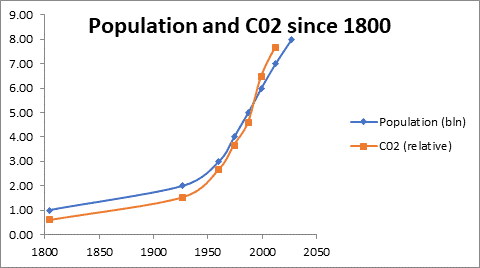
    On the heels of a study showing that the most effective solutions to climate change are not being discussed, and UN reports of disastrous mass extinctions, a growing coalition of environmental and child protection organizations is launching a daring new campaign.

    The Tell the Truth Campaign is urging the education community around the world to speak out, and to tell teen students as appropriate and depending on their age, that smaller families are the most effective way to mitigate the threats of climate change and many other environmental crises.

    Why are groups urging teachers to speak out?

    Here are the facts:

    Population and CO2

    The campaign will be sending a new letter each week to influential educator organizations around the world urging them to take action, providing them with all of the relevant information, and offering to publicize the most impressive efforts.

    “Who would oppose telling kids the truth about what protects their future,” said Erika Matthews, Executive Director of Having Kids. “It’s well past due to give teens the information they need to promote effective policy changes,” said Small Families Project Executive Director Peter Fiekowsky. “This may be the most important thing for the educational community to convey to younger generations.”


  • UN: Adopt Sustainable Families Policy for Earth Day

    UN: Adopt Sustainable Families Policy for Earth Day

    [et_pb_section fb_built=”1″ admin_label=”section” _builder_version=”4.16″ global_colors_info=”{}”][et_pb_row admin_label=”row” _builder_version=”4.16″ background_size=”initial” background_position=”top_left” background_repeat=”repeat” global_colors_info=”{}”][et_pb_column type=”4_4″ _builder_version=”4.16″ custom_padding=”|||” global_colors_info=”{}” custom_padding__hover=”|||”][et_pb_text admin_label=”Text” _builder_version=”4.16″ background_size=”initial” background_position=”top_left” background_repeat=”repeat” global_colors_info=”{}”]

    Having Kids is calling on United Nations Secretary-General Antonio Guterres to issue a new U.N. family planning statement, recommending a focus on delaying having kids and sustainable families, and calling for a new standard of equity and sustainability for all family planning policies. The group will hold an event in front of the U.N. on Monday.

    A better family planning model and policies – with a focus on more equitable families – are likely the most effective solution to most of the world’s crises today. Remodeling family planning is the most comprehensive and effective way to promote the UN’s Sustainable Development Goals, and in some cases proves twenty times more effective than other reforms.

    Several new developments underscore the need for truly fundamental change. Current and downstream attempts to deal with climate change are failing, as demonstrated by the United Nations’ own reports. The United States recently determined that climate change will shrink the U.S. economy and kill thousands.

    Simply stated, the current family planning model used by the United Nations is the fundamental source of the problem, ensuring unsustainable population growth in a way that degrades equality, democracy, and our environment. This archaic model was developed before we learned what we know today about climate change, the disproportionate impact of early childhood development on human well-being, the way birth conditions and early childhood can exacerbate inequality, etc. Many better models have been proposed, including one by leading political theorist Sarah Conly, and Having Kids’ own model, the Fair Start approach (detailed here). To begin the process Having Kids has asked public figures to take action and speak out, but the United Nations should lead.

    “This is an opportunity for the United Nations to do what it was founded to do, and protect the world from dire threats through the promotion of human rights,” said Erika Mathews, the Executive Director of Having Kids.

    [/et_pb_text][/et_pb_column][/et_pb_row][/et_pb_section]
  • What’s Progressive About Unsustainable Family Planning?

    What’s Progressive About Unsustainable Family Planning?

    In a one-sided piece that really should have been treated as an editorial, The Washington Post (WP) spills much ink lamenting falling birthrates in the United States. The article seems like an opinion-piece prelude to policies like Italy’s recent scheme to bribe parents into having more kids by giving them land in exchange. The U.S. is actually not that far behind, following Trump’s recent cash-for-babies tax credit increase.

    Pushing for larger families, without accounting for every child’s right to a fair start in life and the impact of growth on our environment is irresponsible. Smaller families mean more time, love and energy for each child, a safer and more sustainable environment, and more connected communities where each person’s voice can matter. That strengthens democracy. Promoting higher birthrates to fuel cheap future labor, voracious consumers, and compliant taxpayers is economic nationalism, the end of which we hope is coming. Bigger is not better, and if the WP truly values democracy, it will be more careful when reporting on its fundament, the trends in family planning that literally determine who we are and will be as a people.

    Tweet Marty Baron, Executive Editor of the WP, at @PostBaron and politely suggest fuller reporting on this vital issue.

  • Time for Guaranteed and Sustainable Child Income

    Time for Guaranteed and Sustainable Child Income

    Cory Booker is right. It’s time to target inequality, and baby bonds, as he proposes, are a great way to do it. But what if we could create more equity for kids and protect our environment – the environment our children will need in the future, at the same time? We can. 

    Today the national child-protection organization Having Kids called upon the District of Columbia to adopt a sustainable guaranteed income for children in the District, one pegged to better family planning. The idea is simple: The District can reach many of its goals at once by promoting smaller families so that communities and families can invest more in each child. The policy is centered around every child’s right to a fair start in life, and is designed to address the greatest threats facing the District and nation, including inequality and climate change.

    Can Washington D.C. make a difference by itself? It can for its residents. But it can also lead by example and set a trend – a line of dominoes – for the rest of the nation.

    Read the full letter here. 

    The policy urges the District to adopt a stable community model, where the financial resources formerly required to support growth could be directed to other beneficial investments. Rather than focusing on blunt and unsustainable economic growth, the Having Kids GMI proposal shrinks the wealth gap by specifically contemplating (1) household resources per capita, (2) level of access to public services such as health and education and (3) above all, the relationship between a child’s fair start in life and prospects for success.

    Several studies show that smaller families are the best way to confront climate change, as well as other and related environmental crises. Research also confirms the disproportionate impact of early childhood development on human wellbeing and inequality later in life.

    The current family planning model in use makes our future less secure, healthy and equitable than it should be. Having Kids Executive Director Anne Green said this: “We offer the child-first Fair Start family planning model as a sustainable and equitable alternative. The Fair Start model is cooperative rather than isolationist, is based upon binding sources of international law, and provides a clear human rights-based solution to our biggest problems and a path forward.”

    Tweet @MayorBowser and ask her to adopt sustainable income for kids that is tied to family planning.


  • Having Kids Announces Sustainable Families Campaign

    Having Kids Announces Sustainable Families Campaign

    Having Kids is urging families to come together in support of a new family planning model that puts children first and to speak out about their choices. The Sustainable Families campaign promotes smaller and more sustainable families, and a move towards cooperative family planning designed to give every child a fair start in life.

    Erika Mathews and her partner have chosen a smaller and more sustainable family, where they can invest more time, love, and energy in their daughter, as well as in their community. Erika and her family are leading by example, and building a better future for all.

    The Phelps-Mathews Family
    The Phelps-Mathews Family

    The facts are clear:

    Having Kids has come under fire recently for promoting better family planning. The debate over family planning models pits traditional forms of family planning, where some benefit from a growing population, massive inequality and dysfunctional democracies, against everyday families who take a child-first and values-centered approach to having kids. The two models would create vastly different futures, based on whether we use kids to fuel our economy or invest in them.

    “Family planning, more than anything else, determines the future,” said Anne Green, Executive Director of Having Kids. “Parents often say they will do anything to protect their kids. If that’s the case they should join us and speak out.”

    Interested in becoming a Sustainable Family and speaking out? Write us today at Info@HavingKids.org.

  • Effective Environmentalism? Make Sure Future Generations Are Better People Than We Have Been

    Effective Environmentalism? Make Sure Future Generations Are Better People Than We Have Been

    Today, on Earth Day 2018, you might hear a familiar expression: “Be the change you wish to see in the world.” It’s an amorphous and difficult thing to live up to. But if we temporalize our thinking and relate the expression to family planning, it can become deeply meaningful and actionable. Who do we want future generations to be, literally, in terms of their quantity and quality? There are plenty of studies that show the quantity of future generations is a key determinant when it comes to things like mitigating climate change. But of course the quality of future generations matters as well – will they care about and care for the environment, or consume it into degradation, as we and prior generations have done?

    While most environmental, child welfare, human rights and other progressive organizations are silent on the issue of family planning, a whole faction of industrialists and politicians is pushing for larger families as a means to create a glut of cheap labor and voracious consumers in the future. Yes, Elon Musk, we heard you. They know who they want future generations to be: People who will make them money.

    How do we confront that threat?

    Human rights are designed to protect the vulnerable from the powerful. Future generations are vulnerable to the sort of exploitation the faction of industrialists and politicians described above are intent upon. Having Kids is pushing back against them with something called child-first Fair Start family planning. It’s a human rights-based family planning model designed to ensure future generations a fair start in life, functional democracies (not simply growth economies) where their voices will be heard and matter, and a clean and safe environment in which they can thrive. Its core moves are  1) to shift public thinking about family planning as something we do in isolation from others to something that is cooperative, 2) to use the benchmark of fair starts in life as something around which to orient that cooperation, and 3) to recognize the simple fact that smaller families mean a healthier environment and the ability to invest more time and love in each child.

    Fair Start family planning is not designed to create future generations who will just make rich people richer.

    For Earth Day, make being the change you wish to see in the world mean even more. Take action here. 

  • Earth Day: Challenge Environmental Organizations to Address Family Planning

    Earth Day: Challenge Environmental Organizations to Address Family Planning

    Meet Tricia and Mickey Bhotiwihok.

    A man, woman, and two young girls stand in front of a tall grandfather clock with a red patterned wall as the background. The woman holds the youngest child, while the older girl stands in the center, smiling.Last year, on the heels of announcements that Prince William and Kate Middleton were having a third child, Los Angelinos Mickey and Tricia set a different example. Like Having Kids’ other Featured Families, Mickey and Tricia chose a smaller family, two children in their case. They understand that choosing a smaller family is the best way to protect their kids’ future and the environment at the same time. It’s a win-win. But only if we all work together.

    Tricia and Mickey are leading by example and steering the world towards a better future. We all benefit from what they’ve done.

    Here are the facts:

    For Earth Day, Having Kids is issuing this challenge:

    We are urging environmental and animal protection organizations to adopt a public position on family planning, simply one that furthers their mission, before Earth Day 2020.

    Want to take action? If you are a member of environmental and/or animal protection organizations politely encourage those organizations to meet the Having Kids Earth Day Challenge.

  • How Do You Simultaneously Restore Nature, Protect Kids, and Build Real Equality and Democracy?

    How Do You Simultaneously Restore Nature, Protect Kids, and Build Real Equality and Democracy?

    It’s called child-first family planning, and it starts by recognizing that all children have the fundamental human right to fair start in life, with the same opportunities that wealthy kids are getting, the same opportunities Donald Trump’s kids are getting. What loving parent wouldn’t want that for their child?

    Kids have that right because systems of human rights and democracy begin with free and equal people coming together. That “coming together” happens – in the most important way – when we have children and bring them into society. Our family planning systems have to bring kids in as equals, on a level playing field, and each with the resources – high levels of things like education, health care, nutrition, love – to eventually make them truly free and emancipated people. Systems of human rights and democracy don’t begin to work until we ensure kids that right.

    How does a child’s right to a fair start in life also protect the environment and restore nature?

    Ensuring kids a fair start in life is a two-way street – parents have to work with their communities to create that start, before they have kids. If parents do that they will have fewer children (which is the most effective way to mitigate disastrous climate change), and will invest more in each child. That process in turn builds real democracy, or smaller communities of better-prepared people, living in a healthier and natural environment. Here is an example of one family moving towards child-centered family planning.

    There is a natural confluence between cooperative family planning, smaller families, and higher investment in each child. That in turns leads to freedom: The freedom to do what you want that comes from a fair start in life, the freedom of a smaller, truly democratic and autonomous community where your voice matters, and the freedom of nature.

    Having Kids is pushing for children’s right to a fair start in life, against our current family planning systems, which treat kids like widgets in an economic model. You can push for child-first family planning too, and restore nature, protect kids, and build real equality and democracy, all at the same time.