Author: Fair Start Movement

  • What’s Progressive About Unsustainable Family Planning?

    What’s Progressive About Unsustainable Family Planning?

    In a one-sided piece that really should have been treated as an editorial, The Washington Post (WP) spills much ink lamenting falling birthrates in the United States. The article seems like an opinion-piece prelude to policies like Italy’s recent scheme to bribe parents into having more kids by giving them land in exchange. The U.S. is actually not that far behind, following Trump’s recent cash-for-babies tax credit increase.

    Pushing for larger families, without accounting for every child’s right to a fair start in life and the impact of growth on our environment is irresponsible. Smaller families mean more time, love and energy for each child, a safer and more sustainable environment, and more connected communities where each person’s voice can matter. That strengthens democracy. Promoting higher birthrates to fuel cheap future labor, voracious consumers, and compliant taxpayers is economic nationalism, the end of which we hope is coming. Bigger is not better, and if the WP truly values democracy, it will be more careful when reporting on its fundament, the trends in family planning that literally determine who we are and will be as a people.

    Tweet Marty Baron, Executive Editor of the WP, at @PostBaron and politely suggest fuller reporting on this vital issue.

  • Rubio Putting Profits Before Planet

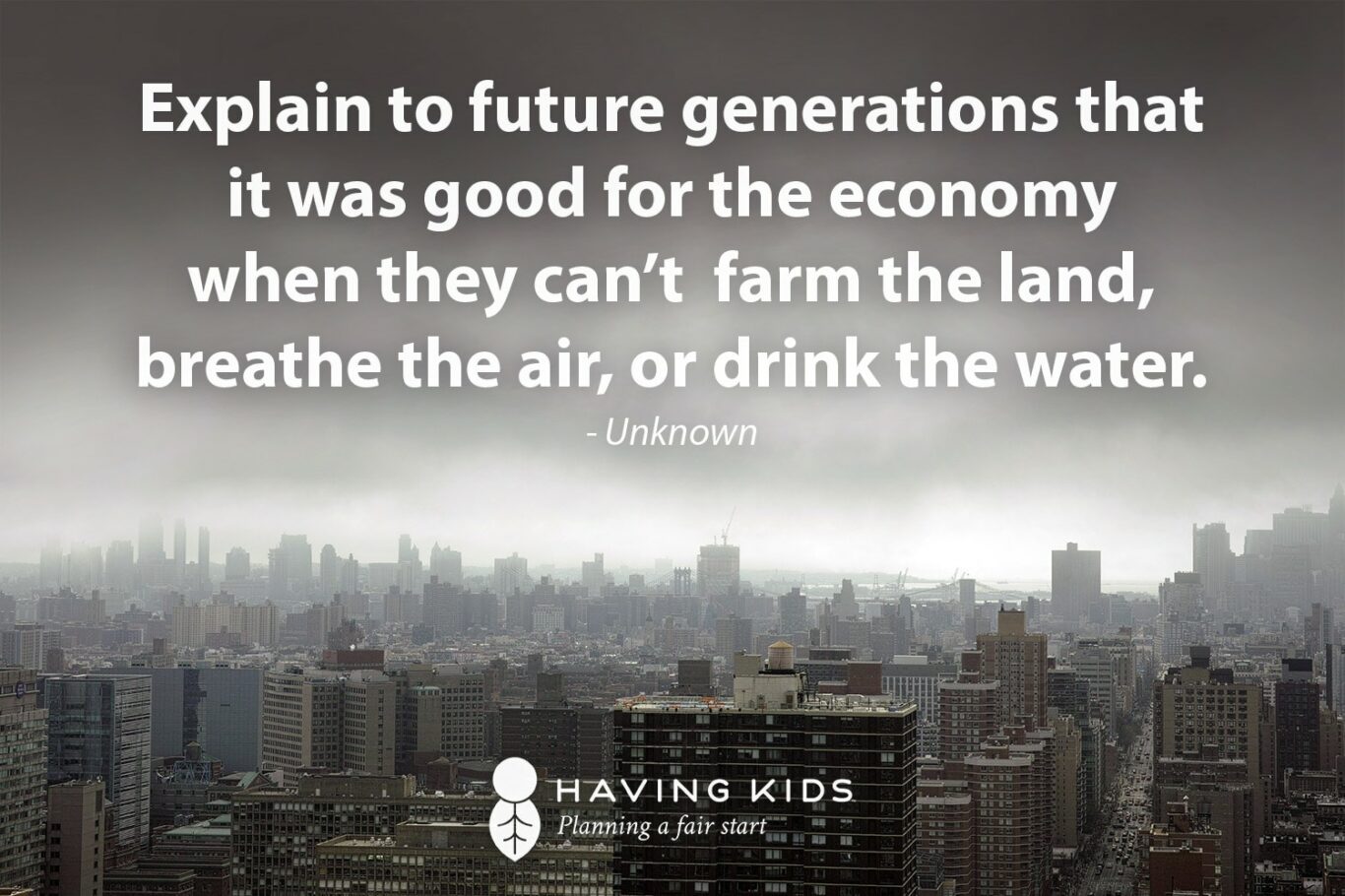
    Rubio Putting Profits Before Planet

    Yesterday, Marco Rubio explained that when it comes to climate change, his priority is the economy over the wellbeing of the planet. As a Republican with Presidential ambitions, he walks a fine line between climate skeptic and Senator of a state already seeing the firsthand effects of climate change, including sea level rise and stronger hurricanes. It has not even been one week since Hurricane Michael wiped out some towns in Florida. Climate change is not his priority? Michael will undoubtedly be the twelfth billion dollar storm this year, with an expected cost of $30 billion.

    As a father, he is harming his and other children’s future to benefit a small percentage of uber-wealthy people. Rubio has explicitly pushed for larger families and unsustainable families and the cheap labor and hungry consumers they create: That is THE WORST way to exacerbate climate change and other crises in the long term, the timeframe that really matters.

    He and his colleagues push for the deregulation of corporate activities while playing semantics with stances on whether climate change is man-made. But it’s those regulations that protect our planet for all of us, for all of us, not to mention the future that Rubio’s own children with inherit. There will be no way to have a successful economy with the outrageous costs that climate destruction is causing if we continue on this path. We must put greed and consumerism aside to enable a habitable, stable future for the next generation. 

    Last week’s alarming climate change report made it clear that drastic changes in human behavior will need to occur if we are to mitigate the climate ecocide that is already underway. Are we willing to do that? If current trends continue, we are on course for endless drought, flooding, wildfires, heat waves, weather-related disasters, and food and water scarcity. Coastal towns where vast portions of the population reside, including Rubio’s own South Florida which is already flooding, will be swallowed by the seas.  

    Is it fair to subject our kids to that chaotic, unsafe future? By our own nature, we are reluctant to accept uncomfortable facts and problems that are not immediate. But it’s time to face them because our kids have a right to a fair start.

    rubio climate change

    It’s not an either-or proposition. We can have a thriving economy and a sustainable planet. Yes, we need leaders to enforce environmental measures, participate in the Paris Climate Agreement, and call for corporate responsibility. But we all have a responsibility at the individual level as well to reduce our impact.

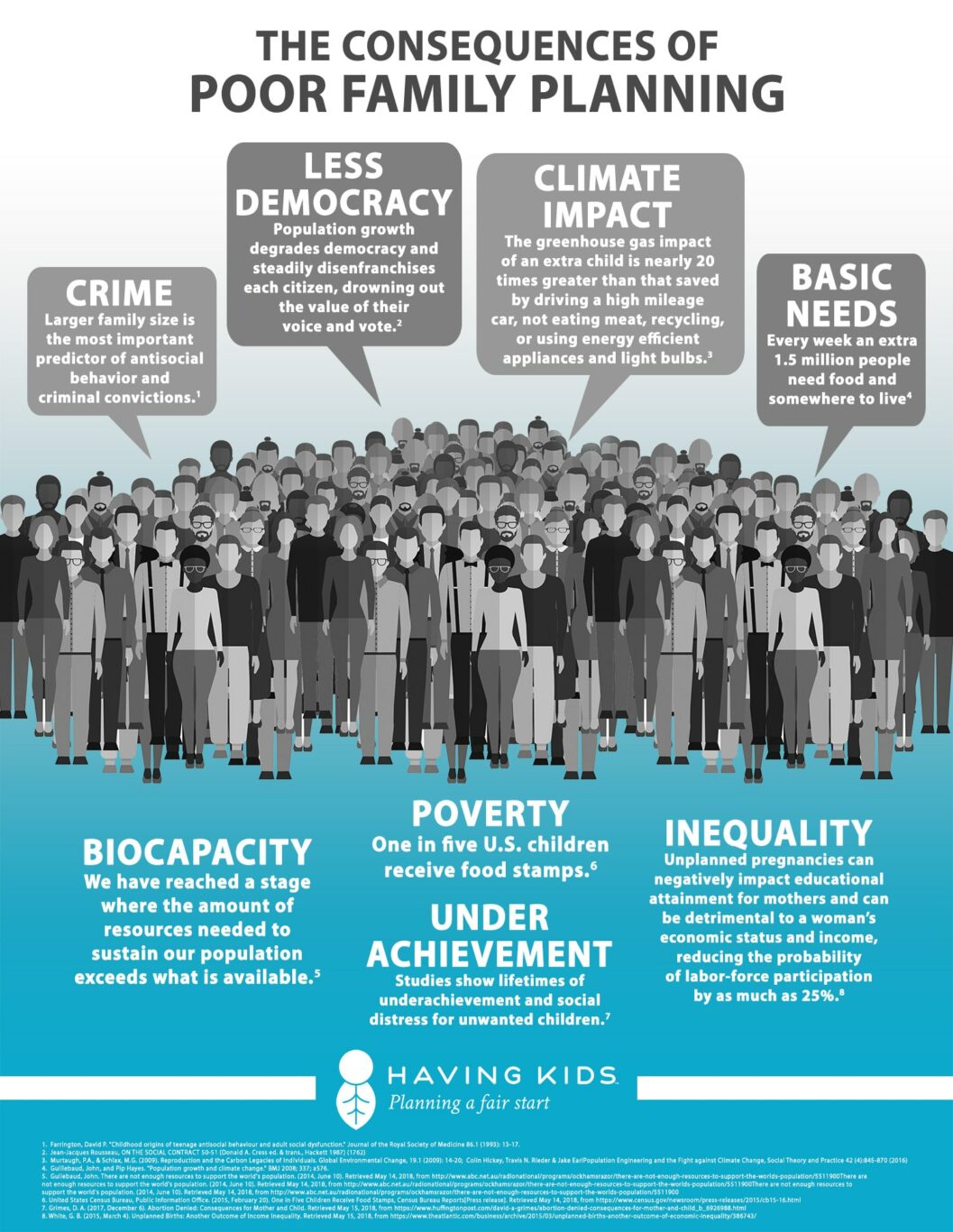
    The best way we can do that is by choosing to have smaller families – at usually that means one or two kids. Having one less child saves more harmful emissions than changes in transportation, energy, or diet.

    human impact on climate

    Why not set up our kids to thrive in safe, healthy, and sustainable communities where everyone has a fair start in life? Isn’t that the future we want?

    Senator Rubio is morally obligated to take the most effective response to climate change, which has been recognized as a national security threat. That response is better family planning.

    We are calling on him to reverse his stance and to join us in asking the U.N. to recommend smaller families across the globe.

    TAKE ACTION:

    1. Tweet Marco Rubio with a ready-made tweet.
    2. Add your name to our message to the U.N.


  • Congress Overlooking the Obvious Solution to Opioid Births

    Congress Overlooking the Obvious Solution to Opioid Births

    Last week, the House and Senate passed a compromise to send the Opioid Crisis Response Act of 2018 to the White House for signing. This coincides with recent headlines that have renewed attention to the skyrocketing number of babies born addicted to opioids.

    Meanwhile, a staggering 90% of pregnancies among opioid-maintained women are unintended. So where are the safeguards to help these moms prevent unplanned pregnancies in the first place?

    TAKE ACTION: Add your name here.

    It should be noted that prosecution and incarceration have no proven benefits to maternal or infant health. We need a public health response. However, efforts have been centered on treatment and recovery. And of that, only 10 percent of Americans with a drug use disorder get specialty treatment.

    A Failure By Health and Human Services

    The Department of Health and Human Services is already working with selected states through the Substance-Exposed Infant Initiative. However, there is no mention of family planning or contraception in its report. While treatment is important, all of these efforts are focused on addressing the problem after the fact. We need to a proactive solution.

    LARC4CO is serving as a model for success for long-acting reversible contraceptive public programs in Colorado. As a member of the coalition, Having Kids is working to replicate that success in more states. But we must ask, why is this model not the federal standard?

    Only about 6% of women with an opioid use disorder report using Long-Acting Reversible Contraceptives (LARC), such as an IUD or implant. Because of this massive hole in family planning, children undergo physical trauma at birth and the lifelong emotional and health consequences that result. And the crisis is not limited to affecting children in infancy.

    Opioid Crisis Effects On Children
    • Babies born addicted to opioids endure withdrawal symptoms, which can last for months.
    • The instability that comes with a parent battling addiction also has harmful effects on children.
    • According to one study, “Children of opioid- and (alcohol-dependent parents) have significantly higher rates of psychopathology, as well as more difficulties in academic, social, and family functioning compared to the children of parents without a substance abuse disorder.”
    • Children’s born to mothers who use opioid during pregnancy may face learning disabilities.
    • Abuse and neglect are causing an increase in the number of children entering the foster care system.

    According to the Gooden Center:

    “Mainly because of the opioid crisis… [there were] 30,000 more children in foster care in 2015 than there were in 2012 which represents an 8 percent increase. In 14 states, the number of foster kids rose by 25 percent between 2011 and 2015. The problem became so severe in states like Texas, Florida and Oregon that kids had to sleep in state buildings because there were no more foster homes available.”

    Why are we waiting for babies to become drug dependent before action is taken? Is this legislation’s blindness to the source of problem intentional because of potential difficulty in getting conservatives to support a package which includes family planning measures? I truly hope not. The well-being of newborns should supersede political agendas.


    Helping Women With Opioid Dependency Through Family Planning

    We can help women and children by removing the hurdles to accessing long-acting and effective birth control. By doing so, we can improve lives and better help those struggling with addiction to overcome their dependency without the added burden of parenting before they are ready. The obvious solution to preventing infants from becoming additional victims in this crisis is through a conscious public effort for family planning.

    And what about cost concerns? While an IUD can cost about $1090, the cost of caring for an infant with neonatal abstinence syndrome (NAS) can be upwards of $60,000. Therefore, it makes fiscal sense for the public to support family planning.

    The failure by HHS and Congress to address this problem is forcing more infants to go through the agony of withdrawal every day. More children are being irreversibly affected. Swift, significant action is needed at the federal level to help communities afford women the ability to better prevent unplanned pregnancies.

    This crisis demands that we put children first with family planning that accounts for their needs. Anything less than immediate attention is an acceptance of more suffering of infants and additional trauma on families.

    Let’s invest in our communities by helping parents wait until they are ready and able to provide kids a fair start at life.

    The bill is on its way to the White House for signing. Please ask President Trump and HHS Secretary Alex Azar to use the bill signing as an opportunity to prioritize family planning to stop newborns from suffering. 

    TAKE ACTION: Add your name here.

  • Brett Kavanaugh: Let’s Take A Deeper Dive

    Brett Kavanaugh: Let’s Take A Deeper Dive

    For a lot of people, the connection between Brett Kavanaugh’s ascent to the Supreme Court and family planning is fairly simple: He is a threat to Roe v. Wade, and women’s right to terminate their pregnancies. Others will go further and consider that – given how tainted he is – anything the Court does with abortion will only embolden and further the women’s movement. Both of these arguments are missing something about the Kavanaugh debacle that matters more, for everyone.

    Our transfixing on this story is an example of how power over many is centralized in just a few people, and how they can influence our lives in many ways, both obvious and subtle. 

    Yes, Kavanaugh’s confirmation is an immediate threat to women. It is also a larger reminder of the way the patriarchy dominates all of us – a reminder worth hearing. Just look at Paul Ryan, who pushes women to have more kids in order to fuel the economy. Trump’s championing Kavanaugh is an obvious example of raw power over those who are vulnerable. But so are his family tax reforms, which are designed to encourage a patriarchal family planning model grounded on the values of economic growth and Handmaid’s Tale style national strength at a cost to child welfare, equality, and nature. What’s the difference? Progressives are outraged by Kavanaugh. Yet, they barely noticed Trump’s more subtle family planning moves, ones that will echo his values long into the future.

    While the world was transfixed on the spectacle of a few people in Washington D.C., the world around us continued to change because of the actions and inactions of those in power. The environment became increasingly polluted, and the planet’s average temperature continued to rise. Each minute of the day roughly 250 babies were born into the world (not enough for many special economic interests that wanted more consumers, future laborers, and taxpayers), many in conditions that would lead to their early and unpleasant deaths, or if they survive, to the further destabilization of their communities and regions. Children were born around the world to both the rich and the poor, and that process alone furthered the gap between the two – significantly. Families bore children in whom they would instill the hierarchical sexism we see in Washington D.C. – ensuring its continuity long into the future. 

    Why is it so hard to even think in these terms? The average human alive today is hardwired to think and problem solve in terms of simple and immediate stories, rather than more abstractly. That’s not a good thing. Family planning is the greatest determinant of the quality of life on earth, and the quantity and social quality (through our early childhood development and its knock-on effects) of the people that will inhabit it. While we stared at the sensation of the testimony (much the way Al Gore noted we distractedly gape at the puppetry of Trump), the world was busily and quickly unfolding around us – and not all in ways that are good.

    What’s the solution? We can break the temporal myopia and other cognitive dissonances by thinking of family planning policies in different ways than we do today. There are more matriarchal models that are based on an ethic of care, cooperation, and the restoration of nature. Rather than focus simply on what economic interests want, we can instead begin to focus on what future children need. First things should come first. That change will help us empower future generations, and begin to build real and decentralized democracies comprised of capable and thoughtful people engaged in true self-rule, new communities that are free from the handful of overly-influential people in Washington, D.C. and their centralization of power and control.

    The public figures in Washington D.C., or Hollywood, or in boardrooms or on sports teams across the country, are like the shadows on the wall in the Allegory of the Cave. Learning to ignore and disempower them, to take back their resources and influence in order to empower future generations as the self-rulers of the future, and be mindful of the true world around us and our potential role in it, is our way out of that cave. The Brett Kavanaugh debacle goes well beyond Roe. It is a reminder of how dangerously limited our species is, and how we need to refocus our attention on changing the way we plan families if we want a better future.

  • Open Letter: U.N. Leadership Needed on Family Planning

    Open Letter: U.N. Leadership Needed on Family Planning

    Having Kids is renewing its call for Secretary-General Antonio Guterres to issue a new U.N. family planning statement, recommending a focus on children’s well-being and their need for a sustainable future. While the current family planning model used by the U.N. and most major family planning organizations seeks to improve human welfare, it has overlooked the long-term human rights of children to have an equitable and sustainable world. 

    Read the letter here.

    Since our last letter, several new studies have confirmed the dire threat posed by climate change, including its impact on the increasing threat of pestilence and crop losses, the severity of hurricanes and other weather threats, and the degradation of all ecosystems on earth. Fair Start family planning is not only the most effective way to mitigate the dangers of climate change. It also addresses children’s welfare crises such as poverty, inequality, hunger, disease, and the threats of violence and terrorism.

    A better family planning model would advance all 17 of the U.N.’s Sustainable Development Goals. All nations have a responsibility to act. That’s why we are urging Secretary-General Antonio Guterres to issue a new U.N. family planning statement on this urgent need.

    Take action now. Add your name to the petition or send a message through this page.

  • Is It Trendy to Have A Big Family?

    Is It Trendy to Have A Big Family?

    Observers having been suggesting that large families are a new status symbol. Even Tina Fey pointed out the absurdity. One writer wonders if the Instagram influence is to blame for creating the aspirational image of the trendy big family.

    “The Instagram world is a showcase of perfect mums who look like they have their act together, with a perfectly tidy house, immaculate lippy and a brood of gleaming children who have clearly been superglued to their chair to eat – normal children don’t sit still for photos.”

    People are now reacting with praise to an op-ed by writer Mark Oppenheimer, who is having five kids.

    We couldn’t help but notice what’s lacking in these promotions of large families: a consideration for kids’ needs. They also ignore the impact large families have on the environment and the future world all children need to thrive.  

    Research has shown that small families are better for children. Each additional child diminishes the amount of individual attention and investment that a parent can provide for the other children. Moreover, large families are the worst way to exacerbate climate change and other environmental crises. They ensure a future filled with more people competing for fewer resources in a degraded environment. Why do that to kids?

    Thinking Beyond Ourselves

    In an amazingly egocentric claim, Oppenheimer writes:

    “…People should do what they want to do…And those of us who want five children should have them.”

    Really? It is ok then to disregard the harmful impact we have on others? Is it fair for us to impose ourselves on others in that way? Do we owe something to all children in planning our families? Wouldn’t that recognizing that duty result in a better future for our own children?  

    There is a better way. We encourage all parents to consider how they can engage in more conscientious family planning by adopting the Fair Start model to reduce their impact on our already degraded environment, and give all kids a better shot at a more equitable future.

    Smaller families working together to plan for and invest more in each child is, hands down, the most effective way to improve child welfare, reduce inequality, and restore our environment.

    Let’s end the isolationist thinking in the act of planning our families that disconnects us from others in the world. 

  • Inequality and Children: Why A Head Start for Some, Hurts All Kids

    Inequality and Children: Why A Head Start for Some, Hurts All Kids

    Bloomberg recently posted a story about a summer camp for the ultra-rich, that teaches them how to get richer.

    What?

    Why should a select few get to have their hands held to jump to the front of the line? Children born with a head start are handed opportunities, access, guidance, trust funds, and connections that allow them to easily generate wealth in adulthood. The doors are opened to them to simply walk through. Compare that with the rest of Americans who struggle to find affordable housing, healthcare and fair paying jobs, and are often burdened with student loan debt.

    But inheriting a massive head start in life from wealth and privilege is not simply unfair. It degrades democracy. Because as the rich getting richer at the expense of a shrinking middle class, powerful interests wield their power to influence policy and keep our economy working only for themselves.

    Furthermore, we know that the economic inequality created by such policies is closely tied to poverty and crime, and results in a number of negative health and development outcomes for children. As inequality increases, child welfare decreases. And that is the direction we are going. How is that progress? Our standard of living should improve over time, not worsen.

    So then, how can we create more fairness and take a serious approach in attacking inequality? The answer is not simply a redistribution of wealth from a system flawed at its foundation. It’s looking at our values as Americans, as humanitarians, and recognizing that children deserve to be born with a fair start. That means safe neighborhoods, healthcare, a quality, equitable education, and nutrition. It also means having parents that are able to give them the time and attention that they need to thrive and be successful.

    This can be accomplished with a cooperative family planning framework. Fair Start family planning brings us together to invest in all kids, to improve equity and create a better society.

    Who would argue against a level playing field?

    TAKE ACTION: Ask him to respond to Having Kids’ questions. Fairness for children starts with those questions. Add your name here.

  • It’s Time to Address Child Poverty in the U.S.

    It’s Time to Address Child Poverty in the U.S.

    Headlines tell us that the U.S. economy is strong and that the unemployment rate is low. But those positive indicators don’t reflect the reality for the 40 million Americans living in poverty. As politicians thirst to slash safety nets, many take the stance that people need to pull themselves up, and simply work hard.

    It’s not that simple, however. Wages are stagnant, inflation is rising, and hourly jobs are not guaranteeing hours to employees, which leaves many struggling to stay afloat week to week.

    But aren’t we losing sight of who is most vulnerable? When we talk about welfare programs and SNAP food assistance benefits, there’s often an undertone of judgement focused on the adults. What if we brought the focus back to kids, and the staggering fact that nearly half of U.S. children live near the poverty line, according to a study in 2014?

    Addressing this epidemic requires solutions from many angles. But one of the most critical answers is ignored by our leaders and most of the child welfare community. And that is family planning. Never mind the expenses for basic needs. The cost of childcare is a significant barrier to employment. When parents can’t find affordable child care, they stay home.

    If we’re serious about addressing increasing inequality, child welfare and working to reduce the number of people relying on social programs, we must improve family planning. It is essential to tackling systemic low income.

    Last week we asked Secretary of Health and Human Services, Alex Azar to respond to a few questions regarding child welfare. Better family planning starts with those five questions. Let’s refocus towards the needs of children from the start, rather than the failing downstream approaches currently in place.

    Take action: Add your name here.

  • Tough Questions for HHS. Demand Answers.

    Tough Questions for HHS. Demand Answers.

    As children return to school, many will be participating in the federal National School Lunch Program. The NSLP provides free or reduced price meals and serves 20 million lunches and 11.6 million breakfasts daily. The start of a new school year is good news for the 30 million kids who will have a guaranteed meal – sometimes their only meal. Those statistics are jarring. What can we do to prevent kids from facing hunger in the first place?

    The stated mission of the U.S. Department of Health and Human Services is to “enhance and protect the health and well-being of all Americans”. It got us thinking. And we have a few questions for HHS Secretary Alex Azar.

    1. How does the HHS current family planning modeling actually assure at least a minimum level of well-being for each child born in the United States?

    2. How does that level of well-being reflect every child’s right to a fair start in life, with equal opportunities in life for wealthy kids and poor kids?

    3. How does the HHS current family planning modeling account for the impacts of growth on the natural environment and communities, including exacerbation of climate change and urban gridlock?

    4. How does the HHS current family planning modeling account for the demands that growth places on social service systems like education, nutrition, and healthcare?

    5. How does the HHS current family planning model account for the impact of growth on the democratic processes of the United States, and the ability for all citizens to have a meaningful and equal voice in those processes?

    Want answers as much we do? Add your name here.