
Category: Family Planning & Child Rights

  • Promoting Smaller Families

    Promoting Smaller Families

    [et_pb_section fb_built=”1″ admin_label=”section” _builder_version=”4.16″ global_colors_info=”{}”][et_pb_row admin_label=”row” _builder_version=”4.16″ background_size=”initial” background_position=”top_left” background_repeat=”repeat” global_colors_info=”{}”][et_pb_column type=”4_4″ _builder_version=”4.16″ custom_padding=”|||” global_colors_info=”{}” custom_padding__hover=”|||”][et_pb_text admin_label=”Post Text” _builder_version=”4.16″ background_size=”initial” background_position=”top_left” background_repeat=”repeat” use_border_color=”off” border_color=”#ffffff” border_style=”solid” global_colors_info=”{}”]

    Planning smaller families is the most effective way to reduce climate-changing emissions and to slow the degradation of the environment in which you, your children, and other families’ children will live.

    According to a story on NPR’s All Things Considered,

    [S]lowing population growth could eliminate one-fifth to one-quarter of all the carbon emissions that need to be cut by midcentury to avoid that potentially catastrophic tipping point.

    …

    Oregon State University researchers have calculated the savings from all kinds of conservation measures: driving a hybrid, driving less, recycling, using energy-efficient appliances, windows and light bulbs. For an American, the total metric tons of carbon dioxide saved by all of those measures over an entire lifetime of 80 years: 488. By contrast, the metric tons saved when a person chooses to have one fewer child: 9,441.

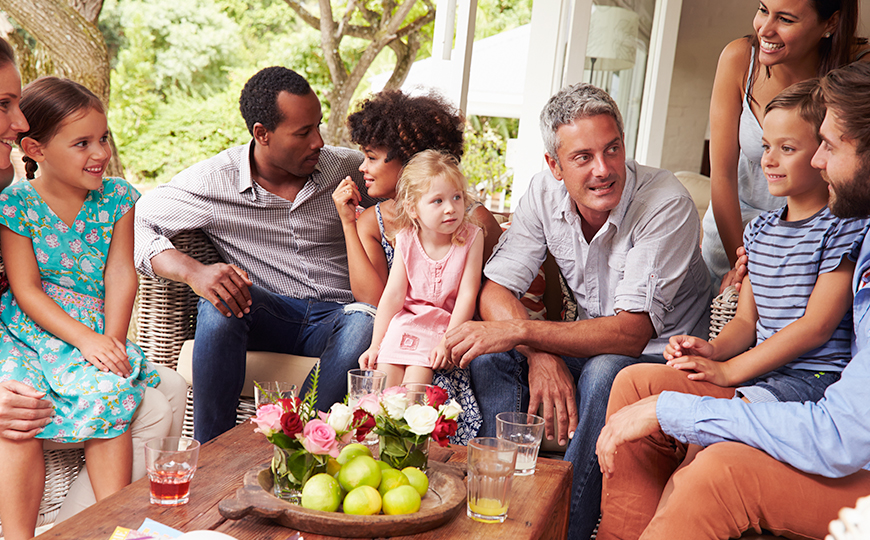
    Smaller families also result in parents who have more time and energy to invest in the children they already have. And everyone will benefit from the less crowded communities smaller families will create, communities where each one of our voices has more of a chance to be heard.

    But it’s not enough for thoughtful and caring people to make this choice. The worst possible outcome would be for parents who care about the future to have smaller families, while those who don’t care do the opposite. Parents who lack empathy for future generations will instill in their own kids that same disregard for the larger community, endangering all of us. That’s why it’s time to have a public conversation about family planning, family models, and what’s best for everyone. It’s right to do so because the decision affects every one of us—and every one of our kids.

    Don’t be afraid to speak out in support of smaller families. You can start by telling your friends you’ve adopted the Having Kids model. The children who will grown and thrive in a clean future environment will thank you for breaking the silence.

    [/et_pb_text][et_pb_cta button_url=”https://fairstartmovement.org/adopt-the-model/” button_text=”Adopt the Model” admin_label=”Action Button” _builder_version=”4.16″ use_background_color=”off” background_size=”initial” background_position=”top_left” background_repeat=”repeat” custom_button=”on” button_bg_color=”#ea593c” button_border_color=”#ffac9b” button_font=”|||on|” button_icon=”5||divi||400″ text_orientation=”left” use_border_color=”off” border_color=”#ffffff” border_style=”solid” button_letter_spacing_hover=”0″ button_bg_color_hover=”rgba(234,89,60,0.8)” saved_tabs=”all” global_colors_info=”{}” button_text_size__hover_enabled=”off” button_one_text_size__hover_enabled=”off” button_two_text_size__hover_enabled=”off” button_text_color__hover_enabled=”off” button_one_text_color__hover_enabled=”off” button_two_text_color__hover_enabled=”off” button_border_width__hover_enabled=”off” button_one_border_width__hover_enabled=”off” button_two_border_width__hover_enabled=”off” button_border_color__hover_enabled=”off” button_one_border_color__hover_enabled=”off” button_two_border_color__hover_enabled=”off” button_border_radius__hover_enabled=”off” button_one_border_radius__hover_enabled=”off” button_two_border_radius__hover_enabled=”off” button_letter_spacing__hover_enabled=”on” button_letter_spacing__hover=”0″ button_one_letter_spacing__hover_enabled=”off” button_two_letter_spacing__hover_enabled=”off” button_bg_color__hover_enabled=”on” button_bg_color__hover=”rgba(234,89,60,0.8)” button_one_bg_color__hover_enabled=”off” button_two_bg_color__hover_enabled=”off”] [/et_pb_cta][/et_pb_column][/et_pb_row][/et_pb_section]

  • Four Nonpartisan Reasons Reinstating the Global Gag Rule Is a Dangerous Move

    Four Nonpartisan Reasons Reinstating the Global Gag Rule Is a Dangerous Move

    [et_pb_section admin_label=”section”][et_pb_row admin_label=”row”][et_pb_column type=”4_4″][et_pb_text admin_label=”Post Text” background_layout=”light” text_orientation=”left” use_border_color=”off” border_color=”#ffffff” border_style=”solid”]

    Last week, the Trump administration reinstated Ronald Reagan’s Global Gag Rule policy, which prohibits the granting of U.S. foreign aid to health service providers abroad who advise abortion as a family-planning option (not just those who provide the service itself). This move comes on top of an existing U.S. law which prohibits the use of American taxpayer dollars for abortion services anywhere in the world.Here are four rarely stated and nonpartisan reasons why reinstating the Rule is a dangerous move.

    • It will hurt children. The Rule will create a situation where vulnerable women who do not wish to have a child might be forced to do so, even if they know they will not be able to feed, clothe, and otherwise care for that child. And that will mean children living—and dying—in conditions none of the Rule’s proponents would allow their own children to live in. A good life requires more than simply being born; it requires the parents to have actual resources. Being pro-birth is not the same thing as being truly pro-life or being prepared to give kids the resources we ourselves would want and that they legally and morally deserve. Will those behind the Rule pay for the care of the severely disabled children affected by the Zika virus who will be born as a result of the policy? If not, why shouldn’t they?
    • It will widen the global gap between rich and poor, and it will underscore the poor’s demands to take resources from the rich so that their kids get a fair start in life. Will the children affected by the Rule get a fair start in life, relative to the born-rich children of Mr. Trump and the other wealthy pro-birthers pushing this policy change? Probably not. Given that any human-rights-based and democratic system requires that all people enter the system as free and equal persons, the Rule degrades the system and heightens the likelihood of justified class conflict.
    • It exacerbates the degradation of our atmosphere. While those living in many part of the word affected by the Rule probably have a negligible impact on climate change relative to those living in the U.S., the fact is that any rule interfering with a woman terminating her pregnancy blocks the most effective individual move a person can make—choosing a smaller family—to protect the environment. Given that the U.S. Department of Defense recognizes climate change as a threat to our national security, the Rule poses a threat to us and future generations.
    • It interferes with building democracies around the world. U.S. efforts to help build democracies around the world operate on the backs of international development programs that work by promoting smaller families with higher investments in each child. The Rule moves in the opposite direction, ensuring crowding, inequality, lower rates of education, and other factors that create a human environment incompatible with the development of true democracy.

    In short, if you care about kids, equality, the environment, or democracy, you will have reasons to oppose and work against the Global Gag Rule. Having Kids will stand with you as you do.

    [/et_pb_text][et_pb_cta admin_label=”Action Button” button_url=”https://fairstartmovement.org/contact-us/” url_new_window=”off” button_text=”Get In Touch With Us” use_background_color=”off” background_color=”#18aacc” background_layout=”dark” text_orientation=”left” use_border_color=”off” border_color=”#ffffff” border_style=”solid” custom_button=”on” button_letter_spacing=”0″ button_use_icon=”on” button_icon_placement=”right” button_on_hover=”on” button_letter_spacing_hover=”0″ saved_tabs=”all” button_bg_color=”#ea593c” button_border_color=”#ffac9b” button_font=”|||on|” button_icon=”%%20%%” button_bg_color_hover=”rgba(234,89,60,0.8)”] [/et_pb_cta][/et_pb_column][/et_pb_row][/et_pb_section]

  • Child Care Starts with Family Planning

    Child Care Starts with Family Planning

    [et_pb_section admin_label=”section”][et_pb_row admin_label=”row”][et_pb_column type=”4_4″][et_pb_text admin_label=”Post Text” background_layout=”light” text_orientation=”left” use_border_color=”off” border_color=”#ffffff” border_style=”solid”]

    The Seattle Times recently joined many progressives calling for bipartisan support for increased child care subsidies. But the proposed policy of subsidies—which would ensure that no more than 10 percent of a family’s income is spent on child care—raises questions.

    First, shouldn’t any policy that provides resources be linked to and synergize with whatever is creating the demand for those resources? In this case, child care subsidies should be linked to family planning policies that ensure maximum and equitable investment in each child.

    Second, while the article cites increased national GDP as the ultimate reason for child-care subsidies, isn’t every child’s right to quality care the real reason we need such a policy? The article’s authors have said that “[a]s moms, we’re not willing to leave $210 billion on the table. Our children’s futures literally depend on it.” Perhaps children’s futures won’t depend on GDP, but rather on our collective decision-making about how they enter the world and develop within it to become the people who will define our shared future.

    [/et_pb_text][et_pb_cta admin_label=”Action Button” button_url=”https://fairstartmovement.org/mission-values-and-vision/” url_new_window=”off” button_text=”Learn More” use_background_color=”off” background_color=”#18aacc” background_layout=”dark” text_orientation=”left” use_border_color=”off” border_color=”#ffffff” border_style=”solid” custom_button=”on” button_letter_spacing=”0″ button_use_icon=”on” button_icon_placement=”right” button_on_hover=”on” button_letter_spacing_hover=”0″ saved_tabs=”all” button_bg_color=”#ea593c” button_border_color=”#ffac9b” button_font=”|||on|” button_icon=”%%20%%” button_bg_color_hover=”rgba(234,89,60,0.8)”] [/et_pb_cta][/et_pb_column][/et_pb_row][/et_pb_section]

  • Family Models, and Having Kids, in the New York Times

    Family Models, and Having Kids, in the New York Times

    [et_pb_section admin_label=”section”][et_pb_row admin_label=”row”][et_pb_column type=”4_4″][et_pb_text admin_label=”Post Text” background_layout=”light” text_orientation=”left” use_border_color=”off” border_color=”#ffffff” border_style=”solid”]

    Yesterday the New York Times published a letter to the editor from Having Kids. The letter called for starting a public dialogue about non-coercive but effective family-planning policies that protect all of the interests at stake, including children, parents, and their communities. A few days earlier, the Times published an article titled “Finding Family, Right Next Door” that raised the issue of what we mean by the word “family.” The piece tells the story of two mothers helping to raise one another’s children, living out the common expression that it takes a village to raise a child.

    Geography brought us together when we were both young mothers. We spent days, weeks, months, years eating meals together, celebrating birthdays, helping raise each other’s children. We made enough chicken nuggets and pasta for all of the kids, and delicious meatballs and jerk chicken for us. We swept up leaves and drank wine, and borrowed Benadryl and ketchup. We took vacations together and grocery shopped for each other and put Band-Aids on whichever little daredevil had fallen off his or her skateboard. We welcomed the other’s kids if one of us had to work, or had to take care of an aging parent, and during those times the kids never felt like guests, they felt like they were home. Being there, actually being there in physical proximity to each other meant something, something significant.

    . . .

    As young mothers, each with two kids, we both knew that our traditional support networks were vital, if not indispensable — spouses, helpful grandparents, lifelong girlfriends. And these mattered, of course. But husbands weren’t always available, grandparents became sick or lived too far away, and lifelong girlfriends, well, they had their own lives with their own families. So luckily, we found our lifelines in our next-door family.

    How does this story—which really tells the story of breaking down the archaic vision and norm of families isolated in their private homes holding fast against the world—relate to the Having Kids model? The model takes it one step back from families raising their children together to families planning their children together, cooperating to ensure their children enter the world in the best conditions possible.

    If it takes it takes a village to raise a child, it will take a village to plan for one.

    [/et_pb_text][et_pb_cta admin_label=”Action Button” button_url=”https://fairstartmovement.org/mission-values-and-vision/” url_new_window=”off” button_text=”Learn About Having Kids” use_background_color=”off” background_color=”#18aacc” background_layout=”dark” text_orientation=”left” use_border_color=”off” border_color=”#ffffff” border_style=”solid” custom_button=”on” button_letter_spacing=”0″ button_use_icon=”on” button_icon_placement=”right” button_on_hover=”on” button_letter_spacing_hover=”0″ saved_tabs=”all” button_bg_color=”#ea593c” button_border_color=”#ffac9b” button_font=”|||on|” button_icon=”%%20%%” button_bg_color_hover=”rgba(234,89,60,0.8)”] [/et_pb_cta][/et_pb_column][/et_pb_row][/et_pb_section]
  • Why We March: Having Kids at the Women’s March On Washington

    Why We March: Having Kids at the Women’s March On Washington

    [et_pb_section admin_label=”section”][et_pb_row admin_label=”row”][et_pb_column type=”4_4″][et_pb_text admin_label=”Post Text” background_layout=”light” text_orientation=”left” use_border_color=”off” border_color=”#ffffff” border_style=”solid”]

    On January 21st, people and organizations from across the country will participate in the Women’s March on Washington to stand for women’s rights and reproductive rights and to protect our families and communities. Having Kids staff members and supporters will participate in both the core march in Washington, D.C., and in satellite marches in New York City and Trenton, New Jersey.

    Having Kids is marching for the future of our families, our communities, our children, and our planet. We believe that we all need to be intentional about the future that we want to create for future generations, and we need to make sure they have the resources they need and a healthy environment to have a better life than we did. However, this needs to be true for every child. We cannot be satisfied with the fact that most children born into this world will not have a high quality of life or even have their basic needs met. We need to create a community that cares about one another and sincerely wants to make life better for all.

    We also recognize that if we give people the tools to have smaller families—such as sex education, birth control, and access to reproductive health services—then they can ensure that more resources are available for each of their children to create this future. In fact, they might have more resources leftover to help other families that might be struggling.

    Having Kids believes that we need to look at things more holistically, and that we need to make sure that we have the ability to provide a healthy planet, safe communities, and the things children need to have a high quality of life. Next Saturday, we will march for these values and to protect the programs that help us move toward that future. Will you march with us?

    [/et_pb_text][et_pb_cta admin_label=”Action Button” button_url=”https://fairstartmovement.org/model/” url_new_window=”off” button_text=”Learn More” use_background_color=”off” background_color=”#18aacc” background_layout=”dark” text_orientation=”left” use_border_color=”off” border_color=”#ffffff” border_style=”solid” custom_button=”on” button_letter_spacing=”0″ button_use_icon=”on” button_icon_placement=”right” button_on_hover=”on” button_letter_spacing_hover=”0″ saved_tabs=”all” button_bg_color=”#ea593c” button_border_color=”#ffac9b” button_font=”|||on|” button_icon=”%%20%%” button_bg_color_hover=”rgba(234,89,60,0.8)”] [/et_pb_cta][/et_pb_column][/et_pb_row][/et_pb_section][et_pb_section fullwidth=”on” specialty=”off” admin_label=”Section”][/et_pb_section]

  • Let’s Have Meaningful Conversations, Not Point Fingers

    Let’s Have Meaningful Conversations, Not Point Fingers

    [et_pb_section admin_label=”section”][et_pb_row admin_label=”row”][et_pb_column type=”4_4″][et_pb_text admin_label=”Post Text” background_layout=”light” text_orientation=”left” use_border_color=”off” border_color=”#ffffff” border_style=”solid”]

    At Having Kids, we’re concerned about the quality of life each child will have on this planet. We want them to have access to education, food, a safe and caring community, and a livable planet. We promote the idea of having smaller families, supported by the community and parents, so that current and future generations can live a better life. But having meaningful conversations about family size can be challenging, and we need to find a respectful way to do it.

    For example, a village in India recently intervened to stop a family with seventeen children from having any more, because of concerns about the wellbeing of the children. In the United Kingdom, a son publicly criticized his mother for having eight children, in part because he and his siblings were forced to parent the younger siblings. And in the United States, there has been a backlash against the Duggar family and their decision to have 19 children. But this type of criticism is divisive; it does not move us forward together.

    Is there a better way to have this discussion? Can we move beyond simply criticizing large biological families? One alternative is to instead find common ground with people who want to create larger families, and to explore ways for everyone to agree on best, but alternative, outcomes. The Duggars, for example, recently adopted their first child, finding a way to help children and protect the world those children will live in at the same time. Many people find ways to parent by helping others raise their children. Can communities do more to share the responsibility for caring for the children that live in them, like communal day care and mentoring programs? Parents certainly need the help, and this is one simple way for those who want a large family to parent children in need.

    Whatever common ground we seek, the key is starting a positive conversation about what everyone wants and needs, both now and in the future, and how to get there. Having Kids wants to start those conversations.

    [/et_pb_text][et_pb_cta admin_label=”Action Button” button_url=”https://fairstartmovement.org/whatwedo/” url_new_window=”off” button_text=”Learn More” use_background_color=”off” background_color=”#18aacc” background_layout=”dark” text_orientation=”left” use_border_color=”off” border_color=”#ffffff” border_style=”solid” custom_button=”on” button_letter_spacing=”0″ button_use_icon=”on” button_icon_placement=”right” button_on_hover=”on” button_letter_spacing_hover=”0″ saved_tabs=”all” button_bg_color=”#ea593c” button_border_color=”#ffac9b” button_font=”|||on|” button_icon=”%%20%%” button_bg_color_hover=”rgba(234,89,60,0.8)”] [/et_pb_cta][/et_pb_column][/et_pb_row][/et_pb_section]

  • Isolation Parenting, its Costs, and an Alternative

    Isolation Parenting, its Costs, and an Alternative

    [et_pb_section admin_label=”section”][et_pb_row admin_label=”row”][et_pb_column type=”4_4″][et_pb_text admin_label=”Post Text” background_layout=”light” text_orientation=”left” use_border_color=”off” border_color=”#ffffff” border_style=”solid”]

    If you listen to conversations the people around you are having about choosing to have children, you might notice strangely conflicting advice. You’ll constantly hear that having kids is the most important decision a person can make in life, with lots of people lining up to give advice about how to decide. But at the same time—and from the same people—you’ll also hear that the decision is personal, and that each person alone will know the right time to have kids, the number of kids to have, and the reasons for having those kids.

    How can both be true? How would anyone know that the decision to have children is an important one, for someone else, if the decision were truly personal or private to each person? The truth is that the decision to have kids is more interpersonal than personal, and that it involves factors we can all collectively see and consider: the time and other resources required from us, the impact the world around us will have on our children, the impact those children will have on the world, and more. In other words, when a couple chooses to save money before they have a child so they can pay for his or her basic needs, they are making that decision not because it is right for them, but because it is right, plain and simple.

    Yet we continue to hear incomprehensible statements like this: “It’s the single biggest life decision a person will make.” . . . “But ultimately, it’s a leap of faith.”

    So why do we talk about the decision to have kids as subjective and personal? The little-known fact is that there is a narrative around parenting as personal and subjective (something we at Having Kids call the “isolation model”), which has become almost universal. The isolation model was intentionally created and propagated between the middle and end of the twentieth century by many governments around the world who, working through the United Nations, were trying to improve family planning. However, the process involved several critical mistakes. These mistakes resulted in the peculiar claim—still promoted by the United Nations and almost all of the major foundations and nonprofits engaged in providing family planning services—that family planning and parenting decisions are only subjective and personal.

    There are several costs of this narrative and of the isolation model. Here are a few:

    • Demands for family planning services (like access to contraception and abortions) become easily dismissed because they are based on personal or private reasons, rather than the weighty and widely held (or objective) values like being able to adequately take care of a child or concern about further degrading our polluted environment.
    • Couples around the world are told it’s their personal choice to have children, but in patriarchal parts of the world where husbands make household decisions, women are frequently turned into into involuntary mothers for most of their lives.
    • Parents are dissuaded from working together to ensure that the resources children need are actually there for them, as the subjective isolation model separates families into spheres of personal decision-making and helps them ignore objective values.
    • Democracies, which were premised on citizens entering their political systems as free and equal people, fail as some children enter the world with massive resources while others enter with virtually nothing. They are neither free nor equal in a meaningful sense of the words.
    • Families in communities are seen as isolated, and there are no incentives to help one another and support children throughout the community.

    Many of the problems in the world today—from inequality to poverty to the degradation of the world environment—could have been mitigated had governments not created and left prospective parents adrift in the fog of confusion that is the isolation model. But it’s not too late to change models. One simple alternative to the isolation model is to broaden our perspective to include the needs—needs we can all see and understand—of parents, future children, and the community.

    Trying to decide whether to have a child? Consider what you would have wanted to have coming into the world. Consider whether you would want a fair start in life relative to other children in your generation. Consider what your community might look like in 25 years if the parents in that community worked together to plan and provide or the children they would have. Consider the natural environment your child and other children and the animals they will come to love will need in 100 years to thrive, and the impact the decision to have those children will have on that environment and those animals.

    The decision to have kids is truly an important one, and worth working together on. Welcome to the Having Kids model. Welcome to a better future.

    [/et_pb_text][et_pb_cta admin_label=”Action Button” button_url=”https://fairstartmovement.org/faqs/” url_new_window=”off” button_text=”Learn More” use_background_color=”off” background_color=”#18aacc” background_layout=”dark” text_orientation=”left” use_border_color=”off” border_color=”#ffffff” border_style=”solid” custom_button=”on” button_letter_spacing=”0″ button_use_icon=”on” button_icon_placement=”right” button_on_hover=”on” button_letter_spacing_hover=”0″ saved_tabs=”all” button_bg_color=”#ea593c” button_border_color=”#ffac9b” button_font=”|||on|” button_icon=”%%20%%” button_bg_color_hover=”rgba(234,89,60,0.8)”] [/et_pb_cta][/et_pb_column][/et_pb_row][/et_pb_section]

  • Early Childhood Matters, So Let’s Get Family Planning Right!

    Early Childhood Matters, So Let’s Get Family Planning Right!

    [et_pb_section admin_label=”section”][et_pb_row admin_label=”row”][et_pb_column type=”4_4″][et_pb_text admin_label=”Post Text” background_layout=”light” text_orientation=”left” use_border_color=”off” border_color=”#ffffff” border_style=”solid”]

    We all know intuitively that early childhood experiences shape the rest of our lives. Today, scientists can offer research to back up what we already assumed.

    A recent article in the journal Frontiers in Human Neuroscience found:

    that adults with insecure attachments to their parents or caregivers as children tend to perform poorly in tasks and work when under stress or when negative emotions are present. . . .Children whose caregivers don’t respond to their needs or signs of emotional distress learn ‘defensive strategies,’ such as suppressing feelings or using poor coping skills, whose high emotional cost they may pay later in life.

    What does the fact that our early lives matter so much for our adult lives have to do with family planning? Right now, we live in an isolated model of parenting; Families are seen as an isolated unit that chooses to have whatever number of children they want, and then raises those children without outside influences. But without family planning help from the community, families can actually have more children than their time, money, and effort can support. This creates an unhealthy environment for the parents, children, and eventually the community.  

    Because early childhood matters so much for our lives—and the lives of the people with whom we interact—family models should maximize investment in early childhood development that a family and a community can realistically support. Additionally, families should be provided with the family planning resources they need to give their children the best start in life. Then they can work together to give each child the best future possible.

    Let’s change the way we think about family planning. The best models promote smaller families working together to plan a better future for every child.

    [/et_pb_text][et_pb_cta admin_label=”Action Button” button_url=”https://fairstartmovement.org/mission-values-and-vision/” url_new_window=”off” button_text=”Learn More” use_background_color=”off” background_color=”#18aacc” background_layout=”dark” text_orientation=”left” use_border_color=”off” border_color=”#ffffff” border_style=”solid” custom_button=”on” button_letter_spacing=”0″ button_use_icon=”on” button_icon_placement=”right” button_on_hover=”on” button_letter_spacing_hover=”0″ saved_tabs=”all” button_bg_color=”#ea593c” button_border_color=”#ffac9b” button_font=”|||on|” button_icon=”%%20%%” button_bg_color_hover=”rgba(234,89,60,0.8)”] [/et_pb_cta][/et_pb_column][/et_pb_row][/et_pb_section]

  • The Eberly Family

    The Eberly Family

    [et_pb_section fb_built=”1″ admin_label=”section”][et_pb_row admin_label=”row”][et_pb_column type=”4_4″ parallax=”off” parallax_method=”on”][et_pb_text admin_label=”Post Text”]

    We support the Having Kids model because we want to live out our commitment to protecting children, the environment, and the animals with whom we share the planet. We believe that smaller, loving families are critical to our future—to giving children the care and attention they need to thrive and learn, to an earth that can sustain us, to a world where our fellow creatures have a fighting chance to survive and live lives free of human harm. Investing our resources in fewer children means more attention to each child, a lesser impact on an already fragile planet, and a greater fostering of community. And because having fewer children means we have extra resources, we’re able to give to organizations that promote environmental protection, public interest causes, reproductive rights, and animal welfare. We also recognize that the surest way to create change is to start at home, and for that reason we’re are proud to support the Having Kids model and committed to instilling in our son the values it represents.

    [/et_pb_text][et_pb_cta button_url=”https://fairstartmovement.org/adopt-the-model/” button_text=”Adopt the Model” use_background_color=”off” text_orientation=”left” admin_label=”Action Button” custom_button=”on” button_bg_color=”#ea593c” button_border_color=”#ffac9b” button_font=”|||on|” button_use_icon=”on” button_icon=”%%20%%” button_bg_color_hover=”rgba(234,89,60,0.8)” saved_tabs=”all”] [/et_pb_cta][/et_pb_column][/et_pb_row][/et_pb_section]