Category: Family Planning & Child Rights

  • Featured Family Counters Growing Royal Family

    Featured Family Counters Growing Royal Family

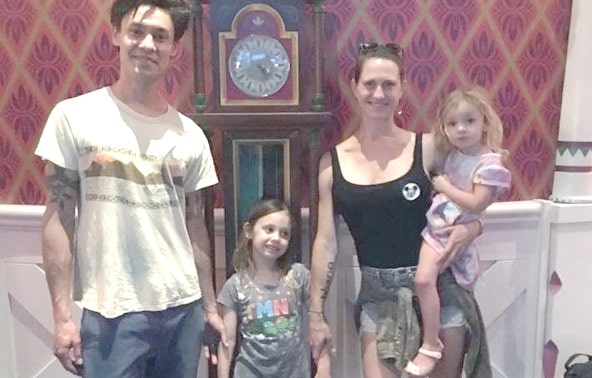
    On the heels of announcements that Prince William and Kate Middleton are having a third child, another couple – Los Angelinos Mickey and Tricia Bhotiwihok – are setting a different example. Instead of putting money into their children, they are giving thousands to help other children.

    Like Having Kids’ other Featured Families, Mickey and Tricia chose a smaller family. That decision also allows Mickey and Tricia to act on their altruistic natures and help other families.

    To show just how powerful this approach to family planning is, Having Kids gave Mickey and Tricia a big choice: we sent them three thousand dollars that had been allocated for this purpose. The Bhotiwihoks could choose to apply this money to their family. Or they could donate the money. It was up to them.

    Mickey and Tricia chose to donate all three thousand dollars to Project Healthy Children, a Givewell.org standout charity working on fortifying food for kids in the developed world.

    They knew that the best way to ensure everyone’s kids live in a cleaner and safer world is to choose a smaller family and help other families do better too.

    Mickey and Tricia’s Statement
    “Before discovering Having Kids’ Fair Start Model, we did not know there were other ways to approach family planning.  Instead, we relied on generational, social, and cultural norms passed down to us. After considerable thought, we adopted the Fair Start Model, because it just made sense. We are a family of four in which both parents work. Like all parents, we want the best for our children. We are also thinking of the big picture. The Fair Start Model provides an indispensable tool for families and children. Participation in the Fair Start Model demonstrates our commitment to a brighter world for all children.”

    Please join us! HavingKids.org

    Screenshot of an email from GiveWell confirming a $3,000 donation to Project Healthy Children, with details on how the funds will be used and additional information for the donor.

  • We Can Still Do Better For Our Kids

    We Can Still Do Better For Our Kids

    Yes, Having Kids suggested that Prince William and Kate might forgo having a third child. We did so to encourage them to set an example of the most effective thing possible to mitigate climate change and protect the future.

    And yes, it appears the Royal family, and what CNN calls the world’s strongest brand, is getting bigger.

    That’s OK. Having Kids wishes Prince William, Kate, and their kids all the best.

    The truth is that we don’t have to always rely on celebrities to lead by example. Changing this world for the better does not happen overnight.

    This week Having Kids will feature two everyday families, families like you and me, families without a lot of money or prestige. But these families care deeply about all of our futures, working to create a sustainable world that nurtures us all. They are showing their concern and dedication by choosing a smaller family, and choosing to save resources and work with other families to plan a fair start in life for every child.

    We can all do the same.

    We always hear that children are the future, But what does that really mean? It means how we plan families today will determine whether our world will be hotter, more crowded, and filled with people who never got a fair start in life, or greener, cleaner, safer, and filled with people born into loving homes where they got what they deserved.

    It’s our future. Let’s build it together.

  • Are There Any Limits on Who Should Be Allowed To Have Kids?

    Are There Any Limits on Who Should Be Allowed To Have Kids?

    Recently USA Today reported on the Nigerian militant organization Boko Haram’s increasing use of children as human bombs. Already this year, 83 children – including a baby strapped to a girl – have been used as terrorist tools since the beginning of 2017. Bloomberg reports that many of the victims come from families who donated the children, knowing how they would be used.

    The stories raise a compelling question: Are there any limits on who should be allowed to have kids?

    Do parents who would donate their young children to be blown up by Boko Haram still have a moral or legal right to have more? Should we as a society say nothing about members of ISIS having more kids, given what will happen to them?

    These are questions no one is asking. And not because there are no ways to answer them – bioethicists deal with similar questions all the time – but because there appears to be no way to actually implement such limits. Why ask the question if there is nothing we can do about it? How would the United Nations and the international community begin to limit the right, legally and in practice? How should we actually intervene in these situations to stop parents? The notion is almost silly.

    But that’s thinking inside the box. It’s almost equally silly to think laws and policies that are not enforced have no impact on our behavior. Such laws and policies do, and are studied under an area of legal theory and research usually referred to as expressive law. Prominent organizations and governments merely taking a position on a controversial subject – that some people are not fit to have children – can have a tremendous impact.

    And what does not taking a position mean? That we think it’s ok for parents who would use their children as human bombs to have kids? Is that what we think? Is that the universal norm we all want to be living with?  

  • Mike Huckabee: Defend or Apologize, or You Are Part of the Problem

    Mike Huckabee: Defend or Apologize, or You Are Part of the Problem

    Recently, Mike Huckabee took to Facebook to attack Having Kids and insult the parents who run the organization. However, when challenged to either defend his attacks or apologize on multiple occasions (1, 2), Mr. Huckabee was suddenly silent.

    It is almost as though he was more interested in getting cheap laughs from his fans than wanting to honestly face the future and help to solve the world’s problems.

    In the meantime, we’ve experienced what is likely to be the most expensive disaster in US history. It is estimated that Hurricane Harvey could cost more than Katrina and Sandy combined.

    All this suffering and devastation was exacerbated by global warming. And yet another report has come out showing that the most effective way to combat climate change is family planning.

    We will ask again: What will it take for us to have an honest, constructive conversation about leaving our children, and their children, a sustainable world where they can have a fair start?

  • What Will It Take?

    What Will It Take?

    Hurricane Harvey has broken all sorts of records, killed dozens, and caused untold suffering and devastation. Anyone who looks honestly as the science knows that global warming has caused this and other storms to be more deadly and destructive.

    As the world becomes more crowded and overheated, events like Harvey, Superstorm Sandy, and Katrina are certain to cause more and more harm, threatening more people and disrupting more lives.

    Study after study has shown that the single most powerful step we can take to combat climate change is family planning (1, 2, 3). This is not a hard problem to address – currently, over half of the pregnancies in the US are unintended! (4)

    What will it take for us as a society to take family planning seriously?

    At Having Kids, we’re not willing to let the planet burn because people are unwilling to broach the taboo of reproduction as a societal concern. We want every child who will be born to have a fair start and be born into an inhabitable, sustainable world.

    It is time to stop passing the buck, expecting others to step up. Be a part of changing the conversation. Please join us today!

    [1] Seth Wynes and Kimberly A Nicholas, The climate mitigation gap: education and government recommendations miss the most effective individual actions. 12 Environ. Res. Lett 7. (2017).

    [2] Paul A. Murtaugh & Michael G. Schlax, Reproduction and the Carbon Legacies of Individuals, 19 Global Envtl. Change 14, 18 (2009).

    [3] University of California San Francisco Bixby Center for Global Reproductive Health, By Slowing Population Growth, Family Planning Can Help Address Food Insecurity and Climate Change (Feb. 3, 2015), available at https://www.biologicaldiversity.org/programs/population_and_sustainability/pdfs/UCSF_Population_Climate_Food_Feb_3_2015.pdf.

    [4] L.B. Finer and M.R. Zolna, Unintended pregnancy in the United States: incidence and disparities, 2006, 84 Contraception 478 (Nov. 2011).

  • The Worst Child Protection System Possible?

    The Worst Child Protection System Possible?

    Imagine a parent torturing their own child. Child Protective Services takes in the child to protect him or her, and begin the long process of trying to find a foster family for the child while courts try to deal with the parent. In the middle of this long, drawn-out process, the parent has another child. Because of the prior abuse, this baby also goes into state custody.

    Although there are ranges of outcomes and different stories of children who lived through situations like this, if we look at the statistics, we can safely say that the children going through the state system are not, on average, getting a fair start in life. Recent reports found state systems that are failing children across the board. The community loses out too, because it will pay for the costs of this failing child protective and care system, in the short-term and in the long-term as it absorbs scores of unprepared children reared in public systems.

    Would it be possible to design a worse system?

    There is a solution. In some egregious cases, judges are ordering abusive parents not to have more children. Many courts have upheld those orders as constitutional, finding that a child’s right to a minimum level of well-being should balance against a parent’s right to have a child.

    But the process of using these orders is haphazard and undertheorized.

    Having Kids strongly believes a child’s right to a fair start overrides other considerations. We are exploring ways to help standardize this process.

    And if you agree that the child’s rights should come first, please click and sign our Fair Start Declaration. Thanks so much!

  • Trump Pushing Teen Pregnancy – Why?

    Trump Pushing Teen Pregnancy – Why?

    Addressing the Trump administration’s assault on efforts to prevent teenage pregnancy, the New York Times commentary demolishes the administration’s stated rationales. But Trump and team’s underlying motivation is also suspect, and goes beyond any religious objections to contraception.

    In the short-term, the economic elite might subvert democracy by subverting the press. How would they do it in the long-term? Various theorists might have noted that higher teen pregnancy rates translate into more consumers with less education. Over time, a less educated populace provides cheaper labor, higher profits, and a more easily manipulated electorate.

    The 1% don’t benefit from a smaller and better-educated populace.

    Babies are big business, with advertisers exploiting the appeal of infancy and motherhood to sell more and more products. If the economic elite can subjugate young women and force them to spend more at the same time, it’s a double windfall.

    Like the European monarchs and oligarchs of old, Trump and his big consumptive family embody an unevolved and unsustainable model of domination and proliferation. Their example is harmful environmentally, socially, and politically.

    How do we get rid of it? We can lead by example with a better model that says “I actually give a damn about children, equality, other species, and the future. I’m not just in this for myself and the narcissism of my bloodline.”

    Want change? Change people. To do that, we need to start before the very beginning of life. Let’s make a Fair Start the very core of our thinking.

  • A Respectful, Productive Discussion, or Cheap Jokes?

    A Respectful, Productive Discussion, or Cheap Jokes?

    Having Kids’ Open Letter to Prince William and Kate Middleton has attracted a great deal of attention from around the world, with over 50 media outlets picking it up so far.A Facebook post by Mike Huckabee includes a photo of Prince William and Kate Middleton smiling with their two young children, accompanied by a headline about an environmental group criticizing Trump for having too many kids.

    Instead of discussing the many pressing topics raised in the letter – including the threat the UK faces from climate change, and how family planning is the single most powerful step we can take to address the climate crisis (more) – former Arkansas governor Mike Huckabee took to Facebook to imply that I and Having Kids’ Director of Operations should not have reproduced, thus contending that our child shouldn’t exist.

    Mr. Huckabee’s attack on my family is obviously an irrelevant cheap joke to play to his fan base. What is more disturbing, though, is how Mr. Huckabee’s snide attack is symptomatic of the head-in-the-sand attitude that ignores all the challenges humanity faces, now and in the future. These challenges include not only environmental degradation, but also rising inequality.

    Our single question to our critics is: Do you think every child born today will have an equal and fair start in life?

    Do you think Hillary Clinton’s and Donald Trump’s grandchildren have the same opportunities as those born in Muñiz, TX?

    My husband and I realize, compared to the majority of other children in the US and around the world, our child was born with many advantages. That is why we are dedicating much of our time and resources to helping others, rather than simply pursuing our personal short-term interests.

    Instead of attacking and mocking people dedicated to making the world a better place for all, maybe we should reconsider our tone and tactics. We can each help more children have a Fair Start. We hope Mr. Huckabee agrees. Regardless, we hope you will be a part of this work. Thanks!

    –Anne

  • The Times on Etiquette around Childlessness: A Better Option?

    The Times on Etiquette around Childlessness: A Better Option?

    The title of Anna Goldfarb’s New York Times piece (“What to Say When People Ask Why You Aren’t Having Children,” August 8, 2017) implies that she’s embarking on an examination of the ethics of procreation. But instead, she repeats the trite mantra you’ll hear on trash television and at the grocery check-out: Family planning is only about personal fulfillment, and is a highly personal topic that should be considered off limits for discussion.

    That mantra is simply false. People forgo having children for many altruistic reasons: to protect the environment, restore biodiversity, to retain time and money in order to do public interest work, etc. All of our decisions about having kids profoundly impacts others – that’s the whole point. If we care at all about the future, then we all have a stake in family planning decisions. The topic is inherently interpersonal.

    Why would publicly thinking about our collective future be considered off limits?

    The topic is inherently interpersonal, starting – obviously – with the potential child. Rather than trying to close public forums, why not seek common ground? Specifically, why don’t we have a discussion about what future we want? Why not collectively plan an escape from our current crowded, polluted, divided, unequal, and relatively uneducated world?

    Beyond the Isolationist View

    Goldfarb’s article rides upon the isolation model of family planning. This model focuses only on what parents want in the short term, rather than on what children and society need in the medium and long term. Isolationist views break the link between vital needs and available resources, and ignore the fact that having children is the most public thing most people will ever do.

    Furthermore, the isolation model completely disregards the fact that children are born entirely vulnerable, dependent on the people around them. By focusing only on the parents’ wants, rather than the child’s needs, we have created a society where children are not guaranteed a minimum level of well-being. Arguing that having children is a private matter also eliminated the opportunity for parents to cooperate in their decision making to achieve the best outcomes for every child. Because of the lack of organized, collective action dictated by the isolationist model, the caring and thoughtful people who forgo having children don’t have as great an impact as would otherwise be possible.

    In short, the isolation view harms everyone’s future and denies many children a fair start in life – a deprivation that tends to pass down over the generations. The Fair Star model breaks that cycle.