Category: Family Planning & Child Rights

  • Having Kids Offers Trump’s Child Separation Policy Architect Stephen Miller K For a Vasectomy

    Having Kids Offers Trump’s Child Separation Policy Architect Stephen Miller $25K For a Vasectomy

    Today Having Kids offered the official behind Trump’s child separation policy $25K in exchange for his undergoing a vasectomy. Why? To send a message that caring for children starts with better family planning, and that some folks are just not ready to have kids.

    The Trump administration has been under fire for its policy of separating children from parents who are entering the country.  The media has revealed that senior policy advisor to Trump, Stephen Miller, is the architect behind this egregious policy. Beyond being morally reprehensible, this policy has been described by some as “state-sponsored child abuse.”  Indeed, the psychological trauma of a child being ripped from his or her parents, even for a short amount of time, is shown to be devastating.  Anyone who not only implements such a horrific policy – not to mention, allegedly delights in watching children separated from parents – is not prepared to parent.

    Having Kids is making the following offer to Stephen Miller:

    Having Kids, Inc. will pay you, Stephen Miller, $25,000 on the conditions that you 1) undergo a successful vasectomy procedure within the next two months, as well as 2) publicly announce that you have donated an amount of your choice to a charity of your choice for the purpose helping the hundreds of thousands of children who are victims of child abuse each year in the United States.  

    Anne Green, Executive Director of Having Kids, had this to say. “Someone who has demonstrated total disregard for the welfare of so many children is not prepared to parent.” “Caring about kids starts with better family planning. Everything else is after-the-fact. That’s the conversation we all need to be having.”

    Having Kids is a 501(c)3 nonprofit nonprofit organization dedicated to reforming family planning by replacing parent-centered family planning models with the human rights-based and child-first Fair Start model.


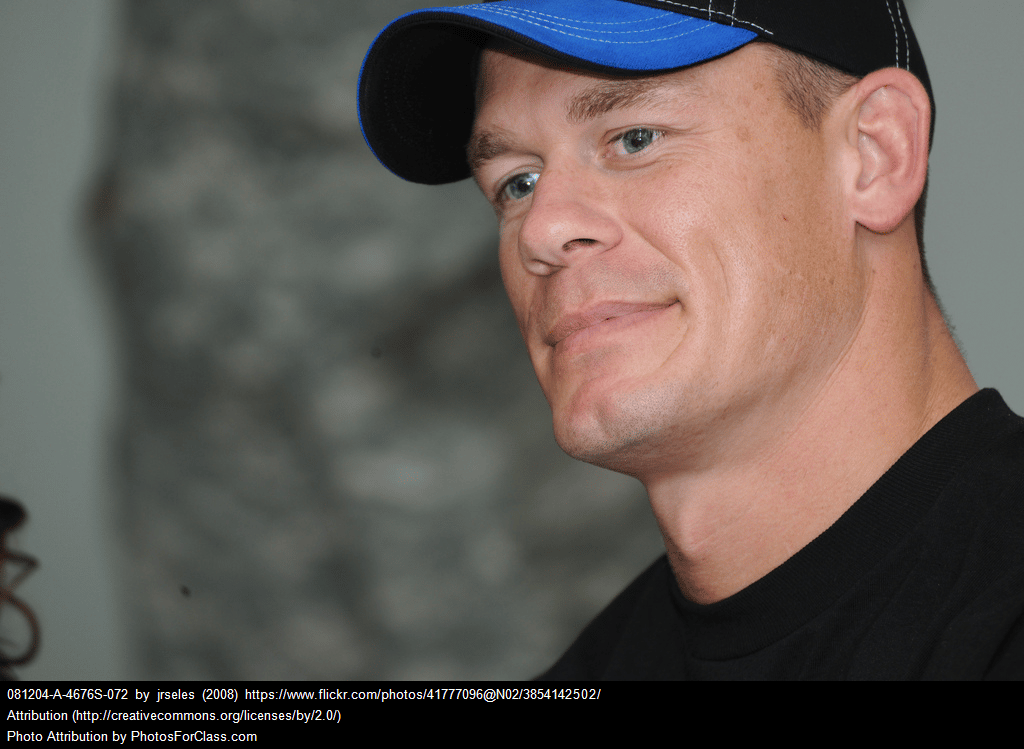
  • John Cena, Don’t Have Kids You Don’t Want

    John Cena, Don’t Have Kids You Don’t Want

    Wrestling sensation John Cena has been grabbing headlines recently with his roller-coaster relationship with Nikki Bella. After their massive break-up in April over whether to have kids, John changed his mind and has said he would reverse his vasectomy for Bella.

    John said this: “So it literally it is just about being a mom?” he says. “Okay. Because I can’t have you out of my life, ever. I want to marry you. And relationships and marriage, especially, is about sacrifice. And I will make that sacrifice for you. I will give you a child.”

    Today Having Kids sent John a message:

    John – as a role model people need you to set a good example when it comes to family planning. Having kids should not be a sacrifice. Children deserve to be wanted one hundred percent before they are brought into the world. We urge you to hold off until you are ready, and then adopt, or choose a smaller and sustainable family that will be a model for others.

    Family planning defines the world around us, and celebrities can influence how other people plan their families. Wrestling fans around the world look to Cena as a role model. John should plan his family around the future we all want – a safe and sustainable word filled with people raised in thoughtful and loving families. 

    We need celebrities to stand up and do the right thing. Children are not pawns or bargaining chips. They deserve better.

  • Urge UN To Promote Better Family Planning After Trump’s Child Separation Scandal

    Urge UN To Promote Better Family Planning After Trump’s Child Separation Scandal

    Today Having Kids called on the United Nation High Commissioner for Human Rights to prioritize every child’s right to a fair start in life in response to President Trump’s child separation scandal. While decrying President Trump’s policy, the group called his disregard for children and their right to healthy development part of a much larger problem.

    Read the full letter here. 

    Trump’s policy is only one example of how we ignore the right of every child to a fair start in life. 

    • The letter pointed out that without the sensational border crisis the plight of these children, through poverty, trauma, and deprivation, would be ignored.
    • The letter linked the child abuse at the border, and the permanent harm it would cause the children, to the impacts of childhood poverty and trauma more generally, and noted immigration policies would not address these larger issues.
    • The group called on the Human Rights Council, from which the United States recently withdrew, to adopt a child-first Fair Start family planning model, rather than the current model of planning.

    Anne Green, Executive Director of Having Kids, said this: “Now is the time for the Human Rights Council to take a bold step towards creating a better world for future children.” “Now is the time to prioritize the needs of future children and promote the universal value of smaller, more sustainable, and truly equitable families.”

    Take action: Tweet UN HRC High Commissioner, at @UNHumanRights, and politely suggest he act on our request. 


  • Children First: Demand An End To Family Border Separations

    Children First: Demand An End To Family Border Separations

    A nationwide backlash to Trump’s policy of separating kids from their parents at the border, as a tactic to decrease illegal immigration is underway.

    It’s easy to get trapped in the specifics of the debate over immigration law and policy, but is there a larger issue at play – the well being of children and the consequences of child trauma. When we determine immigration policy, we must consider it from a broader, and longer-term, perspective. The Trump separation policy is more evidence of a dangerously shortsighted view of the world. Whether it’s

    the Trump administration shows a dangerous proclivity for short-term thinking. That’s evident in Trump’s child separation policy too, given the long term impacts on the children and the potential for trauma to be continued for generations.

    Humans have historically valued strongmen leaders because they could protect us from threats, like dangerous foreign powers. But we live in a different world today. What if these less-evolved strongmen, with their short-term thinking, have themselves become the threat?  What do we do then? We put children and future generations first in all of our policy positions and decisions.

    The choices we make now will affect children for a lifetime. We must stand up against the cruel human rights violation that is currently happening on our southern border. Every American has a duty to defend the values of our country and the welfare of the children on our soil and in our care. It’s time to put children first in all of our policy decisions.

    Take action: Call your representative today and demand Congress act to end to Trump’s child separation policy.

  • Five Ways to Celebrate [Responsible] Father’s Day

    Five Ways to Celebrate [Responsible] Father’s Day

    Not all fathers should be celebrated on Father’s Day, from the many fathers that kill their own children, to “TV Personalities” like Josh Duggar who’s life and poor family planning is eerily reminiscent of characters from the movie Idiocracy.

    But there are ways to celebrate, and help make Father’s Day mean more than just another excuse to buy something. We can make it mean a better world, and not just more people.

    1) Make a donation in the name of male contraception. The Male Contraception Initiative is a non-profit that is pushing for the development of male contraception through education, advocacy and funding research. A modeling study indicated that even if only 10% of interested men took up a male contraceptive pill, there would be a 5% decrease in unintended pregnancies in the United States. Want better fathers? Encourage better family planning, and ask the environmental organizations you belong to to do the same.

    2) Know someone who has a boatload of kids, or wouldn’t be a good father? Start planning your very own “Vasectomy Party” and invite those special guests. Could Josh Duggar be on your list?

    3) Talk to your kids about the importance of family planning.  In 2011, 45% of all pregnancies – or 2.8 million pregnancies – in the United States were unplanned. Though this figure represents an all-time low in unplanned pregnancies, there is still a lot of work to be done. There are loads of resources available about how to have these conversations with kids of all ages.

    4) Ask for family planning help if you need it  Responsible parents make sure they care for their child’s physical, emotional and educational needs. They put the needs of their child before their own feelings of pride and shame and ask for help to ensure their child is cared for. There are resources in every state to help families with financial or logistical needs.

    5) Offer help if you can give it. The best parents are those that teach their own children compassion for others and that everyone deserves a fair start in life.  If you are fortunate enough to have the resources, give to one of the many organizations that support low-income families with basic needs, kids in foster care, and equal educational opportunities for all kids. Mentor kids in need. And encourage the United Nations to take family planning seriously, and change from its outdated parent-focused modeling to the forward-looking and child-first Fair Start model.

  • UNFPA Must Address Climate Change. Take Action.

    UNFPA Must Address Climate Change. Take Action.

    Today, given a recent study showing that the loss of ice in Antarctica has tripled in a decade as a result of the climate change crisis, Having Kids called upon the United Nations Population Fund (UNFPA) to abandon its outdated family planning modeling in favor of the sustainable Fair Start model. Family planning is the most effective way to address climate change and other environmental threats.

    This is our message to the UNFPA Executive Director Natalia Kanem: 

    Dr. Kanem:

    We respectfully request that you consider reforming the family planning model at the heart of the United Nations Population Fund’s work. The UNFPA currently uses an outdated family planning model that was developed before the manifestation of climate change, key developments in the science of early childhood development, and the massive and growing gap between rich and poor that exists today. That outdated model should be reformed to account for these things, and many other problems it exacerbates.

    The current model adopted by the UNFPA recognizes the fundamental human right of parents to decide the number, spacing, and timing of their children. It treats parents as if they were isolated from one another and their community in the act of planning, and does not include the rights of future persons, animals and their environment, the role of family planning in further democracy, etc. That model has no basis in binding sources of international law, and is unethical.

    How does that model account for parents that choose to have massive families, degrade the environment we all share, and put us all at risk? How does it account for parents’ obligation to not flout the Children’s Rights Convention, or even basic standards of fitness, by bringing children into existence below legally mandated thresholds? How does it account for the obligation parents and their community share to give every child a fair start in life, with opportunities equal to their peers? The UNFPA’s current model is isolationist, and by focusing on parents, violates the fundamental human rights of future children and communities.

    We offer the child-first Fair Start family planning model as a sustainable alternative to the UNFPA’s isolationist model. The Fair Start model is cooperative rather than isolationist, is based u[on binding sources of international law, and provides a clear human rights-based solution to the problems discussed above and a path forward. It is also reflected in the worldwide trend towards smaller families that can invest more in each child and ensure a safer future.

    Take action, and ask Dr. Kanem to consider our request by tweeting her at @Atayeshe.


  • Family Planning Systems Designed to Protect Children

    Family Planning Systems Designed to Protect Children

    Under California Law Governor Jerry Brown has the ultimate responsibility to protect children from harm. It’s called the parens patriae doctrine. States cannot fulfill their responsibilities to children without improving family planning models, taking steps to screen for irresponsible parents, and to prevent child abuse rather than simply react to it. Having Kids was formed, in part, to show states how to do this. In January, on the heels of the gruesome Turpin case, we wrote to Brown. 

    Brown has yet to respond, and multiple children and infants have been abused and neglected. This will continue to happen.

    The recent case of Gabriel Fernandez, who was tortured and murdered with help of his mother, is a reminder that Brown should act.

    Governor Brown, please promote Fair Start order legislation now. You are politically positioned to take action as your term winds down, and to support a family planning system designed to protect children (and in so doing protect the environment and promote equity), rather than randomly encourage people to have children in order to create economic growth.

    It is your legal responsibility. Please take action now. 

    Take action: Call Jerry Brown at (916) 445-2841 and remind him that he is obligated to do everything possible, including promote Fair Start orders, to stop the abuse.

  • Having Kids Asks Guardian to Issue Correction on Climate Gaffe

    Having Kids Asks Guardian to Issue Correction on Climate Gaffe

    The Guardian recently ran a story claiming that eliminating meat and dairy is the single biggest way to reduce impact on the environment. While going vegan is crucial for our planet, the claim in the article is not quite accurate. Today Having Kids is calling for a correction.

    As the Guardian itself recently reported, multiple studies have shown that choosing smaller families easily has the most impact on environmental crises like climate change. Moreover, those studies did not assess vital and obvious knock-on benefits of smaller families, like better cognitive outcomes for children, opportunities for empathy-building through early childhood development, and increased social cooperation and compliance with environmental norms.

    Population Impact

    From Paul Hawken’s book Drawdown to previous studies on climate change population size has been shown to be the primary driver of climate disruption. That’s also the case for the downstream impacts of climate change like ocean acidification, and for other forms of ecocide, like the loss of biodiversity / mass extinction of other species. Thus, sustainable family planning is the most significant act that we can take to reduce our impact.

    Are Vegans Exempt?

    Dietary changes should not replace better family planning. It should be included as a necessary condition of sustainability. If you want to be a true vegan, change your diet and plan smaller families for the goal of reducing the number of animals used for food and restoration of the nonhuman world. We should do our best to live sustainably through our consumption choices as well as through our reproductive choices.

    Ending the Taboo

    Discussing family planning is difficult because we have a cognitive distortion called temporal myopia. The push for pro-natalism has been ingrained in us over generations since the beginning of time. But today the size of the families we plan will determine our survival on the planet. It’s time to look beyond our selves. We must confront our own self-centered wishes to put our children’s future first.

    Our climate change trajectory is largely the product of past failures to deal with known variables like population and family planning policy. We should not repeat those mistakes, and the media has a grave responsibility in this regard.

    Fertility Rate Vs. the Economy

    Leaders and economists constantly push policies that support having more children to create future consumers and endlessly growth the economy. We see ourselves as consumers, rather than as citizens, which explains why dietary change is the common approach for people who care about animals. But why are we seeking infinite growth? What about a more stable, sustainable economy with a smaller gap between rich and poor and better opportunities for everyone?

    The Trend Toward Smaller Families

    Today there is also a marked trend towards smaller families, driven by several factors that range from cultural to financial. When thinking of policy changes, why not capitalize on, rather than ignore, this existing trend? From fully-funded LARC programming, to reforming child protection systems, to equity-based family tax systems, there are existing and effective vectors for real population policy change that can capitalize on the trend towards sustainable families.

    Family Planning for a Better Future

    Family planning is the unifying and primary driver behind all anthropogenic impacts. To fix our relationship with the nonhuman world, we will have to start at the source. Family planning is also our chance to create more equitable as well as sustainable societies. We can replace increasingly crowded, consumption-oriented economies with more connected communities that live in balance with nature. Family planning must be where we start in any discussion on how to reduce impact – at the source of who we are, and will become.

    The Guardian should issue a correction today. Ask the Guardian to do so at guardian.readers@theguardian.com, and to run a sufficient article explaining the correction highlighting the importance of better family planning.

    Ashley Berke, Spokesperson for Having Kids


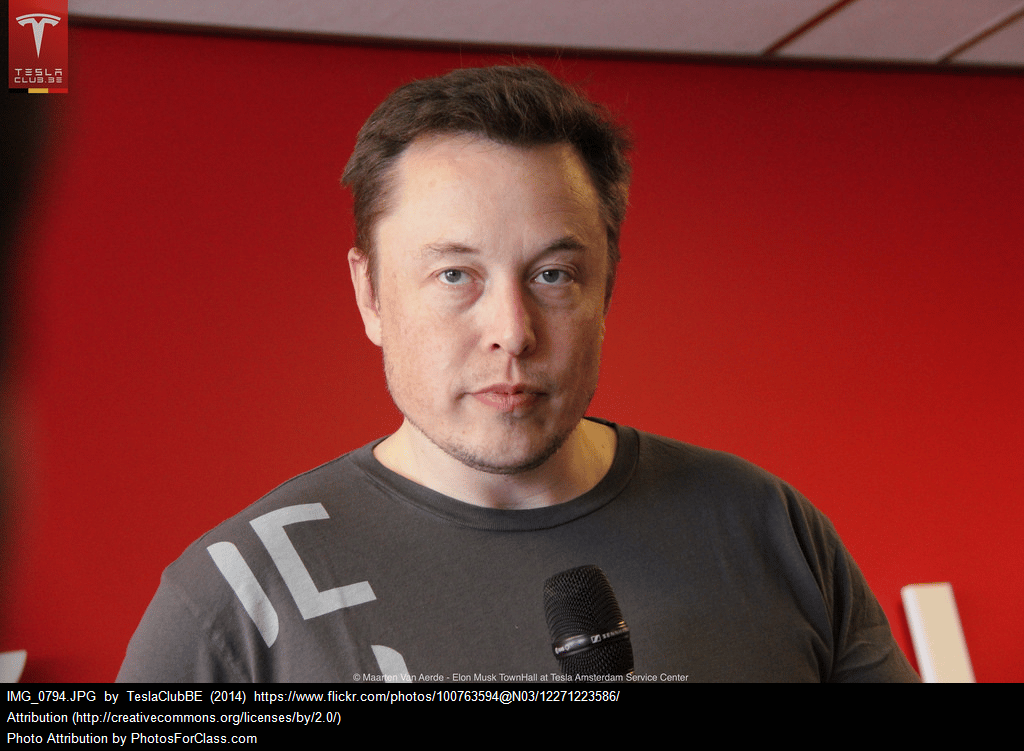
  • Having Kids Calls on Elon Musk to Clarify Position on Family Planning and Population Growth

    Having Kids Calls on Elon Musk to Clarify Position on Family Planning and Population Growth

    Elon Musk, the outspoken billionaire who’s been attacking journalists lately, has also been sending conflicting messages about population growth. He’s incorrectly said that “world population is accelerating towards collapse,” but also decried the “soul destroying traffic” of urban centers like Los Angeles and proposed controversial tunneling by his companies as a solution.  It sounds as if Musk wants to increase population pressures and intensify climate change in order to profit from trying to solve them, and exacerbate the massive gap between poor people and billionaires like Musk in the process.

    Today Having Kids called on Musk to clarify his position on family planning and population growth by endorsing a human-rights based family planning model based on the principle that every child deserves a fair start in life. Musk was born into a privileged upbringing, having attended boarding school in South Africa during its Apartheid era, before leaving the country to avoid military service.

    Having Kids is asking Musk this question: Does he believe that every child deserves a fair start in life, with equal opportunities relative to children like his own? Anne Green, Executive Director of Having Kids, had this to say: “Elon should promote better family planning and true social and economic balance and sustainability, not the creation of more consumers and workers to further his economic empire.” “Many of the world’s richest people are calling for systemic change to avoid class warfare – this is Elon’s chance to do the same, and promote environmental protection at the same time.”

    Take action and tweet @elonmusk to politely ask for him to take a stand. 

    Having Kids is a 501(c)3 nonprofit nonprofit organization dedicated to reforming family planning by replacing parent-centered family planning models with the human rights-based and child-first Fair Start model.