Today the Fair Start Movement and an emerging coalition called the Truth Alliance filed a notice of preemptive standards with the California Attorney General seeking full justice in matters, like consumer fraud, impacting the futures of the most vulnerable children.
A New Standard for Justice in California
The Fair Start Movementhas called on the California Attorney General to recognize that existing fraud and similar laws are preempted by what the organization describes as the “full justice” standard. This standard is now before the African Union and asserts that true empowerment requires ensuring no child is born beneath a threshold of resources necessary for freedom and self-determination.
Why Equitywashing Is the Core Problem
As the Fair Start Movement has argued in its foundational works, including Illegitimate Power, Illegitimate Violence: How Nations Are Built on the Backs of Disenfranchised Children, conventional legal and policy systems ignore the inequities at birth that drive global crises. This omission leads to political equitywashing, where claims of progress in areas such as climate or human rights obscure the fact that children continue to enter the world in conditions of radical injustice.
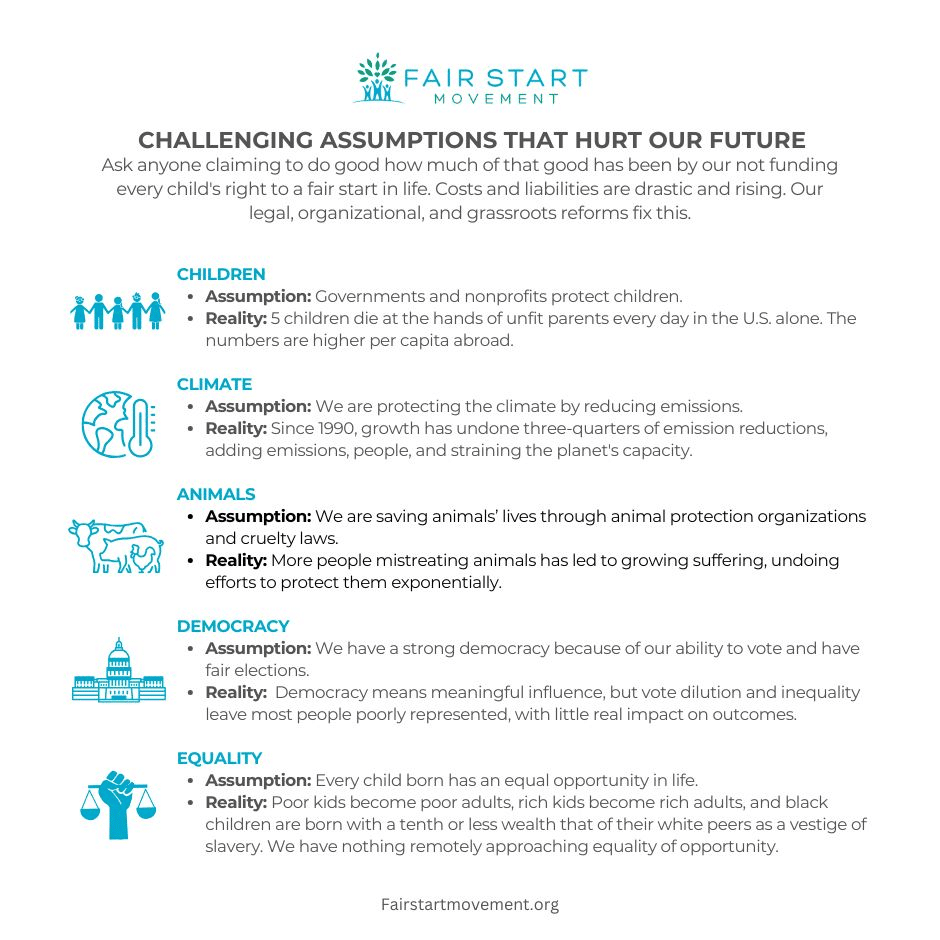
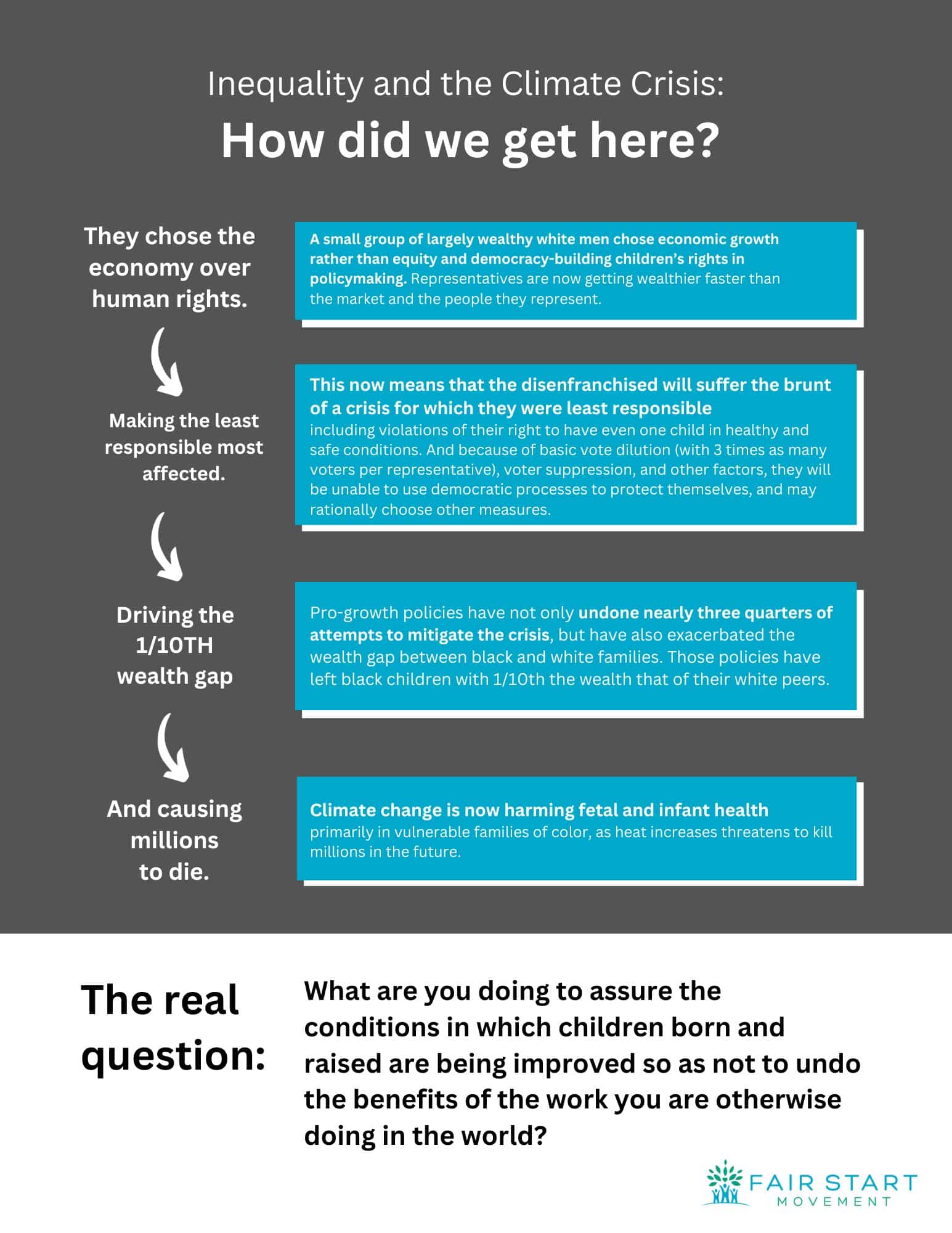
The use of the equity fraud standards has meant treating children of color – for decades – as worth exponentially fewer resources and more risk. As such, the standard gutted equity, or each person’s equal capacity to influence one’s political system and the outcomes that affect one’s life. That policy has led to millions of deaths in the climate and underlying crises, and the undoing of a lot of the value many claimed to create and the beneficial impacts they had.
This is equity fraud, ensuring the assumption that our birth relations empower us, and in a sufficiently legitimate way to define things like the “green” in greenwashing laws or concepts like animal liberation, when in fact the standards are hardly green or liberating in the sense of what the most vulnerable children and animals need, but rather designed to enrich some at cost to others. Activists were comparing themselves to the worst actors rather than what was necessary to achieve their ends on balance, thus ensuring a race to the bottom.
Empowerment as the Basis of Legitimacy
Fair Start’s letter to the California Attorney General emphasizes that governmental and corporate authority cannot be legitimate if it is not conditioned on empowering those it claims to represent. By centering child equity in all claims of value, impact, and legality, the Fair Start Movement argues that freedom and justice must be defined not as an absence of state coercion but as true consent to any external influence—a consent impossible without equitable starts in life.
According to Mwesigye Robert, who helps lead a growing coalition called Truth Alliance that demands those making value and impact claims actually account for the preemptive need to ensure children entering the world are measurably empowered: “Positionality matters, children from the global south deserve to be seen as equal in dignity and opportunity and when global policies reflect that equity, their voice potential can truly be heard in highlighting the need for fairness in family planning and development funding.”
Fair Start Movement
The Fair Start Movement is the only organization connecting the root causes of the climate crisis, inequality, and illegitimate governance to the fundamental issue of inequitable births. Their legal advocacy, including direct appeals to the California Attorney General, marks a groundbreaking step toward transforming systems of law and policy.
If legitimate governance, including the authority to assign wealth, derives from empowering the people, then we all have preemptive right to ensure businesses treat the violation of children’s birthrights as a horrific cost, and not a benefit to be exploited for growth.
Do you believe children deserve a fair start in life? Prioritizing that is the most effective way to ensure a better world.
The idea of an equity override is about putting fairness at the center when the strict letter of the law falls short. At the World Court hearing where climate change was described as an “urgent and existential threat, ”an equity override would allow the Court to look beyond technical legalities and focus on what is right and just, especially for those most affected.
This approach would empower the Court to prioritize justice over rigid legal formalism, reinforcing demands like those of Fair Start: that historical emitters must take the lead in mitigation and support. Equity overrides shifts the conversation from narrow legal obligations to broader moral responsibilities, centering principles like climate finance, loss and damage reparations, and Fair Start development pathways.
(For information on Fair Star’s planned research in the context of vulnerability theory, read more here).
For the Global South, this isn’t just about legal recognition–it’s about survival, dignity, and the right to a future shaped by justice rather than inherited crisis.
The Problem: Equitywashing and the Legacy of Power
Any value or impact claim made today is likely out of context because it ignores the radically unequal conditions children face at birth. This goes beyond greenwashing to a more fundamental or first order problem – equitywashing:the hiding of illegitimate, inequitable, and birth-based power relations that ensure defining standards like “green” in a way that enriches some at deadly cost others, and causes the climate crisis.
Those policies led to systems of subjective valuation that hid impacts on objective values like infant health and equity, and ensured the world overshot key thresholds within less than a few generations leading to the climate and political crises we see today. Overshoot was thus essentially the illegal shifting of power.
The standards took the idea of bodily autonomy outside of one’s political equity (accounting for all measures determining that equity and the emancipation it implies), or one’s capacity to influence outcomes that influence them, disenfranchising people. For example, many companies and nonprofit organizations use cost/benefit business models that treat infant victims of the climate crisis as equally self-determining as those who benefited the most from it. These models ignore those infants’ overriding right to equity resources/reparations as the basis of political obligation and state legitimacy. Such frameworks are not just unethical, they are unlawful,, and potentially actionable under unfair competition laws.
This is not about “population control”, but empowerment: is your political “we” legitimate or built under the latter. Our supposed freedom becomes a mechanism for others’ wealth.
Here’s one example: under current legal frameworks, even the most liberal ones—a woman terminating a pregnancy is considered autonomous. Yet if she later dies in a heatwave because she couldn’t influence her government to act, what kind of autonomy is that? She wasn’t free—she was positioned that way by illegitimate standards that valued her life incorrectly–-she was treated as an economic input.
The victim would have been taught and likely assumed that she had just been unlucky in her being born without wealth, when in fact she would have had the right to derive her obligation to the political system and condition her compliance with the law, on the state reversing that state of affairs. She was never free because she was never physically empowered, and in that situation, there would have actually been little reason to follow the rules. What went wrong? She was slowly being disenfranchised. Her freedom was taken out of context, and valued incorrectly, as governments began their worth with the injustice of an illegal birth lottery.
The Consequences: Systemic Disenfranchisement
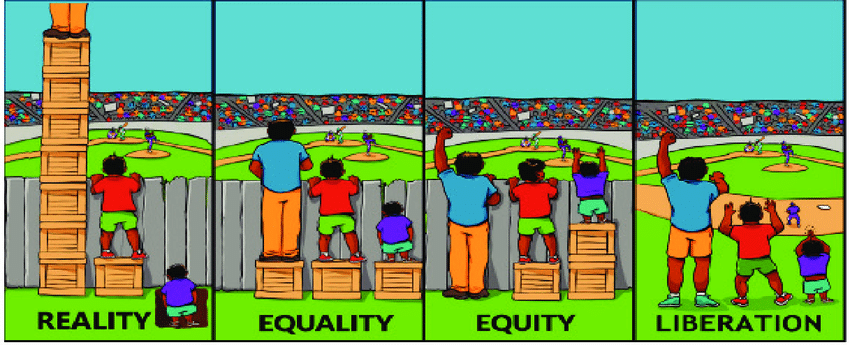
For decades equity fraud standards have treated children of color as worth exponentially fewer resources and more risk. In doing so, these standards gutted the very idea of equity—equal power to shape the political and economic systems that determine our lives
The Solution: A Preemptive Right to Equity-Reparations
NGOs should have always used measurable birth-based political equity as their guidestar, not sustainability – not sustaining the commercialized democracy approach that created Trump.
There is a big difference. Where else does national legitimacy, and the authority to entitle wealth, come from if not birth equity?
Here is one way to pivot to justice and a form of equity that overrides competing values given that the future majority need freedom, and outnumber those alive today:
Many are already taking wealth that externalized its costs onto children and using it to fund (via “legitimations”) collective family planning unions that expect government and the wealthy to treat their authority and entitlements as contingent on actually empowering constituents rather than exploiting them for more growth.
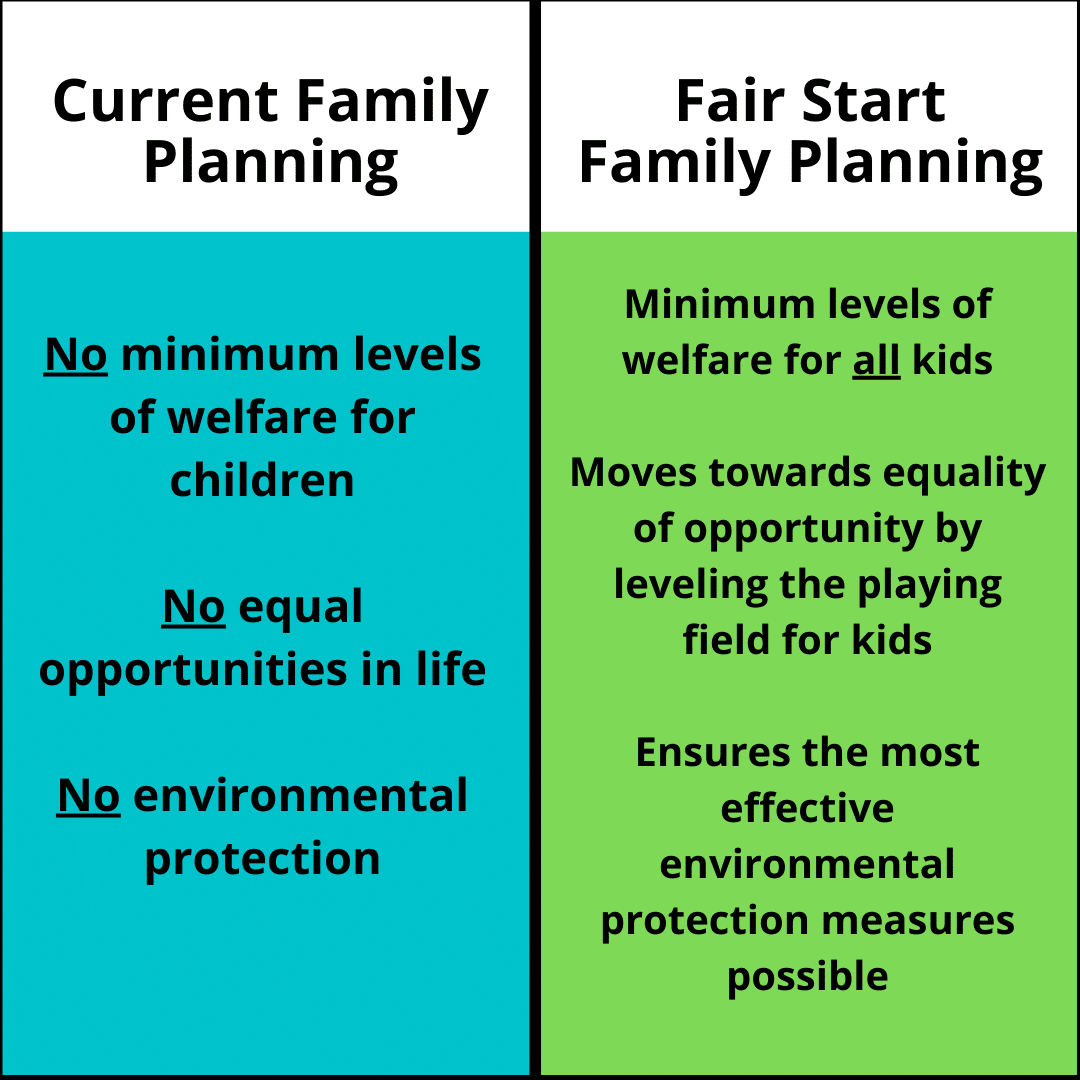
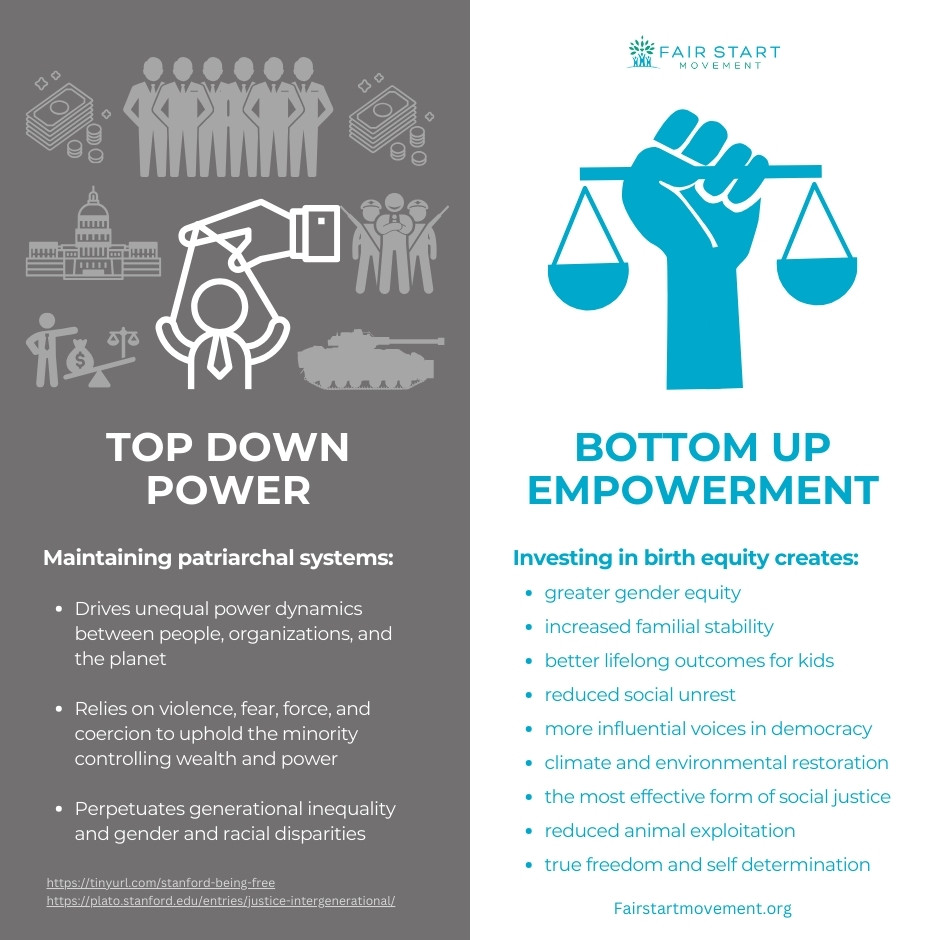
There is a preemptive right to equity-based reparations, payable to more collective systems of family planning that guarantee every child a fair start.. Governments must derive their authority and legitimacy from the measurable empowerment, or political equity (equal offsets, relative to zero), of its constituents. That means no child should be born beneath the “legitimacy line”—the threshold of self-determination and necessary resources.
The only viable reform tactic? Fact-value checking—securing public admissions of truth and formal commitments to change. This kind of discourse doesn’t just inform policy; it creates obligation. It builds the foundation for truly self-determining lives.
This is not about mere intersectionality. It’s about unifying obligation and asserting the preemptive principle: governments cannot unilaterally define empowerment. Empowerment is measurable. And a just society must begin by measuring what truly matters.
Obligation, not intersectionality. This is about preemption – governments can’t define what it means to be empowered. That is an objectively measurable thing.
Humans are animals. Recognizing this helps shift us away from anthropocentric thinking that drives the climate crisis and leads to mass suffering. Animal law isn’t just about legal protections for nonhumans; it’s about fostering relationships between humans and nonhumans that prevent suffering.
Most acts of animal cruelty go unreported. How do we address that? True animal law starts with inclusive birth and child welfare policies that foster empathy, empower future generations, and protect animals. Human and nonhuman liberation are interconnected, as the way we shape our relationships drives outcomes for both.
The Hidden Undoing of Animal Law
Many organizations promoting animal law ignore how their efforts are undermined by unchecked human growth and the erosion of political equity. They claim progress without acknowledging that expansion in human populations, wealth concentration, and political inequity counteract their efforts. By ignoring these fundamental drivers of animal suffering, these organizations uphold a version of animal law that ultimately harms animals more than it helps them.
This omission is intentional. The organizations rely on assessment and reporting standards that obscure the real impact of human expansion, protecting the interests of wealthy donors rather than the vulnerable beings they claim to defend. They omit the connection between animal protection and just, sustainable human development because it threatens entrenched power structures.
The Fundamental Truth
We have collectively violated children’s right to a fair start in life. We have prioritized economic growth over political equity, allowed unsustainable population expansion, and ignored the needs of marginalized communities. These actions have caused more harm to animals, ecosystems, and human justice than any isolated intervention can remedy.
Animal law isn’t just about legal directives referring to animals; it’s about ensuring legal systems protect nonhumans meaningfully. The best measure of animal law is found in constitutional preambles and the structures that shape human-nonhuman relationships—not just in laws that mention animals.
The Creation Problem
Our birth and development—our creation—is the largest determinant of nonhuman suffering. It outweighs any other human behavior. Our creation also dictates how legal systems function, determining whether they genuinely include and empower the vulnerable or serve only the privileged.
Animal law must begin with the ethical considerations of human creation. Without this foundation, no legal system can meaningfully protect nonhumans. Yet, discussions of creation ethics are avoided because they raise uncomfortable questions about racial equity, climate reparations, parental responsibility, degrowth, and liability for misleading charitable work.
The Wealthy Influence on Animal Law
For decades, wealthy families and funders have shaped animal law to serve their own interests. They support narrow definitions of animal law that ignore the role of population growth and political inequity, ensuring that advocacy remains performative rather than transformative. Many advocates embrace this limited scope because it offers well-compensated work with little real impact.
Growth continues to undo the progress claimed by these organizations. It is easier to engage in performative animal law—discussing legal references to animals while ignoring the broader forces that shape their suffering. Large media budgets promote interventions that favor donors more than animals, drowning out solutions that would have a real impact. But there is no such thing as anthropocentric animal law.
Justice cannot emerge from injustice. We cannot create a just society while violating children’s rights at birth, ensuring inequity from the start. Nations cannot be legitimate if they provide no functional protections for children as they enter the world—or for the nonhuman world they will impact.
The HSUS Example: Monetizing Animal Liberation
In 2003, Fair Start advocates working with the Humane Society of the United States (HSUS) framed farmed animals as the most numerous victims of human cruelty. This framing aligned with corporate interests, such as Whole Foods, which profited from growing public outrage over factory farming. The strategy monetized the concept of animal liberation without actually achieving it.
The most numerous class of animals, however, are future animals. HSUS and others ignored this reality, treating future beings the same way growth economists treat future people—as expendable. Rather than promoting small family ethics and policies that would reduce suffering, HSUS focused on food reforms within a growth-based market.
Many advocates profited from the food sector while using sensational campaigns to overshadow the macro-level drivers of suffering. This growth-driven demand, not food choice alone, remains the largest determinant of climate outcomes and animal suffering.
The Corruption of Animal Law
Animal law, as the most demanding form of social justice, serves as a measure of broader justice. It should assess how we include future generations in legal systems, empowering them to protect animals. However, from 2003 to today, most discussions of animal law focus on food and other downstream interventions. Few address family reforms that could benefit both animals and vulnerable humans.
Many nonprofit funders manipulate the field by using media, academia, and legal framing to obscure real impacts. Harvard University, for example, claims to improve animal treatment through law but does not address the fundamental driver of suffering: anthropocentric growth. Their policies benefit funders more than animals.
A senior funder associated with Harvard’s program has refused to include abortion access in animal law discussions, despite its disproportionate benefit to animals compared to food reforms. Their metric for impact ignores growth and birth-related impacts, ensuring inequity continues. Many organizations dependent on this funding remain silent, allowing resources meant for animals to sustain human privilege instead.
The Demand for Climate Justice
As climate reparations become a global demand, animal lawyers will face scrutiny. What were they doing during the crucial years of the climate crisis? Did they challenge the systems enabling injustice, or did they serve the interests of the powerful?
Recent direct action movements offer hope that animal law can move toward true liberation rather than performative advocacy. However, if these movements ignore macro-level reforms, they, too, fail to serve nonhumans meaningfully.
Fair Start: Exposing False Claims
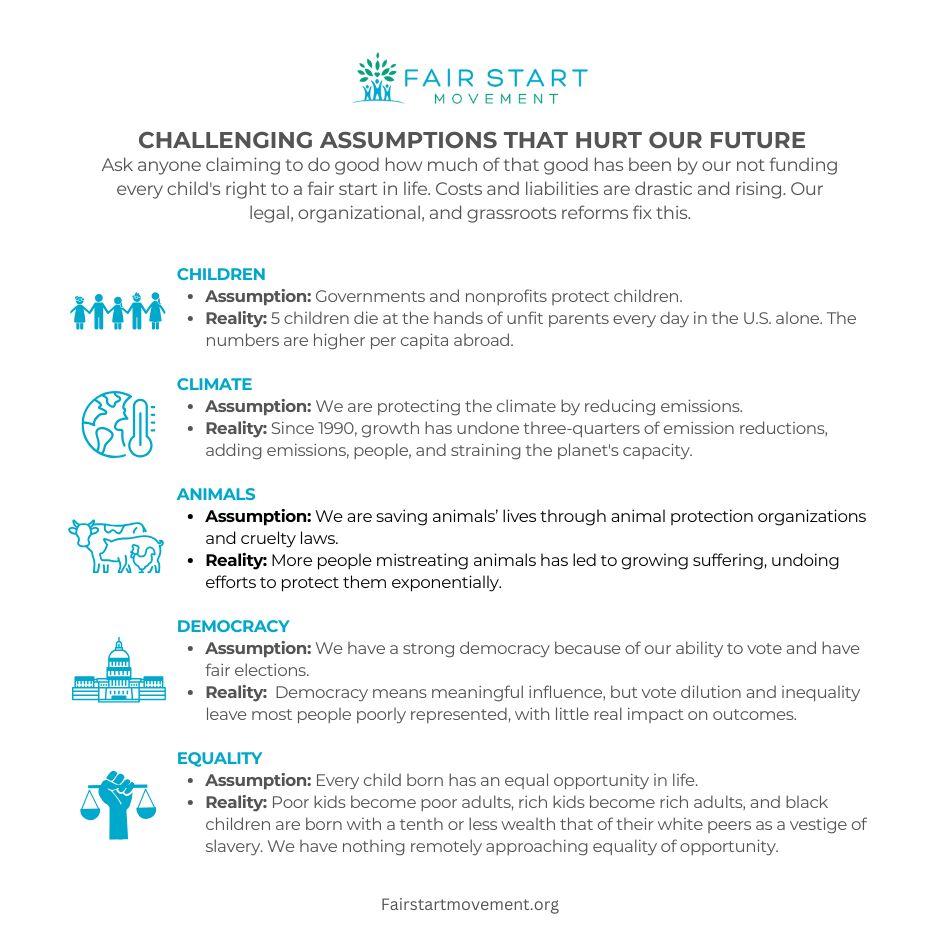
The Fair Start Movement exists to expose misleading impact claims and hold institutions accountable. Our Tell the Truth campaign asks key questions:
How do organizations account for children’s rights when claiming beneficial impact?
Are their claimed benefits being undone by growth and inequity?
By challenging these false narratives, we push for policies that prioritize birth equity and sustainable relationships, ensuring that animal law becomes a force for real justice—not a tool of wealth and power.
Conclusion: Be Effective
The commercialization of animal rights as food consumerism is a stark example of how a justice movement can be co-opted. Organizations continue making fraudulent impact claims while inequity and growth undo their efforts daily. Many companies that diverted resources from fundamental reforms ultimately failed.
We can change this. Start by asking: “When you claim to benefit animals, how do you account for children’s rights? Is your work being undone by growth?”
Only by telling the truth can we ensure that animal law serves animals not the wealthy individuals who define it for their own gain.
FAIRSTART’S ADVOCACY PAPER FOR CSW69: CENTERING CHILD RIGHTS IN REPRODUCTIVE POLICIES
Integrating Child Rights into Reproductive Policies: A Fair Start Approach
The Fair Start Movement advocates for a fundamental shift in reproductive policies, moving beyond traditional frameworks focused solely on fertility rates and contraception to a holistic, child-centered approach. At its core, the Fair Start Movement is committed to ensuring that every child is born into an environment that fosters their well-being, growth, and future success. Aligning with global frameworks, such as the UN Convention on the Rights of the Child (CRC), the Beijing Platform for Action, the Maputo Protocol, and the Sustainable Development Goals (SDGs).
Our mission is to ensure that every child is born into conditions that foster their well-being, rights, and future opportunities, granting them the ability to influence their outcomes in a just and equitable society.
In line with this, FS has initiated petitions before the UN andACHPR, and has launched a Tell the Truth (TTT) campaign, to bring these changes to the forefront of international legal discourse.
Reproductive Rights as a Foundation for Child Well-being
For too long, reproductive policies have been narrowly defined by access to contraception and abortion, neglecting the broader socio-economic realities that shape family planning choices. Fair Start advocates for a paradigm shift from simply reducing fertility rates to creating environments where informed reproductive choices are supported by education, economic security, and child welfare protections as exemplified in our Seed for Future Africa Program across Africa.
Key Policy Advocacy
Governments must prioritize investments in education to empower individuals to make informed reproductive choices.
Reproductive rights frameworks should be integrated with child rights protections to ensure intergenerational equity and sustainability.
Child Rights in Reproductive Policies
Current reproductive policies often ignore the long-term welfare of children born into poverty, conflict, or fragile health systems. To achieve sustainable development,
reproductive policies must be framed within a child rights perspective, ensuring that every child is born into conditions that allow them to thrive.
Key Policy Recommendations
Right to Survival and Development (UNCRC Article 6): Ensure reproductive policies are not solely focused on reducing birth rates but also on providing conditions for child survival, growth, and development.
Right to Health and Nutrition (UNCRC Article 24): Strengthen reproductive policies to reduce child mortality rates, prevent malnutrition, and promote maternal well-being.
Right to Protection from Poverty and Exploitation (UNCRC Articles 26 & 32): Link family planning policies to economic and social protections to break cycles of poverty.
Right to Education and Equal Opportunities (UNCRC Articles 28 & 29)
Aligning with Global Frameworks
Fair Start’s policy advocacy aligns with major international frameworks, ensuring a unified approach to reproductive and child rights policies:
Beijing Platform for Action (1995): Calls for universal access to reproductive health services while recognizing the role of socio-economic conditions in reproductive choices.
Maputo Protocol (2003): Advocates for women’s reproductive autonomy but must be expanded to include policies that enable delayed fertility for child well-being.
AU Agenda 2063: Supports human capital development, gender equality, and social transformation, aligning with sustainable reproductive policies.
SDGs (2030 Agenda): SDGs 3, 4, and 5 highlight reproductive autonomy, education, and gender-responsive health policies as integral to global sustainability goals.
The Fair Start Movement’s Advocacy: UN Petition, ACHPR Petition, and the TTT Campaign
The Fair Start Movement is actively working to bring systemic change through various advocacy platforms, including our UN petition, ACHPR petition, and the recently launched TTT campaign.
The UN petition led by the Fair Start Movement calls for the integration of child rights into global policy frameworks, with an emphasis on addressing the long-term impacts of the climate crisis on future generations. The petition urges the UN to prioritize child welfare, ensuring that the rights of the future generation are safeguarded, especially in the face of environmental degradation and climate-related harm. It highlights the need for climate reparations to support communities most affected by environmental destruction, guaranteeing that future generations inherit a world capable of supporting their rights and opportunities.
Similarly, the ACHPR petition, presented to the African Commission on Human and Peoples’ Rights, calls for the integration of climate justice into policy frameworks across Africa. It stresses the need for African governments to advocate for child rights and demand reparations given the impact of climate change in Africa. This must be done in order to mitigate the effects of environmental damage on children, especially the future generations in order to have the opportunity to grow, thrive, and enjoy basic rights, free from the consequences of climate-induced harm.
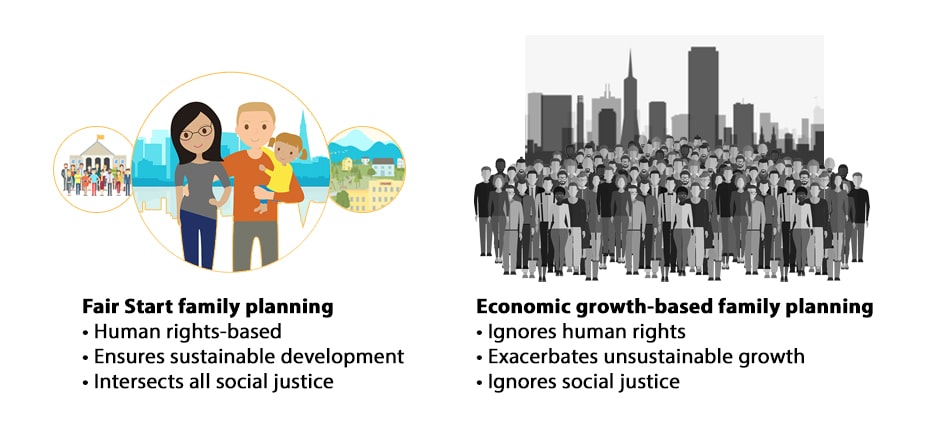
At the core of the Fair Start Movement is the belief that every child should be granted a fair start in life, free from the constraints of systemic inequalities. We criticize any political standard that fails to prioritize child rights, particularly policies that perpetuate cycles of disadvantage. The standard we criticize is anything that does not use child rights to constitute nations with such investment in each child that there are equal offsets of each child’s capacity to influence outcomes relative to zero, or 0, 1, 2,……0.
In other words, political legitimacy should be based on ensuring that every child is equipped with the means to influence their future, starting from birth.
The Deadly Lie: Privatizing Freedom and Political Legitimacy
World leaders privatized freedom in the birth-creation of political relations after 1948 by conflating the act of having and not having children under a singular umbrella of autonomy, rather than treating the former as requiring political equity for the child. This hid the nature of freedom by privatizing the creation of political relations. And it led to
the measuring, assessing and reporting of public interest outcomes based on standards meant to take oneself out of one’s birth and development context, ensuring children of color were treated as deserving less and placing them at increased risk. This was the hiding, linguistically, of birthright white supremacy and massive death debt with a fraudulent assessment and reporting standard that inverted political obligation, hiding the need for nations to invest equitably in each child just to have basic authority over citizens – to be “representative.”
“How dare you? In this inequality and climate injustices that have harmed us from the global south, our children are dying and have no accountability, using a top-down system that isolated victims from the global south. The wealth you enjoy was made from the innocent blood of poor people from the global south. You will not escape blame, and it will pass into your children because your children are born in the luxury that was taken from us.”
This sentiment reflects the reality that wealth accumulated at the expense of the Global South has left many children dead, with millions more at risk of dying from inequality and climate injustices. We must adopt and support an Afrocentric model while dismantling the top-down systems that perpetuate these inequalities.
A Call to Action
The Fair Start Movement calls on governments, policymakers, and global institutions to radically transform reproductive policies by embedding child rights at their core. This transformation is not just a matter of political or social reform—it is a moral and legal imperative that ensures the survival, growth, and development of every child.
We demand a departure from outdated, population-control driven narratives and call for a shift toward child-centered policies that prioritize equitable investments in every child’s future. It is time for nations to acknowledge their responsibility to invest in each child from the moment of conception, ensuring that every child is afforded the opportunity to influence their own future and thrive in a world free from systemic inequalities.
Additional Advocacy Talking Points for CSW69: Integrating Child Rights into Reproductive Policies & Promoting Delayed Fertility
Reproductive Rights Must Evolve Beyond Contraception and Abortion
Historically, reproductive rights policies have focused primarily on access to contraception and abortion without ensuring long-term socio-economic sustainability.
A more holistic approach is needed—one that integrates child rights, economic security, and education policies into reproductive health frameworks.
Key advocacy point: Shift the narrative from “reducing fertility rates” to “creating enabling environments for informed reproductive choices and child well-being.”
The Case for Delayed Fertility as a Policy Priority
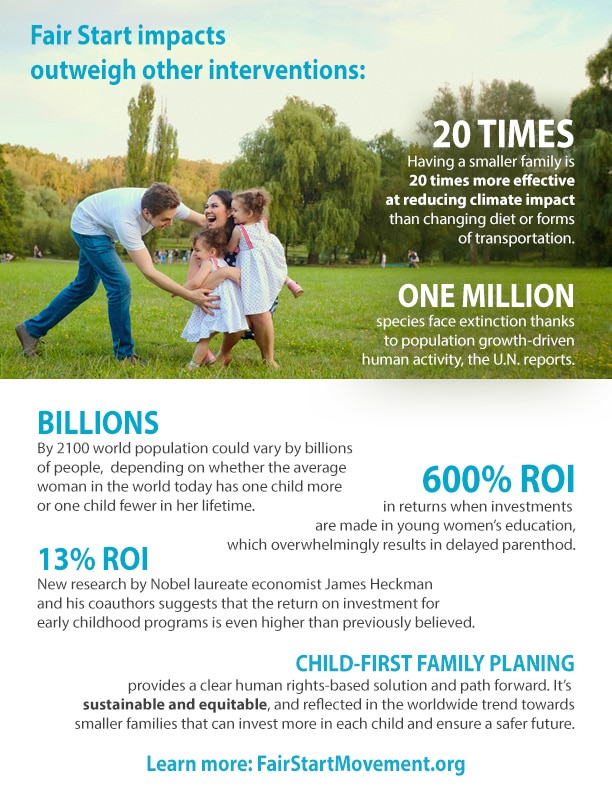
Studies show that delayed fertility (having children at a later age when socio-economically stable) leads to better health, educational, and economic outcomes for children and parents.
Policies should focus on empowering women and families to make reproductive choices that align with their aspirations and economic security.
Key advocacy point: Governments must invest in education, employment opportunities, and financial security for women to enable informed family planning decisions rather than just controlling fertility rates.
Child Rights Politics: Centering Children in Reproductive Policies
Current policies focus on reproductive choices without considering the long-term welfare of children born into poverty, conflict, or fragile health systems.
Child rights frameworks (such as the UN Convention on the Rights of the Child – CRC) should be integrated into reproductive policies to ensure that every child is born into conditions that allow them to thrive.
Key advocacy point: The shift toward child rights-based reproductive policies ensures that family planning policies contribute to intergenerational well-being, not just short-term fertility management.
Linking to Global Commitments: Aligning with Beijing Policy, Maputo Protocol, AU Agenda 2063, and SDGs
Beijing Declaration and Platform for Action (1995)
The Beijing Platform for Action remains a landmark policy framework that recognizes women’s reproductive rights as human rights.
It calls for universal access to reproductive health services and highlights the role of socio-economic conditions in reproductive choices.
Key advocacy point: CSW69 should advocate for full implementation of Beijing’s commitments, with an emphasis on integrating child rights and delayed fertility as part of women’s reproductive empowerment.
The Maputo Protocol (2003)
The Maputo Protocol (Protocol to the African Charter on Human and Peoples’ Rights on the Rights of Women in Africa) guarantees women’s rights to reproductive health, autonomy, and access to safe abortion in specific cases (rape, incest, or when the pregnancy endangers health or life).
Article 14(1) states that women must have the right to control their fertility and access family planning services.
Key advocacy point: While Maputo advances reproductive rights, its implementation should extend beyond contraception and abortion to include economic policies that enable women to delay childbirth if they choose, ensuring child well-being and intergenerational equity.
African Union’s Agenda 2063
Agenda 2063, Africa’s long-term strategic framework, emphasizes human capital development, gender equality, and social transformation.
The Aspiration 6 of Agenda 2063 calls for an Africa where development is people-driven, relying on the potential of its women and youth.
Key advocacy point: Sustainable reproductive policies must align with Agenda 2063’s focus on education, economic empowerment, and gender equality—ensuring that family planning policies are designed to uplift both women and future generations.
Sustainable Development Goals (SDGs)
SDG 3 (Health), SDG 4 (Education), and SDG 5 (Gender Equality) all highlight the need for reproductive autonomy, access to education, and gender-responsive health policies.
The ICPD 1994 framework emphasized reproductive rights beyond contraception, advocating for health equity, maternal support, and economic empowerment.
Key advocacy point: The CSW69 discussions should align with global goals and commitments, ensuring that reproductive policies support women’s empowerment and child well-being holistically.
Addressing Potential Criticism and Challenges
Risk of Restricting Reproductive Freedom
The shift towards child rights-based reproductive policies and delayed fertility must not be used to restrict access to contraception or abortion.
Advocacy focus: Policies should be framed as expanding reproductive choices, not imposing delays on fertility through coercion.
Economic and Policy Feasibility
Delaying fertility requires strong social and economic policies, including affordable healthcare, education, and job opportunities.
Advocacy focus: Governments must invest in infrastructure that enables reproductive autonomy, rather than focusing solely on birth rate policies.
Avoiding Population Control Narratives
Some policymakers might misinterpret delayed fertility as a population control strategy.
Advocacy focus: This is not about controlling population but about ensuring sustainable reproductive choices and child well-being.
Key Child Rights Issues we can include in CSW69 Advocacy and How to Make Them Relevant
Child rights must be central to reproductive policy discussions because policies that affect fertility and reproductive choices directly impact the well-being, rights, and future of children. Below are the key child rights issues that should be included in the CSW69 advocacy, along with their relevance to the discussion on delayed fertility and reproductive policies.
Right to Survival and Development (UNCRC Article 6)
Relevance:
A child’s right to life and healthy development is directly linked to maternal health, prenatal care, and economic stability of parents.
When reproductive policies focus solely on reducing birth rates, they overlook the quality of life for children born under precarious conditions.
Delaying fertility can ensure that children are born when parents are physically, emotionally, and financially stable, improving survival rates and reducing child malnutrition and preventable diseases.
Advocacy Point:
Reproductive policies must not only provide access to contraception and abortion but also ensure that every child born has the conditions needed for survival, growth, and development.
Right to Quality Health and Nutrition (UNCRC Article 24)
Relevance:
When young mothers (especially adolescents) have children before they are financially and emotionally ready, it increases child mortality rates and malnutrition.
Studies show that children born to older, economically stable mothers have better health outcomes and access to healthcare.
Unsafe abortions due to restrictive reproductive policies also lead to orphaned children or children left in unstable care systems.
Advocacy Point:
Governments must strengthen reproductive policies to ensure that family planning services support women in choosing when to have children based on health and well-being factors.
Right to Protection from Poverty and Exploitation (UNCRC Articles 26 & 32)
Relevance:
Children born into poverty are more likely to experience malnutrition, lack of education, child labor, and trafficking.
Delayed fertility allows families to break cycles of poverty, ensuring that children have better access to education and resources.
Young mothers, especially teenage girls, are often forced into economic vulnerability, leading to child marriage, sexual exploitation, and human trafficking.
Advocacy Point:
Governments must integrate reproductive policies with economic and social protection policies to ensure that children born into any family have financial stability and security.
Right to Education and Equal Opportunities (UNCRC Articles 28 & 29)
Relevance:
Early and unplanned pregnancies often interrupt girls’ education, pushing them into economic dependency and limiting their ability to provide for future children.
Children of economically stable, educated parents are more likely to stay in school and achieve their full potential.
Adolescent pregnancy is linked to school dropouts, creating a generational cycle where both mother and child face educational barriers.
Advocacy Point:
Reproductive policies must prioritize delaying fertility to ensure that women and girls complete their education before becoming parents.
Governments should expand school-based reproductive health programs that combine contraception access with economic and career development programs for young girls.
Right to a Family and Social Protection (UNCRC Article 27)
Relevance:
Many children born into unstable environments experience neglect, abuse, and separation from their families due to economic struggles or unprepared parenting.
Orphanages and foster care systems are overburdened, and lack of support for struggling families contributes to the cycle of poverty.
Reproductive policies should not only prevent unplanned pregnancies but also support families in raising children in safe and stable environments.
Advocacy Point:
Governments must align reproductive policies with child protection policies, ensuring that children are born into environments where they have access to stable family structures and social support systems.
Right to Participation and Decision-Making (UNCRC Article 12)
Relevance:
Reproductive policies often focus only on adult decision-making without including young people’s perspectives on their own reproductive futures.
Young people should have a say in family planning policies, especially in regions where early marriage and adolescent pregnancy are common.
Cultural and societal expectations often prevent young girls from exercising their reproductive rights freely.
Advocacy Point:
Governments must involve youth voices in reproductive policy development, ensuring that adolescent reproductive health policies are rights-based and inclusive.
Integrating Child Rights into Reproductive Policies: What Needs to Change?
To bridge the gap between reproductive rights and child rights, the following policy changes are also necessary:
Shift the Focus from Population Control to Child Well-being
Traditional reproductive policies focused on controlling birth rates rather than ensuring that every child born has access to a secure future.
CSW69 should advocate for a rights-based approach that prioritizes the child’s quality of life, not just reproductive restrictions.
Strengthen Economic and Social Protection Policies for Parents
Delaying fertility must be supported by strong economic policies such as: ✔ Paid parental leave ✔ Childcare subsidies ✔ School reintegration for young mothers
Governments must integrate reproductive health services with economic empowerment programs.
Expand Legal Protections for Young Mothers and Their Children
Policies must ensure that young mothers have access to education, job training, and financial support.
Laws must protect children born from unplanned pregnancies from discrimination and economic hardship.
Key Advocacy Message for CSW69
Reproductive policies must move beyond fertility control to focus on child well-being.
Delaying fertility should be a choice, supported by social and economic policies that protect both mothers and children.
Child rights must be integrated into reproductive health discussions to ensure intergenerational equity and sustainability.
Governments must invest in reproductive education, social protection, and legal frameworks that allow families to thrive.
Please consider making a contribution through Donate. Together, we can create lasting change to save next generation
How else would we account for unreported and unreportable animal cruelty, which comprises that vast majority of such acts? How else would the law account for avoiding that? What logically would precede ensuring relations likely to prevent it?
There is no universe in which beneficial impacts, taken out of context from their relative position to birth equity, occurred. They are just being stated out of context. Use of such-out-of-context claims hides the fundamental driver for the deaths: Enabling the powerful over the vulnerable
The undoing of their claimed beneficial work, and their masking of growth as the fundamental driver of the climate crisis, was enabled by the assessment and reporting standards that caused the climate crisis, standards that ignore illegal violations of vulnerable children’s birthrights. In other words, leaders at these organizations chose a version of animal law that – at base – excluded animal protection as a factor impacting how we invest in children coming into the world, and on balance this emaciated version of animal law did more harm to animals than these organizations did to benefit them.
We can fix this mess by moving what we claim to value – animal protection and liberation – into our fundamental constitutional regimes. How?
It starts with Telling the Truth:
Facts: We have all collectively violated children’s right to a fair start in life, by allowing unsustainable growth, trading economic growth for loss of political equity, ensuring the degrading of ecosocial birth and development conditions beneath key thresholds, and assuming children of color deserved much fewer resources and much more risk. This has done more to harm our shared values – animal protection and liberation, experiencing moderate temperatures, enjoying access to food and water, etc. – as well as our many of our public interest missions, than we did to further them.
“Animal law” does not mean talking about abstract directives that refer to animals, and relying in good intentions and symbolic acts to achieve animal protection. Yes, advocates may have better intentions than Exxon, but how much do animals care about our intentions, and why not measure justice from an objective standard rather than use bad actors as the standard?
It’s first and foremost about having functionally protective, legal relations with nonhumans, an idea better reflected in the preambles of constitutions than any reference or lack of reference to animals per se.
Background
Humans are animals and our birth and development – our creation – is the largest determinant of nonhuman suffering. It outweighs any other human behavior that impacts nonhumans, exponentially. Our creation also determines how – through participatory democracy and representation, or what is really just political equity or our functional shared in democracy – our legal systems function.
Animal law starts with that issue – the creation of humans – the first necessary condition for something to be animal law and capable of protecting them. It starts at the subject level of our grammar, the “we” in our constitutions, or the creation-accounted-for existence of our relations with them.
AI systems adept at assessing racial injustice can detect equity values at the subject-level of value claims (and those values will alter the human-animal relations), versus the object level of those claims. Consider the need to distinguish between something like equity in hiring decisions versus who is birth-positioned to make those hiring decisions. A goal for permissible climate emissions as the object of a sentence differs greatly from a low emissions standard implicit in the “we” subject of the same claim, with that collective subject implying the ability of all referenced to be free from harmful emissions. Permissible emissions as a goal/object frames the political system as consensual and legitimate (especially from the perspective of nonhumans), which it would not be without restoration as a condition of the collective subject.
But instead, these issues are rarely discussed because creation ethics, unlike food, zoning, shelter, etc. policies, involve big questions of racial equity, climate reparations, personal responsibility in parenting, de-growth and liability for charitable fraud that hid the drivers of the climate crisis.
Creation ethics as a subject, threaten the nepotistic families and funders who for decades have used their wealth to define animal law in a narrow way, relying on advocates eager to get the benefits of well compensated but low-impact charade work, contrary to the interests of nonhumans and vulnerable humans. Every day growth undoes the impacts and benefits animal lawyers and others advocates claim to produce. But few will admit that.
Performative Animal Law
It’s easier to engage in performative animal law where we just talk about how legal language refers to animals, while the actual benefits to animals and vulnerable humans are undone via inequity and growth, and we enjoy the benefits of our growth based investments and institutions. It’ s easier to use wealth made at cost to animals to create interventions that are being undone daily, in ways that benefit those creating the interventions more than animals, using large media budgets to drown out possible interventions that would on balance benefit animals. But there is no such thing as anthrocentric animal law.
You don’t get to justice by starting with injustice, by violating children’s rights in the birth-creation of actual relations. We don’t get to legitimate nations by having zero functional protections for children as they enter the world, and thus for the nonhuman world they will impact.
For example, circa 2003 Fair Start advocates previously working with the Humane Society of the United States (“HSUS”) embarked on a policy to frame farmed animals as the most numerous class of animals subject suffering at the hands of humans. We did this while partnering with Whole Foods and other entities intent on commercializing the growing anger HSUS and others would create by publicizing the treatment of farmed animals. We had found a way to monetize the idea of animal liberation, but not actually accomplish it.
But HSUS and others chose to focus on food reforms, all of which assumed growth-based food markets. While the book Winners Take All: The Elite Charade of Changing the World, by Anand Giridharadas, looked at issues of human justice, that turn – to focus on food sales over fundamental justice – is the greatest example of the phenomenon he saw, once we measure by the numbers of victims impacted.
Many of the funders, legal advocates and activists working on these issues at the time would go on to make a lot of money in the food sector, in the years to follow, having used sensational campaigns centered on granular/micro issues of animal suffering that overshadowed the macro forces – like growth-driven demand – undoing the work. That growth driving more and more animals into suffering and acting as the largest diver of climate outcomes.
How does this relate to animal law specifically? Animal law is arguably the most demanding form of social justice, and thus a good measure for how systems fare in being just or unjust. It purports, in referring to a legal system capable of actually protecting nonhumans, to be inclusive of the vulnerable in a measurable way.
Animal law goes beyond impacts, and requires assessments about how we are including future children into legal systems in ways that empower those children and legitimate the systems. Look closely at all of the content being created and framed as “animal law,” from 2003 until today. You will see a lot of focus on food and similar downstream-only interventions. Look then for comparable work on family reforms that would have benefitted nonhumans, and vulnerable humans, alike. You will be surprised to find little if any, and with some of the organizations actually encouraging growth that ignores children’s rights in favor of economic growth.
In many cases the funding of animal nonprofits exemplifies a next-level expansion of the corruption that is well documented in philanthropy: The use of well-funded messaging, media, academia, etc. to limit the ability of audiences to use accurate criteria to judge the truth and value of claims and impact.
In one case, those designing programming at Harvard University define the scope of their work in an inaccurate way that implies a beneficial overall impact on animals that is totally unsupported by their work. When political equity is factored in, the scope privileges those funding the work more than the animals they claim to protect. The site refers to the program as “Committed to analyzing and improving the treatment of animals through the legal system,” and yet nothing in their policies or work addresses the fundamental driver of animal suffering and death because that driver—anthrocentric growth—benefits the school and their funders.
One senior funder, associated with the program, is known for creating digests of animal law developments. That funder has refused requests to cover developments in abortion access precedent as “animal law” because, according to their representative at the time, the idea of “animal law” required legal developments that discussed animals. They ignore legal reforms around abortion access as a benefit to animals, despite the disproportionate benefit abortion access has for animals, relative to food. They define animal law in ways that ignore the largest determinants for animals, things like the notion of black birth equity as an overriding human right.
That standard – which is the same one used by a notorious milk brand – is key for the funder, because their entity is highly nepotistic, spending more on family members compensation than on policies capable of actually benefitting animals. Many of the entities relying on funds from funder avoid talking about this issue for obvious, but unethical, reasons. That silence ensures funds meant to benefit animals don’t – on balance – have that effect, while deadly inequity between humans grows.
In fact, many animal lawyers have continued to double down, explicitly embracing anthropocentric systems that have benefitted their funders more than animals. Why does all of this matter? Demands for climate reparations are growing, and many will be wondering what those attorneys and advocates working under the mantle of protecting the most vulnerable were doing during the most crucial years of us all knowing the climate crisis was unfolding, years when we were able to do something about it.
Animal lawyers, more than most, will have questions to answer for their role.
Were they advocating for performative behavior-changing standards without changing the fundamental relations being created, focusing on micro propertyhood, while hiding a much more lethal form of macro propertyhood? What role did funders making money on the latter, those who did not want to question their or their kids’ birth-based national, intergenerational, racial, etc. positionality, have in that fallacy?
If we have account for way inequity and growth undoes our claimed good work for animals, in which fantasy world were we actually benefitting animals? Some recent direct action efforts give promise that animal law can move towards animal liberation, and not just talking about it while living in ways – fundamental ways – that hypocritically undo it. But unless direct action animal liberation movements also include macro animal liberation reforms, they too are not serving nonhumans on balance.
Fair Start: Fundamental Fact and Value Checking
The Fair Start Movement was formed to engage in fundamental fact checking, scanning for use of the same fundamentally illegal standard of entitlements that caused the crisis by those who would use it to avoid liability for the crisis, and for life-saving and legitimating climate reparations.
Under the Fair Start Tell The Truth campaign, we ask questions to bifurcate key influencers into the fair and unfair, and in the latter identify key barriers who should disclose how much of the value they claimed to create has been undone when we factor in growth, and the violations of children’s’ birthrights that enabled that growth. In this process we contrast impact claims with actual harm, relative to a zero-harm baseline, or the neutral standard necessary for a coherent understanding of freedom.
We then urge those key barriers to admit the undoing, and shift some percentage of their resources to incentivize fair starts in life for all kids as the most just and effective solution to the problems we face today. Legitimate nations begin with – or constitute through – rights-based relations, and Tell the Truth identifies “nonconstitutive” targets blocking that process, often by creating a fantasy world of inaccurate impacts.
The Fair Start Movement formed because of the common use, in U.S. companies, nonprofits, media, universities, etc. of an illegal assessment and reporting standard to hide climate damage liability, a standard based on the same fundamentally Illegal metrics that caused the climate crisis and millions of deaths. The standard – deriving from Twentieth Century power grab efforts to subvert civil rights movements – siloes justice away from birth equity into downstream issue areas that act as decoys, hiding a growing lack of birth-based political equity.
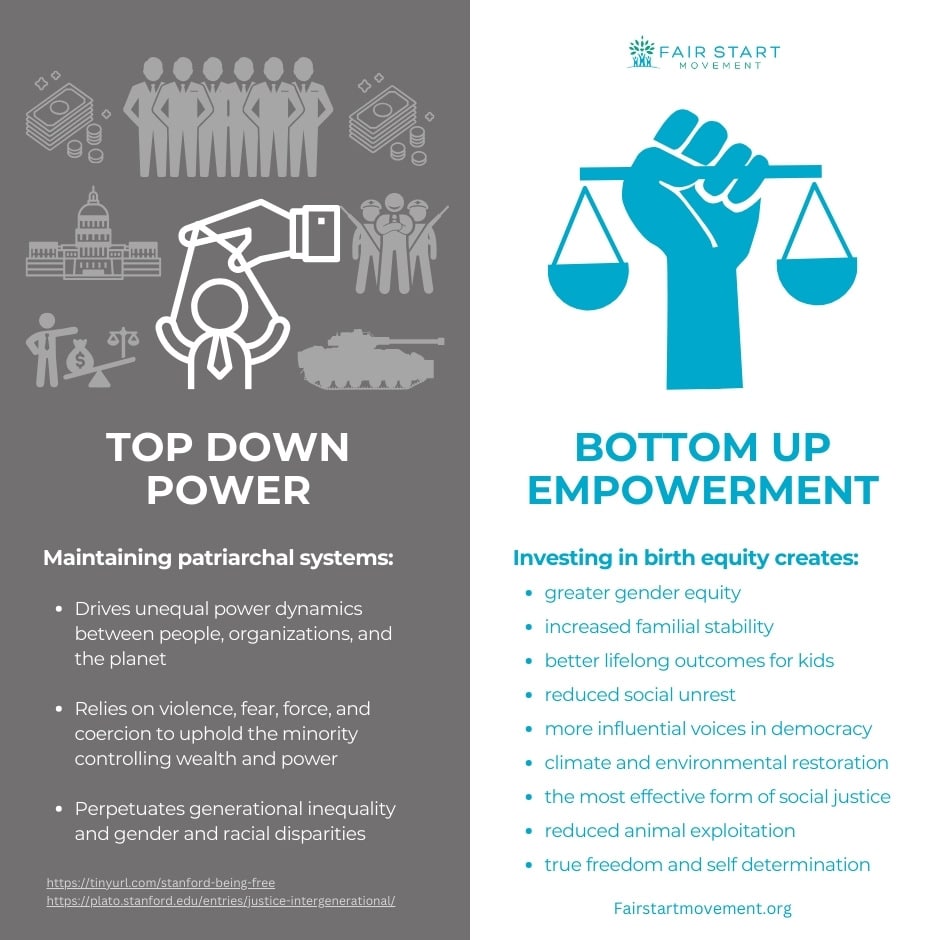
This power grab effectively skipped children’s rights in the logic of human rights regimes, applying them only after children were born into conditions that violated the rights. This was a way to shift costs, evade hard checks on growth, avoid racial equity, and ensure status quo in the direction of power. The illegal; standard centers on using top-down, abstract, and arbitrary measures for social justice and public interest outcomes, rather than zeroing out harm in the actual creation of relations.
Any most of the companies that diverted funds away from successful reforms actually failed.
We can all start to change this, and with easy conversations that begin with questions like: “We noticed you said this about your work and impact. We worry this refers to the use of the same fundamental assessment and reporting standard that caused the climate crisis – the one that does not require child-rights based family planning. How were you accounting for children’s rights as they entered the world when you claimed to have a beneficial impact? Were your impacts being undone?”
Please consider making a contribution through Donate. Together, we can create lasting change to save next generation
Those working in public interest often make claims, and choose definitions of things like “humane,” “green,” “child welfare,” “democratic,” “inclusive,” “legitimate” and “sustainable,” that give enough wiggle room for influential officials and funders to make money on inequity and growth driven investments, at cost to the freedom and lives of many.
They benchmark claims for the wealthy, not the vulnerable, and many are dying as a result.Like me, their statements #leftout that they begin from a system of entitlements that do not actually protect the most vulnerable, and likely undo the good they claim to be doing. These moves hid expensive liability that could move resources and save lives.
This back and fourth dialogue will show many starting from a self-serving position that risks millions of human lives and countless animals.
Between 2000 and roughly 2021, as a federal attorney, as someone teaching law, as a public interest litigator, and as someone creating content for media like the New York Times and other outlets, I avoided subjects that impact United Nations assessed climate “loss and damage” liability, and in ways that protect extreme wealth made at deadly cost to others. This illegally benefited some at deadly cost to many, in violation of things like the human right to a healthy environment.
I used wealth made at deadly cost to black children to promote low impact public interest work that wrongly implied the legitimacy of basic entitlements, further exacerbating risks to millions of other children. Often we focused on food law to benefit animals, because diet does not implicate positionality relative to discussions of share equity. This created an illusion of truth and value. I claimed a role in effective immigration and national security work, and victories in legal cases for animals and the environment, the impacts of which I and others knew were being undone by inequitable growth policies that violated human rights – policies from which we benefitted. Even when advised of the inaccurate nature of their claims, many organizations and their funders have simply persisted.
Animal rights and law is an area of public interest that shows the greatest disparity between what was said, and the actual policies chosen. In many universities I taught content, like cases, statutes, and treaties, as authoritative and justly enforceable through violence, knowing such claims were based on a fallacy that served me while deriving others of their entitlements. Whatever those cases, statutes, and treaties seemed to do in terms of ensuring beneficial change, they were being undone by insufficient neonatal and child welfare systems used to grow economies, a policy many animal rights lawyers ignore because it benefits them. I had one prominent environmental / animal rights professor urge me to avoid discussions of the need for ecocentric over anthrocentric family reforms, knowing that this would mean his children benefitting – through growth-based investments and otherwise – at deadly cost to others.
For the animal rights work I did, the omission hid that we did not help animals on balance, once growth and share inequity was taken into account. This created an illusion of truth and value by letting listeners assume certain entitlements, including ones antithetical to our mission. We also did this by ignoring conflicts of interests, including my own. To ensure legal systems actually protect animals would take massive reforms we never seriously attempted because we could raise funds – in what some have called off-ramp distractivism – without taking on such a massive thing. We knew donors often wear #blinders. It also let us silo off our work from unifying forms of social justice, at cost to those advocates and immediate benefit to us, and it let us ignore the way inequity-driven noncompliance with the law undoes the value of legal victories.
As social justice and animal rights lawyers we inevitably decried violence, but never backed the idea of defunding the police or military because that was a form of violence that benefited us – including the way growth-based birth inequity enriches white kids at cost to children of color. We wanted the benefit of a legal system in terms of coercively obligating others to do things in a system where we held prestige and rank, but not to cover the high costs of actually empowering others with influence over that system. When it came to others’ children, we could benefit again, exploiting them for growth even at disastrous cost to animals.
This account is from a leader on climate reforms in Africa:
An anonymous funder from the United Kingdom pledged to support Rejoice Africa Foundation with $300,000USD to do water project as charity, but not as obligations to cover the harm caused by the true costs of wealth. The wealthy funder, seeing our demands for reparation, then declined the pledge to support the water project in Uganda, as I was struggling to look for funders to pay such obligations because they allow us the dignity of living in the spirit of human rights, as equals who should not be harmed without restorative justice.
It was around this time that a child in a nearby village – Judith – died of Malaria – as the disease worsened, driven by the costs of wealth and with those costs – the climate crisis, the greater breeding of mosquitoes, no prevention measures in place.
Immediately after a while , another wealthy funder from the USA funded a conference with $50000USD, continuing to ignore obligations. The conference did nothing for children like Judith, and very little even for the animals the funder wanted to protect. What could they show? Many wealthy funders from global north have avoided funding Rejoice Africa Foundation because they want to pay as charity not as obligation hence causing conflict of results in climate reality in avoiding climate liability. Rejoice Africa Foundation would double work a $50k grant as an obligation. But most funders are busy not accepting to fund this initiative. Rejoice Africa Foundation would like to call funders to reconsider funding this initiative and invest $50k in women and children as the primary obligation to stop climate genocide.
[Note: Mwesigye Robert suffered from Malaria while fundraising for $3k in February/2024. Malaria in Uganda: 100% of total children go to health facilities every day. 40% are diagnosed with Malaria and 20 % of these children would get fully treated with anti-malarial and 15 % of these would go to buy treatment from private health facilities. 5% die from complicated Malaria due to lack of adequate treatment for Malaria. Yet in global north Countries, children don’t suffer from Malaria unless they are traveling back from Africa. Wealth imbalance is the cause of this and now leading to climate genocide.]
I omitted information because it benefitted me, and those that employed or funded me, or that published my work. My claims and work became a decoy, sensational minutiae, benefitting wealthy funders by evading costly investments in future generations, ones that would impede growth. Wealth made at deadly cost to others was literally used to drown out mostly black voices, voices that could have saved human and nonhuman lives. In some cases I urged others to avoid discussions of white supremacy, when the evidence is clear that gargantuan race-wealth disparities drive daily power relations all around us.
For example, one animal law funder who helped build programming at several leading laws schools made claims about benefitting animals. His underlying policy choices instead:
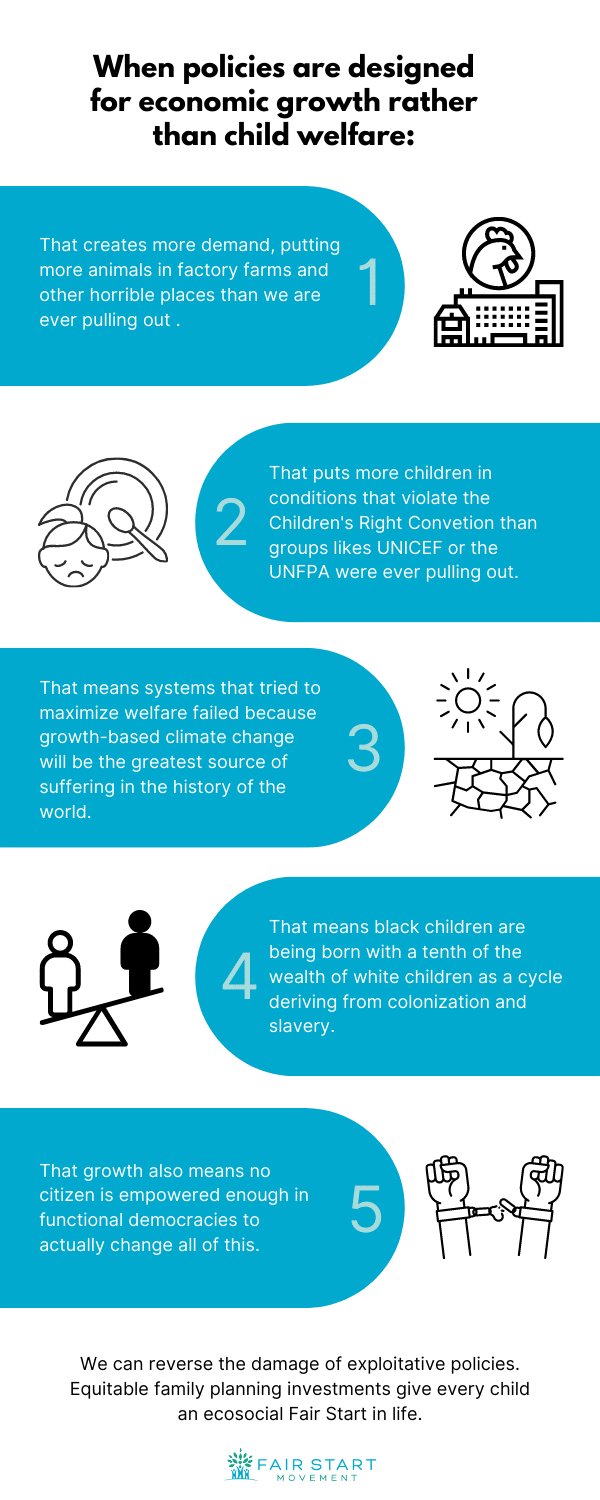
Created more demand for animal products, and thus suffering, death, and extinction, than the policies he promoted saved.
Did so while ensuring black children entered the world with a tiny fraction of the wealth of white children, which meant they would die in greater numbers from the ecological impacts the increased demand would create.
Elizabeth is the Founder and Executive Director of For All Animals (FAA) and for decades has overseen communications for nonprofits: She said:
“To truly measure the impact of our efforts to protect animals and the environment, we cannot review metrics in a vacuum. It is far too easy to manipulate impact by hyper-focusing on one positive outcome or extrapolating beyond acceptable mathematical standards. This not only presents a false narrative of success, but typically ignores the negative reactive implications. Fair Start’s approach requires us to examine individual crises as part of a whole, and highlights the global impact the recognition of a basic legal right to equity could bring.
We can’t fill shopping malls by cutting citizens off from being born and raised into town halls. The money that had been made by cutting many off is owed to first change the system, by elevating birth equity as the basis of all sovereignty. Self-determination, by any conception, means laws that protect the lives of beneficiaries of any political system only derive their legitimacy from the prior act of including and empowering – in a measurable way – future generations, rather than exploiting them and thereby disenfranchising and harming all of us.
We would all rightly ostracize anyone refusing to hire persons of color, and yet we embrace those defending their wealth made at cost to millions of black lives, when it could still save countless others. Many funders are changing their views on entitlements to avoid these deaths, and mounting #deathdebt if they do not.
Had I been asked the questions above, regarding children simultaneously entering the world as I made claims, I would have had to reveal failings in my and others’ assumptions. That would have prompted the beginnings of beneficial change.
The longer we wait, the more innocents will die. All justice starts with human rights and the dignity of expecting, in equity, the power you and your children are owed. Humans can only constitute the future through and accurate language of obligation and the creation of just power relations. It would be physically impossible to be free unless we see ourselves as, and act under an obligation of, being ruled by persons who will parent and the children they will have, rather than by those at the top, officials, wealthy families, celebrities, etc., who hide the mistake above, and who should only have influence to the extent the creation of others ensures measurable equity and the equal offset of their power.
Please consider making a contribution through Donate. Together, we can create lasting change to save next generation
Fair Start formed because of the common use, in U.S. companies, nonprofits, media, universities, etc. of an illegal assessment and reporting standard, one designed to evade the costs of complying with the Children’s Rights Convention. The standard is used to hide climate damage liability, and is based on the same fundamentally Illegal metrics that caused the climate crisis and millions of deaths with it.
The standard – deriving from efforts to subvert civil rights movements – centers on using top-down, abstract, and arbitrary measures for social justice and public interest outcomes, rather than zeroing out harm in the actual creation – in birth and development – of power relations and political equity.
We can all change that standard, and with easy conversations that begin with questions like:
“We noticed you said this about your work and impact. We worry this relies on use of the same fundamental assessment and reporting standard that caused the climate crisis. How were you accounting for children’s rights as they entered the world when you claimed to have a beneficial impact?”
You don’t get to justice by starting at injustice.
What’s justice?
It starts with existence, with birth, developmental and emancipatory positionality – or what we understand to be the commonly accepted idea of intergenerational justice as minimum thresholds for children entering the world, though those thresholds must necessarily modified to account for the fundamental driver of the climate crisis. That driver, at based, is the failure of world leaders to elevate measurable political equity as the value from which legitimate governance and legal obligation derives.
Fair Start’s research shows that ignoring this factor meant that many charities on balance did more to enrich the families of wealthy investors/funders than accomplish their missions.
By not accounting for the fair or equitable creation of actual power relations at birth, our social justice and public interest work became performative, abstracted from reality in a way that ensured the current crises. Our peer-reviewed research also shows that all legal obligations derive from language that accurately captures our first obligations to others, and given our harming future children in the climate crisis, the corrective admissions we call for here will move our language towards mutually empowering all using measurable self-determination – not disempowering exploitation for unsustainable economic growth – as the base value.
Dignity requires orienting from truth, from reaerations, not failed forms of charity and after-the-fact justice derived from injustice.
Change can start with interim disclaimers like “our work does not account for inequity,” as well as making disclosures under the Fair Start Tell the Truth campaign contrasting omissive claims that used the status quo standards with measures of actual harm to vulnerable infants and animals.
Background
The core problem originates from the subversion of the civil rights and anti-apartheid movements, decades ago, when world leaders removed political equity from reproductive rights regimes, essentially ensuring “separate but equal” standards in families. Without political equity, reproductive rights regimes became fundamentally unjust and unsustainable, skewing what it means to be self versus other-determining by wrongly treating the act of having children as more personal to the parents than other-determining for the child. The regimes enabled prior generations to abuse an unlimited right to have children at cost to the rights of current and future generations, creating massive inequity and ecocidal growth.
To the extent wealthy, mostly white, families owed reparative justice, this was reparations fraud, the evasion of theheavy investments in racially equitable birth, development, and emancipatory conditions child rights required.
The lack of investment, the lack of necessitating rights compliant early childhood development conditions, directly enabled catastrophic growth and massive inequality, which measurably did more harm than subsequent philanthropic efforts, all tainted by the desire to exploit the growth, did good because it blocked life-saving funds in favor of concentrating and growing generational wealth.
Those concentrations are so extreme today that they can ensure sustained propaganda of an underpopulation “crisis” in the middle of a growth-driven climate crisis killing millions. They use an illegal standard for cost/benefit assessment and reporting that was designed to benefit the children of wealthy investor-philanthropists by arbitrarily scoring their worth higher than other children, in violation of the rights of all children. Continued use of that standard gives rise to justifiable retaliation.
Those insufficient public interest efforts would have inevitably treated children of color as deserving a fraction of the resources and political influence, and exponentially more risk, meaning that today billions of persons are at extreme risk from a climate crisis they had little to no role in causing. The impact claims this philanthropy funded were wildly off base, being undone daily by the growth driving political inequity (while enriching many of the funders).
There is no universe in which those positive impacts actually occurred – they were simply reported out of the context of negative offset, omitting the largest determinant undoing the benefits every day, making social justice a top-down and performative charade.
There is no way to assess value in the world that would not be measured relative to basic infant health and life prospects, including self-determination, because infant health and development is the objective basis through which humans experience all value, and the fundamental baseline for unifying values like health, equity, democracy, etc. It is the minimum measure, or floor, for political legitimacy. It’s very hard to change a future child’s prospects once they are born, so justice should focus on thresholds beneath which children should not be born.
Much of the philanthropy we see today, which avoids discussion of how inequitable growth easily reversed infant development outcomes, does more to hide this problem than fix it. In fact, funders have blocked some efforts to reform the standards, thereby minimizing climate damage evaluations, including amounts, the weight or priority of claims, universal enforceability, and priority uses of funds.
But continuing that tradition and policy of ignoring political equity in reproductive rights goes beyond racism. By hiding from policy the actual creation – at birth – of power relations, it skews how we see the world, treating the most interpersonal thing – having kids – as personal. This moves values, like nature, equity and democracy, from defining a subject-level “we” towards being minimized objects in our sentences, which has enabled things like discount rates and other top-down inaccuracies that exacerbated the climate crisis. The focus will be on emissions, ignoring how growth undoes reductions while bringing children into the world without the resources to deal with the impacts.
Against all of this, Fair Start, or equity, is the preemptive standard to assess reparations and reparations fraud because governments cannot create their own definitions of legitimacy in lieu of the objective measure for that value.
There are a few tactics we can use to change the standard:
Why? Bringing future children into the world is the largest determinant of outcomes in the long run, and because who we should be – fundamentally relating to one another based on rights and not growth commerce – comes before what we do, we can take radical action to move the incentivizing funds. Would we really think it racist to deny employment to someone because of their race, but to ignore climate risks to millions because of race-based differences in generational wealth?
Climate change and inequality are birth-interconnected crises that disproportionately harm the most vulnerable, requiring immediate, systemic action.
This is not a choice on a menu of public interest interventions. This work relates to the inescapable system of costs, benefits, and obligations we are all born into, the largest driver of outcomes, and the choice to exploit that system or legitimate it.
If we care about a particular value, like animal liberation, wouldn’t we be eager to account for a fundamental cost/benefit analysis that accounts for the harm wealth has done, and what it owes going forward?
2) Identify and make examples of high profile barriers (nonconstitutive free riders, or “noncons”), many of whom would have funded social justice decoy philanthropy.
Failure to resolve this injustice takes the debtors outside of deserving public (legal/inclusive representative) protection because their bypassing child-rights compliant positionality and formation of relations, means impossible to account for their being included in a comprehensive system of obligation/rights that actually accounts for the costs and benefits of birth positionality. They are not included in any organization of mutual obligation, and deserve as much as they necessitate for the most vulnerable.
Their wealth was fundamentally made at cost to our freedom, and the freedom of others, and there is no reason we should not take it back in order to fundamentally liberate. Their behavior, each day, is evidence of whether they ensure legitimacy, or collective freedom from power, or assume illegal entitlements to benefit at deadly cost to others while masquerading as free.
This tactic can begin by asking government officials, wealthy individuals and families, and key leaders across all sectors whether they think kids deserve a fair start on life; how they are accounting for entitlements that ensure children only being born into conditions that comply with their rights under the Children’s Convention so that we can all share a legitimate, or rights-based, political system; and to admit their entitlements derive from and are conditioned upon an obligation to measurably empower the constituents in a way that actually justifies governance.
This can include focusing on the adult children of key targets, who under the preemptive standards above would inherit the death debt of their parents.
For decades the majority of assumptions in population ethics, as a field, have been fundamentally premised on welfare improvements that the climate crisis has now reversed. There is no room for continued debate under the status quo entitlements, as the death rate climbs. Illegal power derives from the illusion of representative authority, used to to justify the exclusive right to the use of violence. But free persons will only follow rules that are fair, and the first rule accounts for our creation or positioning into the system of rules, so that we are more self-determining than determined by others.
3) The Fair Start Tell the Truth (TTT) campaign: In the campaign we take omissive impact claims that were relative to an impact and assessment standard that scored children of color as deserving less resources and more risk, and instead include the full impacts to create contrast. Language matters, because it would be physically impossible to be free without communications that capture how we fundamentally become legally obligated to others as they enter the world, and we are thus preemptively obligated to communicate in accord with shared values to be self-determining.
There is no such thing as an inclusive, representative, and hence legitimate legal system without that.
The TTT campaign allows everyone to relate their experiences to the dynamic reality of the most vulnerable, children entering the world and impacting animals – in the actual first creation of unjust power relations – rather than relating those experiences to decoy points (politicians, celebrities, advertising, etc.) created by the powerful. All legal obligation derives from language, and ours should mutually empower – not disempower – at the base.
Language that accurately reflects and forms obligations has to be accessible to the people who are engaged in the discourse – meaning it definitely is not a traditional constitution in the sense of abstract words. To exemplify this Fair Start is targeting key examples of fraud that go well beyond greenwashing, and in some cases involve criminal conduct that will be investigated before the African Commission on Human and Peoples’ Rights.
There is an analogy for the shift that is needed: All work is done on a floor that is falling apart, and some want to keep going while others fall through, clutching at the others around them as they fall. These free riders threaten us all. Why? It is physically impossible to be free, as in self-determining, if we cannot ask how and then assure that persons are created, developed and emaciated in ways that offset equally their capacity to influence political systems, relative to a neutral position or objective standard for evaluation.
Those entering the world are either not empowered, or we all have no choice but to be subjected to their power and influence – including the degradation of the environment around us. We should instead empower the governed, not the government and the wealthy.
Please consider making a contribution through Donate. Together, we can create lasting change to save next generation
We make sure those claiming to do good are not quietly undoing it, for their own benefit. We simply ask: For any claim of doing good, how is the one making the claim accounting for the most impactful factor: The resources and empowerment with which children enter the world and are measurably empowered to constitute a legitimate nation.
This question identifies constitutive reparations fraud by publicly asking how claimants account for children entering the world on their claims of beneficial public impact, given that there are no functional reparative protections for infants entering the world, and the animals and ecologies with whom they interact. This is not about population. It’s about lies and omissions to gain power.
If the claimant valued some outcome, who will cover the child inequity and entry costs to that outcome – growth undoing climate mitigation, for example – and evade more of it? Is the claimant doing more harm than good by ignoring entry without equity? Do they start with enabling the powerful over the vulnerable? Did the claimant spend more on undoing their mission than furthering it? What formula do they use to assess damages in climate, civil rights, environmental justice, etc. cases?
These questions involve looking for an omission, and a belief that children of color deserve less, and should suffer the brunt of a climate crisis they did not create. The question creates a permanent resistance to oppression by testing authority to see if it is fully derived and conditional, and identify frauds that would use authority without that derivation and conditioning.
The Quiet Subversion of Civil Rights Using Child Inequity
Concentrations of wealth and power in the Twentieth Century have used child inequity to subvert the civil rights movement, and evade race and other reparations. This was and is reparations fraud, and the hiding of a share equity deficit that is killing children of color. This fraud – like the omissive use of language that assumes black lives are worth less – clouds the language and concepts needed for universal reparative justice, and the fact that by ignoring ecosocial birth equity, most philanthropy ensured the climate crisis and did more harm than good.
“I advocate that Black birth equity, through reparations, should be the primary action taken to resolve consequences such as corporation induced climate change — in particular, because those who are negatively impacted the most are Black communities in California and their future Black children.” — Dr. Breeze Harper
By isolating women in the family planning process and ignoring child equity, wealthy families have for decades ensured inherited poverty, or commercially exploitative rather than legitimate and inclusive relations. Martin Luther King, Jr. said, “What does it profit a man to be able to eat at an integrated lunch counter if he doesn’t earn enough money to buy a hamburger and a cup of coffee?” That condition derived fundamentally from the use of illegal family entitlements that undermined all civil rights and created a generational apartheid that Fair Start and others will dismantle with women’s networks engaged in reparations recovery and preemptive self-defense.
These are the efforts to repair that inequity by ensuring no child is born outside of a system of debt and reparations accounting,so that no child is born beneath a line of measurable empowerment. Freedom is an objective and measurable concept, linked to historical ecological and social markers that are tied to birth and development but often ignored. What was owed in birth equity, and one’s influential share in democracy, was instead taken and sold back in growth-based economies.
Reparations Fraud
Reparations fraud is subject to legal action, especially in cases where the evaluation of damages will rob victims of what they deserve because the targets of the reparations claims have already received the benefits, often under false pretenses.
Reparations fraud involves literally using wealth made at deadly cost to the values they claimed to further, wealth that is defended by the violence of the state, to drown out the voices of the victims. It usually starts with siloed forms of justice minus the generic, or active, component of constituting just power relations in the birth, development, and emancipation of the most vulnerable. For example, white animal rights advocates might use base assumptions about the nature of animal law that disable its ability to benefit animals.
Because the creation of one’s positionality relative to others and ecologies is legally preemptive, it enables drastic action to recover reparations. Humans need law for the vulnerable amongst us, so there is no law, or obligation to do what others say, in a system that starts with punching down on the most vulnerable. And if our oppression comes in our creation it becomes almost impossible to see and remove without an objective touchstone – like offset, or zero, baselines.
Not backing the reform raises serious questions about whether entities were trying to create value, or free ride at deadly cost to others on their generational, racial, national and other positionality. Fair Start is not asking those we engage to not do their downstream work. We are asking that they orient from a base upstream that does not undo the work they claim, one contradictory not only to their values but a host of inseparables – like animals rights, which is the most demanding form of social justice and the most current coopted – as well.
How Do You Hide Reparations Liability? Create Decoys of Social Justice Devoid of Equity.
Wealthy families in polluter nations use low child welfare standards and massive inequity to undo upstream what they are pretending to do downstream – selling vegan products in growth markets that do more harm to animals than our sales do good, suing over immediate threats to endangered species that will go extinct long-run, centering children’s needs well after they arrive in the world and most of the damage is done, focusing on political candidates when their ability to represent is being slowly eroded.
For decades FSM members were employed and worked with such entities, and we benefitted at deadly cost to others by omitting information about the fundamental harm we were causing, and in a way that enriched mostly white children and killed mostly children of color. We now work to identify those using the fraudulent standard, especially the most influential.
The Way Out: Invert You Obligation from Non-representative Government to the Governed and Most Vulnerable
There is no way to be free without this public process of communicating, this constitutive discourse. There is no racial justice in language that assumes children of color are worth, in terms of birthright, a fraction of the wealth of white children. And there is no justice without subsequent actions that ensure our taking only the equity we all deserve so we can self-determine and make our own choices, rather than determine and choose for others. It is physically impossible to be obligated as a political equal without doing this because there is no more basic system of valuation.
There is no form of autonomy that would not have had to start positioning the person with share equity in their political system.
There is no freedom without share equity in one’s political system, and no system of valuation that would not start with the evaluator’s position in that system. Those entering the world are either not empowered, or we all have no choice but to be subjected to their power and influence – including the degradation of the environment around us. We should instead empower the governed, not the government and the wealthy, and not skew the criteria needed to assess truth and value by excluding and exploiting others.
Violence, both from the state and those around us, fundamentally derives from this because it seeds fundamental injustice, making government representatives very non-representative, and breaking any functional form of obligation to follow the law because children are never empowered in the system of making it. Logically, we would owe each other as much as our nation owes children as they enter, defining what we sort of a “we” the nation is. There are the just and unjust, and the latter choose to fall outside of social obligation and protection.
Why? Because there is no inherent authority in government, or inalienable rights, that is not receded with an collective pronoun that implies an obligation. There is no way to constitute justice, and an obligation to follow the law from the top down, enabling the powerful over the vulnerable. Free persons see obligation as deriving from and conditional on being empowered, something fundamentally contingent on the creation at birth of the relations we have with others.
The wealth we see in the world today was made, firstly, by illegally avoiding paying the costs needed to protect children, animals, the environment – and measurable freedom for all of us. Making sure – at grassroots, organizational, and legal levels – that no child is born without climate reparations accounting does protect them. Once one accounts for the common omission of the impact of children entering the world without what they need, we can see Fair Start as exponentially more just and effective than interventions without the qualifier.
Fraud Includes Omitting Facts Regarding the Largest Drivers of the Issue Being Discussed, Facts Which Matter Most to the Most Vulnerable
The claims many of these entities make to creating benefits are cancelled out every day as children enter the world in ways that degrade their ecologies, and without the resources they need. For example, wealthy families will often fund animal protection organizations that choose low-impact policies that avoid revealing the impacts of children entering the world on animals, even if that process does more harm to animals than the organizations are doing good.
These are the entitlements that comprise a measurable capacity to engage in democracy (which as the climate crisis unfolds is better understood as physically baselined share equity – equity, like equity in a company, where you have a measurably equal and influential role in outcome) and beneath minimum rights-based thresholds of wellbeing, thereby degrading their own environment and the legitimacy of their political systems, and exacerbating the climate and other crises we see today.
This is the fundamental driver of the crises we see today.
An editor at a major U.S. media outlet told Fair Start activists that the outlet would never cover the full impacts of growth on animals, while simultaneously covering sensational but low-impact animal rights campaigns. The campaigns are funded by a wealthy family that made money on growth-based food investments which, on balance, did more harm to animals than the family’s philanthropy has done good. The outlet routinely published media urging women to have children, with no safeguards, during the climate crisis, and misleading articles criticizing the idea of equality of opportunity and minimizing the role of family wealth in controlling United States politics. Environmental and animal protection funders, nonprofits, and their media did more to empower the industries they claimed to oppose than the victims they claimed to represent.
Would it not be better to actually benefit nonhumans, and humans, on balance?
Why the Entry of Children Into the World Matters Most
Systems ensuring children entering the world as such – without share equity entitlements – degraded your ecological and social self-determination, and that of the children born, because the systems are using the children for economic growth rather than treating them as the constituents of democracy.
Nations cannot legitimately assign entitlements without continuously constituting themselves in way the measurably empowers each citizen. It’s called share equity – which again is like equity in a company, where you have a measurably equal and influential role in outcomes.But right now most nations treat their constituents as economic inputs, consumers and workers designed for growth, rather than citizens with an equal and effective voice in their political systems. Governments take a share of wealth in the form of taxes, rather than justly entitling it first to ensuring the entry threshold for children.
Many involved in Fair Start work were paid by their employers to omit from public statements how growth was undoing the claimed benefits for animals, and other EA favored outcomes, and enriching mostly white children at deadly cost to black children. These employers were often funded by interests that benefitted from growth, e.g., vegan food investors.
TAKE ACTION AND KNOW HOW TO MEASURE AND COLLECT THE THE DAMAGES CORRECTLY FOR WHAT YOU ARE OWED:
All policy starts with who we should be, or children’s rights and the line or threshold of true self-determination below which children should not be born, and above which children may be born. You either agree to that line as a primary obligation or not.
That line is set to a threshold of zero based on hard metrics linked to physical conditions in the world, and it is much is easier to see and achieve in a collective setting like care modeling than a nuclear family. This is a binary choice between acting obligated towards bottom-up systems of investment and inclusion, or top-down systems of governmental violence that exploit low levels of child welfare to create growth that kills animals and destroys nature.
For truly free persons who wish to orient their lives based on a system of being empowered with share equity rather than living under extreme wealth entitlements made via inequity, backed by state violence that cannot be justified, there is no obligation that comes before ensuring the thresholds for being and development, described below. Doing so constitutes freedom at the first border of power, a border that overrides and precedes national borders.
We owe our first obligations to the governed, and the future majority, and never the government which has no inherent authority – especially not to protect concentrations of wealth and power, and those that lie for them. Why focus on Singer? Animal liberation, and the legal system necessary to achieve it, is perhaps the highest ideal of human progress to date. Defining that idea in a way that evades critical protections for nonhumans, and enables today’s catastrophic state of affairs, causes harm by decoying efforts away from effective work.
Here are eight metrics, and how then can be used to assure share equity entitlements, including reparations for climate harms.
Again, they set line, linked to physical conditions in the world, that creates a binary choice between acting obligated towards bottom-up systems of investment and inclusion, or top-down systems of governmental violence that exploit low levels of child welfare to create growth that kills animals and destroys nature.
We cannot evade impacting all these values when we have children. For those who made fraudulent claims that are being undone relative to these metrics, and who choose to benefit at deadly cost to others, consider the horror stories at the end of each values when engaging to hold them accountable for choosing fundamental injustice.
This is not intersectionality. Think of the values below all together as different sides of what it means to be free. Many children die every day because they are born without these entitlements, and all are inseparable and determined when we have children above or below the specific line of ecosocial inclusivity.
Welfare – ensuring things like health, nutritional and educational outcomes that are measured based on the world as it would have been had the United Nations in1948 actually used self-determination – rather than reproductive isolation of families – as the standard for who we should be. Google terms like “conviction” with terms “child abuse” and “child torture.” Those refusing a threshold benefitted from the suffering your are reading about to make money on things like growth-driven investments.
Nature/environment (e.g., measurable emissions) – limiting emissions to levels that would not have caused the crisis, generally less than 280 ppm, and requiring the restoration of full biodiversity towards optimal ranges consistent with low-end UN growth projections. Current growth and wealth-based high emissions standards have already dilled millions. How should we treat those willing to choose a standard from which they benefit, but that kills others?
Having an equal and influential share to determine all laws, including constitutional provisions – limiting representative ratios to those fitting with low-end UN growth projections. When some choose to other-determine rather than self-determine, by choosing economic families over democratic ones, it robs you of your freedom. How do free persons deal with such threats, and how have they in the past?
Self-determination, or share equity, to limit the influence others have over you – Whether you are free requires an amalgamation of the other metrics above. How could your self-determination not be limited by those entering the world? In this value, It would not seem to be limited if the average person were not really being empowered at birth, but being exploited by others. Many died defending notions of freedom that were less clear than what has been laid out here.