Category: Calls to Action & Petitions

  • Our Right to a Better Future Does Not Depend on Amy Coney Barrett or the Court

    Our Right to a Better Future Does Not Depend on Amy Coney Barrett or the Court

    The conflict over Amy Coney Barrett’s confirmation, behind which looms abortion rights and the legacy of Ruth Bader Ginsburg, is capturing the focus of the nation. But it will obscure more fundamental matters inextricably tied to debates about the value of human life, abortion, and the nature of future generations: Has the United States reached a place where its centuries-old institutions, like presidency and the Supreme Court, lost enough legitimacy to require revision? Can a handful of people really represent hundreds of millions of deeply diverse people — hundreds of millions more people than existed at the time institutions like the presidency and the Court were designed?

    It seems odd to think that our future must rely upon the decision-making of a handful of individuals, while existential threats like the population-driven climate crisis and the new pandemics it will enable go largely unaddressed. If we care about our kids’ futures, we can’t leave those matters to a few people to decide.

    It may seem fanciful to even raise these questions. It’s unlikely the nation will be convening a constitutional convention for the input of all on a new constitutional structure. Reenter the issues of Amy Coney Barrett’s confirmation and the legality of abortions. The reason a convention seems fanciful is that the nation contains so many people but almost no common core. Much like the population-driven climate crisis, our freedom is limited by one another.

    But what if instead of thinking of the nation as having been constituted top-down by leaders in the past, we thought of the nation as “constituting,” dynamically, with the creation of children? That would be more consistent with the idea that government derives from the people. What if we took “We the People” in a literal and intergenerational sense, so that our being or becoming an inclusive, representative, legitimate, and self-determining people (arguably the cluster of core values behind the idea of the United States) depended on how we have and raise the next generations? How would our thinking change? Would we make lots of people irrespective of their personal development to grow the economy, or would we create fewer people in whom we’ve invested more?

    If we thought in these terms, we could change who we are, as a nation engaged in a true form of federalism that limits and decentralizes power intergenerationally, without convening a constitutional convention at all.

    Thinking in these terms suggests concrete outcomes.

    The abortion debate would change, because we would have to account for abortion as more that just a means of facilitating women’s autonomy. We would have to also ask whether could ever possibly ensure kids a fair start in life without a women’s right to terminate her pregnancy. We would have to ask whether, without abortion, we could feasibly move toward the “smaller family “ ethic that has 20 times the mitigation impact on the climate crisis than other downstream options. We would have to ask whether we could possibly create a future of smaller democracies where each voice matters and whether without abortion we could possibly give kids a fair start in life, eliminating the unearned privileges of one’s birth position and the inequity that is tearing our democracy apart.

    If we realized we were constituting, and not constituted in the past, our thinking would change.

    Should measures like “baby bonds” be enhanced enough and pegged to family planning incentives as a means of leveling the playing field for all kids, perhaps using the privileged children of white families, or more specifically of pronatalists like Mitt Romney, as a benchmark?

    Rather than being divided into left and right, such thinking might lead to a new and singular political border, and a spectrum between those seeking to constitute ourselves as free and equal people, free of the imposition of forms of human power like the climate crisis and possessed of truly equal opportunities in life, and preconstitutionals, and those like Trump and Matthew Yglesias, who sees future generations as fodder to grow the economy, other values aside.

    If we still think we exercise our freedom by doing whatever we want, in terms of having large and unsustainable families and consuming all we can, we are learning nothing from the climate crisis and the way it will limit our and future generations’ freedoms. We will have learned nothing from the pandemic. Like refusal to wear a mask, things that seem freeing and individualized can at times be the opposite and can end by limiting the freedom of all.

    Ruth Bader Ginsburg knew this, as was evident in her appreciation of the role of population growth in the things that threaten our future.

    These are the issues that matter. If the Court’s power derives from the people, our focus must first be on the creation of children as free and equal people, or that which constantly reconstitutes us as a democracy. We have to see that as a process that overrides the Court’s authority — and end any deference to a handful of people who purport to decide the future of hundreds of millions of people to whom they have little, if any, connection. Our right to better family planning is the first human right. It overrides other matters and puts the function of democracy — to free us — above the archaic form of the Court.

  • Factory Farming is Fundamentally the Product of Poor Family Planning Policy. Take Action.

    Factory Farming is Fundamentally the Product of Poor Family Planning Policy. Take Action.

    Cory Booker is spot on in targeting the industrial agriculture complex that is destroying our environment and health.

    But he could go further, and be much more comprehensive and effective.

    That complex was created in response to, and is driven by, ballooning population growth. It also exploits and exacerbates the growing gap between rich and poor, in terms of who consumes and who produces the animal products. Booker should connect the dots, and tie his attack on factory farming to a new version of the guaranteed minimum income for children, or “baby bonds,” proposals he is known for. Specifically, those bonds could be funded by taxes on the biggest factory farming conglomerates, and be modified to incentivize smaller families that cooperatively exchange resources to give all kids a fair start in life. This would cut demand for the products of factory farms, restore our environment, and also restore the middle class – including middle class farmers – that is the antithesis of the toxic corporate structure at the heart of the United States food system. 

    Urge Booker to take a more comprehensive and effective approach. Contact him here.

  • Fair Start Planning Is Essential to the Anti-Oppression Toolkit

    Fair Start Planning Is Essential to the Anti-Oppression Toolkit

    With nearly 40% of all kids in the U.S. living in or near poverty, human rights and democracy under attack, and systemic racism keeping intergenerational inequities alive and well, better policy is long overdue.

    Sadly, it has taken the murders of black citizens in recent years to bring to the forefront the conversation surrounding inequities and oppression. But a deeper look at the intersectional issues is finally making it to the mainstream. Now is the time to develop anti-oppression and anti-racist informed policies to change course effectively. 

    Fortunately, one path forward is clear. Decades of research have shown that family planning is the most effective way to break the cycle of generational poverty and inequality. Early interventions are up to 13 times more effective than reactive approaches. Furthermore, parents who choose to have only one or two kids can invest more time and resources in each child, setting up these children for great success throughout their lifetimes.

    Yet oppression continues because of a lack of equitable resources from birth. The facts are simple:

    • Inequality is inherited. 1
    • Inequality is a welfare issue. Studies have documented examples of rising inequality decreasing child welfare. 2
    • Inequality affects kids for life. Unequal opportunities translate into unequal lifelong outcomes by the time children reach age 5. 3
    • Inequality’s impacts are more damaging the longer it is experienced. The longer a child is poor, the greater his risk of poverty in adulthood and of experiencing lifelong health problems and involvement in the criminal justice system. 4
    • Inequality disproportionately affects children of color in the U.S. 5
    • Affluence plays a role, too. The growing divide between low-income children and their peers reduces opportunities for low-income children throughout their lives. 6

    And that is why anti-oppression policy without Fair Start investments is a nonstarter. If we are truly determined to dismantle systemic racism, we must come together as communities to ensure a fair start for all children. 

    We are already pursuing Fair Start campaigns to improve equity for kids:

    As we plan for 2021, we are working to invite more partners to join our coalition on these intersectional issues. If you would like to join us or share your perspective, please email ashley@fairstartmovement.org.

  • The Most Fundamental and Effective Social Justice Reform Possible

    The Most Fundamental and Effective Social Justice Reform Possible

    The right to have children comes with responsibilities on parents and their communities that protect us all. The United Nations is using a decades-old pro-growth family planning model that ignores those responsibilities and hurts kids. That model is fundamentally driving ecological crises and the climate crisis, child poverty, and growing inequity across the globe. That model exacerbates the risk and impact of pandemics, and prevents our reaching the U.N.’s Sustainable Development Goals. That non-inclusive model exploits children more than it invests in them, thereby driving political illegitimacy.

    But groups and individuals from around the world are signing on to an effort to change the old model, which is focused on what parents want, toward a new model that focuses on what all kids need.

    The new model is called Fair Start family planning, and it is the beginning of real social justice. The reform can begin with the United Nations secretary general simply acknowledging the need for change.

    Sign on, and urge any organization you support or can influence — nonprofit or for profit — to also sign on. Sign here or contact us at info@fairstartmovement.org for more information.

    Help support this effort and you support new family planning policies that can reduce poverty and inequity, and mitigate the climate and other ecological crises, on a scale of 10 to 20 times non-family planning measures.  

  • Ecological Destruction Starts With Poor Family Planning. Take Action.

    Ecological Destruction Starts With Poor Family Planning. Take Action.

    This video was recently shared by a supporter:

    THE FACTS ARE CLEAR:

    • The most effective way to address many of the impacts on our environment and other species, such as climate change, is to choose smaller families. In fact, it’s 20 times more effective than changing diet or forms of transportation.  
    • By 2100, world population could vary by billions of people, depending on whether the average woman in the world today has one child more or one child fewer in her lifetime.
    • Child-first family planning provides a clear human rights-based solution and path forward. It’s sustainable and equitable, and it’s reflected in the worldwide trend toward smaller families that can invest more in each child and ensure a safer future.

    TAKE ACTION:

    Urge the United Nations to do what it was created to do: protect all of our futures by adopting Fair Start family planning policies: https://secure.everyaction.com/gZiWOydZ_0m7kxrlfD5OjQ2

    Urge any charities you support to commit to better family planning policies. which are the most effective way to protect kids, animals, the environment, and democracy: https://fairstartmovement.org/organizations-joining-for-world-population-day-at-the-u-n/

  • Our Environmental Impact Starts with Having Kids. Take Action.

    Our Environmental Impact Starts with Having Kids. Take Action.

    In a recent piece, The Guardian and George Monbiot do right by at least discussing family planning, the fundamental driver of our ecological and social crises. But they miss the mark by using their pulpit to demonize and exclude those focused on family planning reform, as opposed to unifying environmentalists, and offering ways for anyone who cares about our future to work together on the most effective changes.

    This is not in dispute: People cause anthropogenic impacts, and people don’t fall from the sky. In the case of the climate crisis, choosing one child fewer has 20 times the impact of altering one’s diet. In the mid- to late 20th century, world leaders and environmentalists made a gamble that family size would fall quickly enough to evade catastrophe. All of us, including George, were wrong. Our children will suffer for that mistake.

    What’s the solution now? The right to have children is universal, but properly interpreted, it has to orient from what future children need more than what intending parents want because future children have the most at stake. In other words, social justice and the constituting of just societies has to start at the beginning by prioritizing a resource distribution that incentivizes smaller and more equitable families. We can start by targeting the industries most responsible for the crises to pay what they owe. Making that one change in our family planning systems, and quickly employing policies that give all kids a fair start in life, is the way to be most effective and to unify family planning and equity. And we can do that by starting at home, as Meghan Markle and Prince Harry have done by choosing a smaller family and speaking out.

    TAKE ACTION: Urge the key U.N. agencies to ditch their isolationist family planning models and adopt the human rights-based Fair Start model instead. And urge the Guardian’s head offices to discuss the real solutions — like better family planning policies — to our biggest problems.

  • Yale Climate Connections: It’s Time to Tell the Truth

    Yale Climate Connections: It’s Time to Tell the Truth

    Yale Climate Connections is a crucial media service for understanding the greatest environmental threat facing our species. But a recent article may have missed a key opportunity to further that understanding. The article involved an interview with fertility coach Elizabeth Bechard, and focused on the connection between family planning and our ecological future. Bechard, whose profession involves people having kids, gave this advice:

    I personally have, I guess, a spiritual framework that helps me to trust that there’s more going on than meets the eye, and I believe at a spiritual level that the children who come through are souls that chose to be here. And so, you know, if someone deeply desires a child, I would say listen to that.

    Is there better advice we can give prospective parents who want to protect their kids’ future? The key lies in Bechard’s own decision not to have a third child, for ecological and other reasons. Choosing a small family is the most effective thing one can do to mitigate the climate crisis – twenty times more effective than other lifetsyle changes like changing one’s diet. And if we go one step further, and collectively shape our family planning polcies around equity, and the distribution of resources that would give every child a fair start in life, we can effectively reverse many of the other crises facing our kids.

    If we really care about our kids’ future, shouldn’t we do what is most effective?

    TAKE ACTION: 1) Urge Bechard at elizabeth@elizabethbechard.com to tell the truth about the connection between family planning and our shared future, and 2) tweet the Editor of Yale Climate Connections, @bud_ward, and urge him to ask the questions that really matter for our shared future.

  • New Generations Are Changing the Way We Plan Families and Are Demanding Fair Start. Take Action.

    New Generations Are Changing the Way We Plan Families and Are Demanding Fair Start. Take Action.

    Author Deanna Young (Deanna also recently called Donald Trump out for violating international law.)

    In the past, women were generally expected to have kids, few thought about whether large families were actually sustainable, and almost no one considered the possibility of would-be parents cooperatively working to maximize the conditions into which their children would be born.

    And though the way we plan families is evolving toward a model that’s more sustainable and equitable, what’s the next phase? How do we catalyze this transition? 

    Readiness for Parenthood: Opening Up the Discussion

    It’s actually pretty simple: Break the taboo around publicly discussing what it means to be ready to have kids and around what we deserve from the wealthy and from our governments to give every kid a fair start in life. Some moms, pressed by the Covid-19 crisis, are starting to do just that. 

    I don’t have a child, but I may one day. And the most effective thing I can do to protect that future is to demand a human-rights based system of family planning over the oppressors in big business and big government who are blocking that collective process, join those voices, and speak out. 

    I and many other young voices are willing to delay having kids until we are ready, have smaller and sustainable families, and work together to ensure a fair start for all of our kids. 

    Younger generations are willing to embrace a collectivist vision around parenting, opening up the discussion around readiness for parenthood by authentically and transparently discussing our own capacities for properly parenting any children we may have. We realize that a lack of social concern and governmental provision has made parental readiness an assumption — but not a foregone conclusion — for young adults. And we know that the discussion around the decision to have kids is bigger than ourselves, which is why we’re willing to forgo some degree of personal privacy to speak out about it. Achieving collective goals — like fair starts in life for each child born in the future — requires an organized focus and intention toward the greater good.

    Ross Douthat and the Push for Procreation

    The people who benefited from poor family planning and the flow of consumers, cheap labor, and taxpayers it created are pushing back against the trend in delayed pregnancies and lower fertility rates. Ross Douthat, driven by his religion, is one of the best examples of those pushing women to have more kids, irrespective of how it’d affect the environment, economic inequality, and our democracy. 

    His attempt to pull us backward is a manifest threat to our and our kids’ future. The question is not why women should have more kids: It’s what Ross is doing to ensure a fair start in life for all kids relative to the well-to-do start he is giving his own kids.

    Action Step: Reach Out for Answers

    Tweet Ross @DouthatNYT, or find and engage him peacefully and lawfully in his hometown of New Haven, Connecticut, to get answers. 

  • If There Is a Magic Pill for Today’s Crises, It’s New Male Contraception. Take Action.

    If There Is a Magic Pill for Today’s Crises, It’s New Male Contraception. Take Action.

    Having Kids is a nonprofit organization dedicated to replacing current subjective and parent-focused family planning models with the objective, human rights-based and child-focused Fair Start model​. Sensible family planning is among the best ways to promote quality of life for present and future generations, protect the environment, and reduce overcrowding as a hedge against coming pandemics. We are encouraging Congress and the key federal agency to act.

    We are writing the two key members of the House and Senate, as well as the head of the National Institutes of Health, to make this happen.

    Take Action: Add Your Name Here.

    Given the current pressures the COVID-19 virus pandemic is placing upon our environment, our institutions, and on families everywhere, particularly the most marginalized among us, and given the previously unsustainable pressures these systems and groups were already facing, we are urging Congress and the urge the Subcommittee on Health to prioritize, reallocate, and increase funding towards more sensible family planning tools like long-acting reversible contraceptives (“LARCs”) for men, as well as use its power to facilitate expedited clinical trials of these products. As no such widespread male contraception is currently available for couples, this product represents an opportunity for a remarkable return on investment in the form of more equitably sized family units and all the benefits that flow from them.  

    There are multiple reasons to pursue this strategy:

    • US Environmental Policy Requires Sensible Family Planning: The grandfather of US environmental laws, the National Environmental Policy Act (NEPA) declared that the US government has a “continuing responsibility” to act as trustee over the environment for future generations and it outlines a federal environmental policy to “use all practicable means and measures… to create and maintain conditions under which man and nature can exist in productive harmony…” To that end, it requires government bodies to take a hard look at “population growth” and its effects on environmental health. Facilitating the production of LARCs is consistent with this policy.
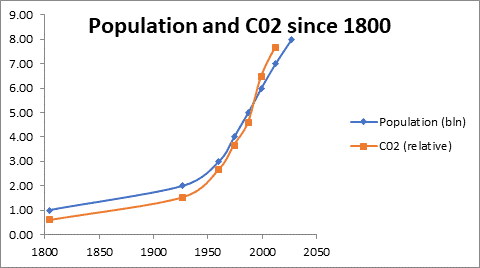
    • Current Population Trends Require Male Contraception: The world’s current population is increasing at the rate of 80 million persons a year and global population is projected to exceed 9 billion by 2050. Choosing smaller families is the most effective way to reduce human impact on the planet and animals. For example, having one less child is nearly 20 times more significant than the adoption of other environmental practices, like driving a hybrid or changing one’s diet.  Accordingly, the long term environmental benefits achieved by even only a few couples employing LARCs can be enormous. 
    • Institutions Implicitly Recognize The Need To Manage Family Sizes and Population: The ​CDC acknowledges​ that “unintended pregnancy carries significant health and economic consequences and disproportionately affects poor women and women of color.” Moreover, the WHO has recognized that ​overcrowding exacerbates epidemics​ and is perhaps the most ​fundamental threat to public health​. Human overpopulation is a ​key factor in the spread of a variety of diseases​, and this now ​includes novel coronavirus​. The WHO has further stated that supporting family planning services is a “life-saving” strategy that policymakers should undertake during the current crisis.  LARCs help manage these risks.  
    • Gender Equality Requires More Focus On Male Contraception: To date, unfounded ideology has been the primary inhibition to male contraception. In the few instances when pharmaceutical companies have tried to create products for men similar to “the pill,” progress has often been halted by side effects that women have experienced for decades, such as depression, acne, increased libido, and shrinking testicles or ovaries. Society apparently will not tolerate these effects in men, but for women they are expected. Moreover, rather than create reliable hormone-driven male contraceptives akin to what’s available to women, the market seemingly focuses on the opposite – pouring its resources into products such as Viagra, Cialis and Levitra. It is Congress’s duty to help correct these market imbalances by facilitating the production of LARCs, not only because it makes pragmatic sense given the environmental and quality of life costs, but also for gender equality. 

    Having Kids previously raised these concerns to the National Institutes of Health (NIH) in Spring 2019, when it requested additional funding for LARCs.  Since that letter there has been no meaningful movement despite the fact that the need for such family planning tools has only been exacerbated over that time. The pandemic caused by COVID-19 is but a symptom of the fact that we have too many unmanaged families living in too close proximity to one another.  

    For these reasons, we are encouraging Congress and the NIH to prioritize funding for research and development of male LARCs to offset the market’s failure to produce these drugs, as well as to expedite their clinical trials.  For example, NIH currently only spends $20 to $24 million on contraceptive research, which is a pittance compared to its current $41.7 billion annual budget for medical research. ​Taking action to create widely available and easily accessible male LARCs would ensure a higher quality of life for future families, it would protect the environment, and it would safeguard future generations from overcrowding, thus substantially reducing the threat, transmission and impact of pandemics like COVID-19.