To the University of Denver, its leadership, faculty, students, funders, alumni, and the wider public,
Truth Alliance writes to raise a fundamental concern about how institutions model, value, and report the impacts of their work on people, animals, communities, and future generations.

We believe the University of Denver’s traditional modeling approach, as we understand it, risks reproducing a “separate but equal” system of valuing life, one in which the interests of some populations, children, communities, animals, or generations can be assigned greater weight than others. In our view, this approach is incompatible with the principle that every child and every human life must be treated with equal dignity and concern.
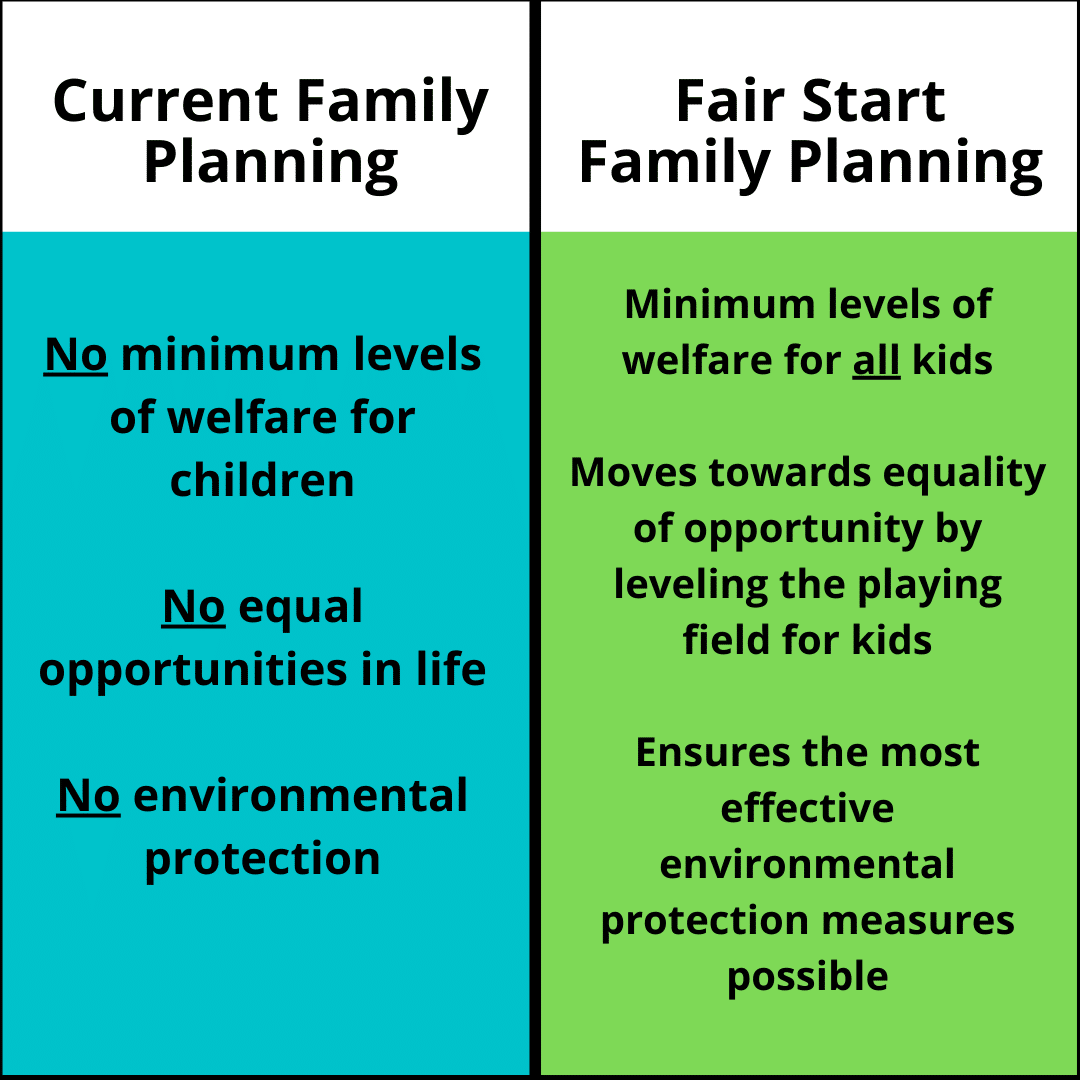
We refer to the prior letter Fair Start sent the University.
Our concern is not simply about one academic model or one institution. It is about the broader consequences of using systems that discount the lives of future generations or treat certain populations as less valuable when calculating public impacts. When a model places a different value on a child’s life because of where that child is born, the wealth of their family, their race, their nationality, or the generation into which they are born, the result can be a deeply unequal distribution of protection, resources, and opportunity.
Truth Alliance believes that no child is worth more than another. That principle must be reflected not only in constitutional law and civil rights but also in the models, policies, economic calculations, and institutional decisions that shape the future.
The Question of Public Impact
We are particularly concerned about the consequences of impact-reporting systems that fail to adequately account for harms imposed on future generations and communities already facing the greatest risks. If a model systematically discounts future life, then the suffering of children who have not yet been born may be treated as less important than the interests of people living today. If the model also fails to account for historic inequalities, the result can be a system that effectively transfers costs from those with greater power to those with less power.
This is especially alarming in the context of the climate crisis.
Africa contributes a relatively small share of historical global greenhouse-gas emissions, inequalities yet African children and other global south communities are among those facing severe consequences from climate change. The impacts include:
- Rising temperatures and increasingly dangerous heat.
- More frequent and prolonged droughts.
- Unpredictable rainfall and changing seasons.
- Crop failures and declining agricultural productivity.
- Food insecurity and malnutrition.
- Water scarcity and competition over limited water resources.
- Livestock losses and threats to pastoral livelihoods.
- Flooding and destruction of homes and infrastructure.
- Soil degradation and desertification.
- Loss of forests, biodiversity, and wildlife habitats.
- Increased displacement and climate-related migration.
- Greater risks of disease and public-health emergencies.
- Disruption of children’s education.
- Increased poverty and loss of household income.
- Greater risks to women and girls, particularly in vulnerable communities.
- Increased conflict and competition over natural resources.
- Loss of cultural heritage and traditional livelihoods.
- Growing pressure on already weak health and social-protection systems.
- Greater exposure of children to long-term and intergenerational harm.
These are not abstract statistics. They represent real children, families, and communities whose futures are being shaped by decisions made today.
A Call for a Different Standard
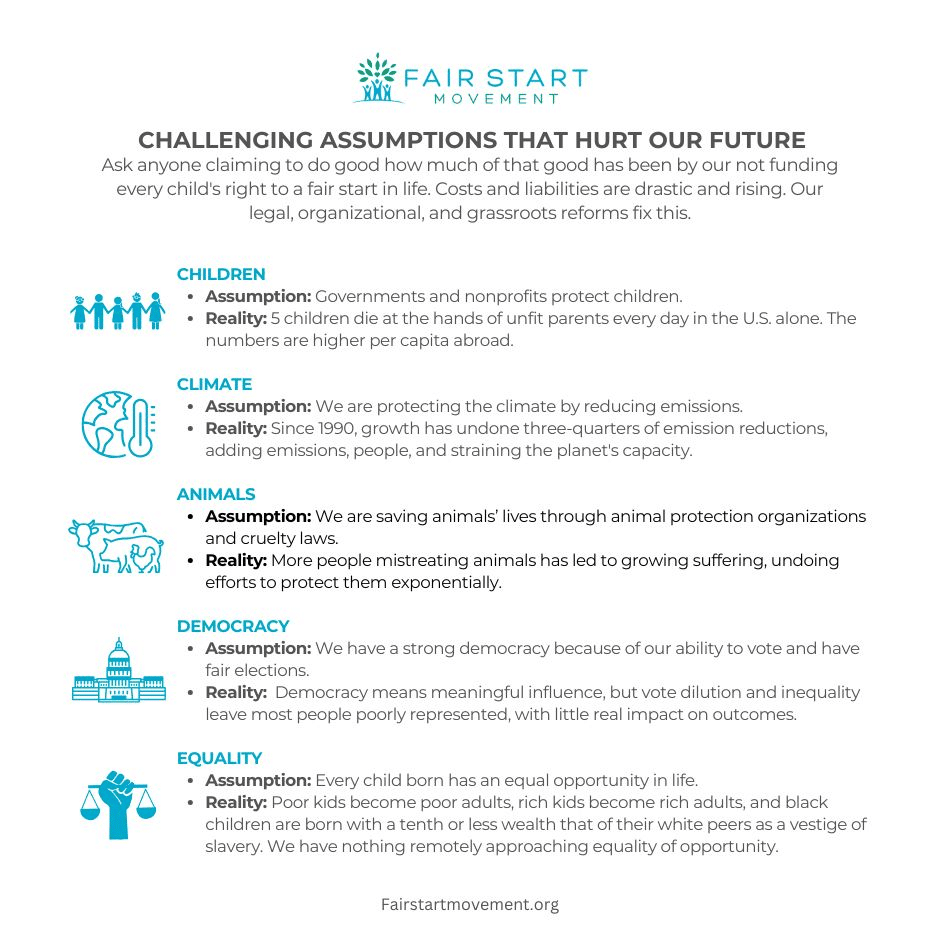
Truth Alliance believes that the solution is not simply to improve one model at the margins. Institutions must reconsider the underlying assumptions that determine whose life counts, whose suffering is measured, and whose future is protected.
We therefore call on the University of Denver and other institutions engaged in public-impact modeling to examine whether their methodologies adequately protect the equal dignity and value of all people including children not yet born. We believe there is an opportunity to move from models that may discount future life toward a Fair Start standard based on the principle that no child is worth more than another.
Such a framework would seek to ensure that:
- Every child is treated as having equal inherent value.
- Future generations are not systematically discounted simply because they have not yet been born.
- Public policies account for long-term and intergenerational harm.
- Historical inequalities are not hidden by statistical assumptions.
- Communities facing the greatest risks are not treated as acceptable recipients of disproportionate harm.
- Public-impact assessments recognize the full human consequences of environmental, economic, and social decisions.
- Institutions are transparent about the assumptions built into their models.
- Children and affected communities have a meaningful voice in decisions that determine their future.
The Cost of Inaction
Truth Alliance is concerned that failing to reconsider these approaches could contribute to continued and unimaginable harm particularly for children and communities already living at the margins of global protection. When institutions normalize the discounting of future life, the consequences do not remain inside classrooms or academic papers. Models influence policy. Policy influences investment. Investment influences infrastructure. Infrastructure influences communities. And these decisions ultimately shape who is protected and who is left exposed.
The question before us is therefore not merely technical.
It is moral.
It is legal.
It is constitutional.
And it is about the future of humanity.
Truth Alliance and its members believe that a child’s value cannot depend on geography, wealth, race, nationality, generation, or economic status.
We call upon the University of Denver to engage openly with these concerns, review the assumptions underlying its models and public-impact reporting, and explore a new approach that places equal human dignity at the center of institutional decision-making.
We further invite scholars, civil-rights advocates, children’s-rights organizations, climate-justice movements, African communities, and affected families around the world to join this conversation.
The future should not be built on a system that treats some lives as more valuable than others.
No child is worth more than another.
That is the standard we believe the law, civil rights, climate justice, and public policy must ultimately uphold.
Truth Alliance
No Child Is Worth More than Another