

Wealth Is Inherited. So Are Its Consequences.
Inheritance can make a meaningful difference in a person’s life. It can provide access to housing, education, healthcare, business opportunities and financial security. For families who receive it, inherited wealth can open doors that might otherwise remain closed.
But not every child begins life with the same opportunities.
Some grow up with access to resources, influential networks and financial protection. Others face poverty, inadequate public services, environmental risks and limited opportunities before they have any meaningful say in their circumstances.
Wealth transfers can preserve these differences across generations. When substantial assets remain concentrated among families that already have considerable resources, financial advantages can continue to accumulate while other children inherit the consequences of decisions made before they were born.
This does not mean every inheritance is unjust or that every person who accumulates wealth has done so in the same way. It means that a serious discussion about wealth must also examine how opportunity, power and costs are distributed across generations.
The Costs Future Generations Inherit
Economic wealth is only one part of what one generation passes to another.
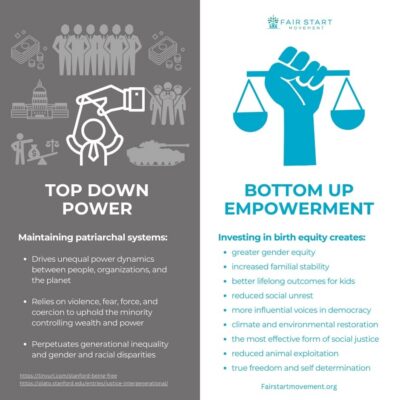
Children also inherit the environmental, political and social conditions created by earlier decisions. They may face the consequences of climate damage, persistent inequality and institutions that give some people far greater influence than others.
These costs are not always reflected in the price of goods, the value of investments or the size of an inheritance.
Fair Start Movement raises a difficult but important question: What if some of the wealth accumulated by earlier generations reflects costs that were not fully accounted for including the costs of adequately empowering children and protecting the conditions they need to thrive?
This is a question of intergenerational accountability. When economic gains are retained by some while environmental and social costs are passed on to others, particularly children and future generations, we should ask how those costs can be acknowledged and repaired.
The Great Wealth Transfer offers an opportunity to bring this question into the discussion about inheritance, philanthropy and the responsibilities that accompany wealth.
Is Philanthropy Enough?
Philanthropy can fund important work, support communities, improve access to education and respond to urgent needs. It can play a valuable role in addressing problems that public systems have failed to resolve.
But charitable giving also raises a broader question: should philanthropy only respond to the consequences of inequality or should it help address the conditions that allow inequality to persist?
A donation may help a child access an educational opportunity. Yet that support does not automatically change the wider conditions that determine why other children lack access to the same opportunity.
Likewise, funding environmental projects can help communities respond to climate-related harm, but it does not, by itself, ensure that future generations are protected from decisions that create further harm.
Fair Start Movement argues that philanthropy should look beyond the act of giving and consider the wider responsibilities associated with wealth. This includes asking whether resources can be directed towards repairing intergenerational disadvantages and establishing fairer conditions for children from the beginning of life.
The aim is not simply to give more. It is to consider what meaningful accountability and lasting repair should look like.
Birth Equity Reparations: Starting With Children
Fair Start Movement advances a child-centred approach that asks a fundamental question: why wait until children experience preventable disadvantage before working to improve their circumstances?
The Fair Start Model calls for families, communities and governments to consider children’s needs from the beginning and work towards more equitable conditions in which every child can thrive. It connects family planning, children’s well-being, economic fairness, environmental sustainability and the future of democracy.
Within this broader vision, birth equity reparations or what Fair Start Movement calls “legitimations” offer a framework for discussing how wealth and resources could help address the disadvantages passed on to future generations.
The concept asks whether resources accumulated within systems that have shifted costs onto children and the future should help repair those costs. It calls for a deeper conversation about responsibility, the distribution of power and the conditions necessary for children to have a fair start in life.
This is a proposal for systemic change, not a claim that charitable giving alone can resolve every form of inequality. It invites funders, policymakers, researchers, families and communities to examine how resources can support lasting improvements rather than only treating problems after they emerge.
A fairer future requires more than responding to disadvantage once it becomes visible. It requires taking children’s interests seriously when decisions are made that will shape their lives.
A Different Measure of Wealth
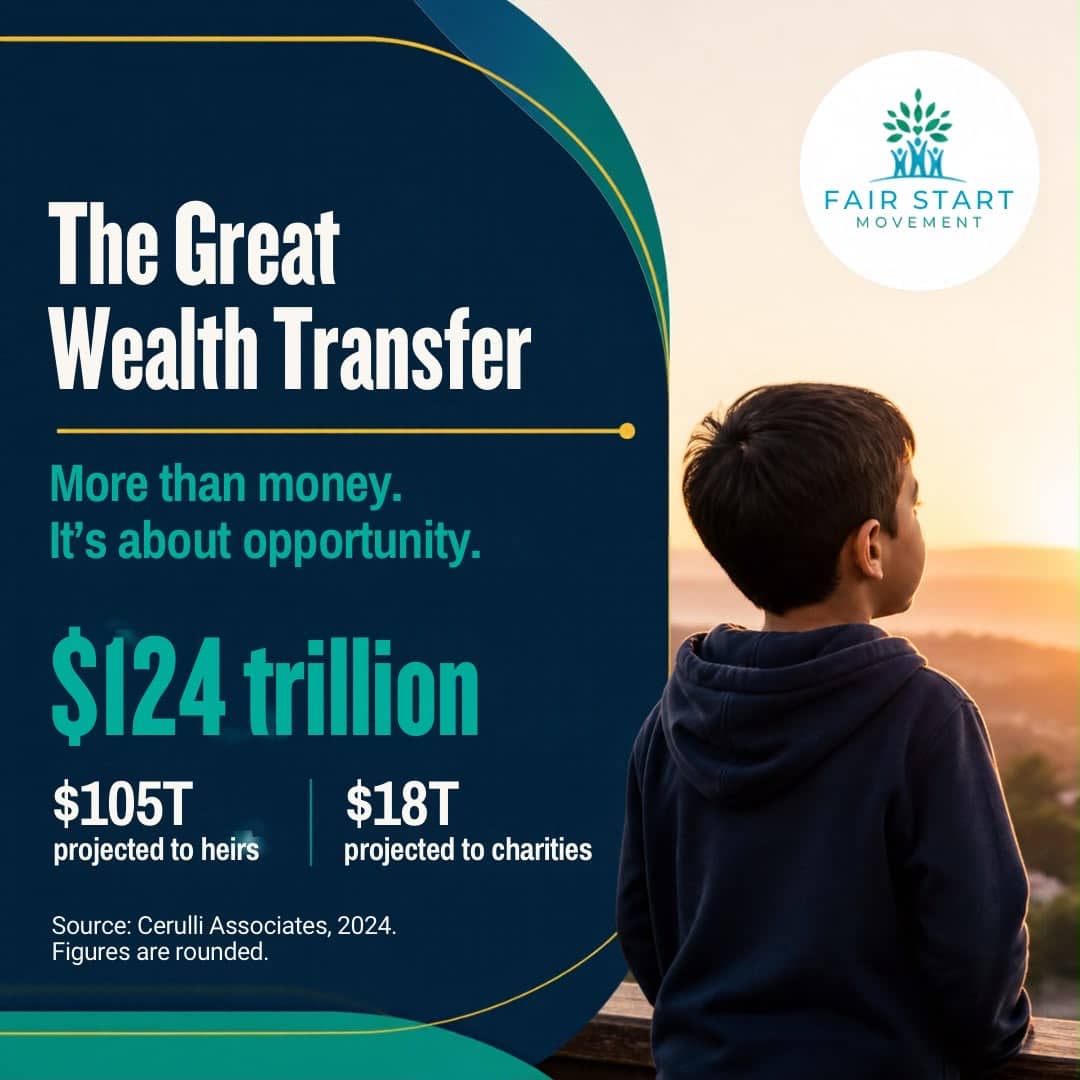
The Great Wealth Transfer is usually discussed in terms of financial assets: how much will pass to heirs, how much will go to charities and how families can preserve their wealth.
Those questions matter. But they are not the only questions worth asking.
We should also ask what kind of world that wealth will be transferred into, who will have the power to shape it and which children will bear the consequences of decisions made by previous generations.
If wealth can be passed down, responsibility must also be considered across generations. If philanthropy can direct resources towards the public good, it should be willing to examine how those resources can help create fairer starting conditions for children and future generations.
At Fair Start Movement, we believe that giving every child a fair start is central to building a more just, sustainable and democratic future.
The Great Wealth Transfer presents an opportunity to rethink what wealth is for not only as a means of preserving advantage, but as a resource that can help address inherited disadvantages and support a future in which every child has a fairer chance.
The question is not only what one generation leaves behind. It is also whether the next generation inherits a fair chance to thrive.

Learn More
Explore the Fair Start Movement website to learn about our work towards a fair start for every child.
Read more about the Fair Start Model and its child-centred approach to intergenerational equity.
Source
Cerulli Associates, Cerulli Anticipates $124 Trillion in Wealth Will Transfer Through 2048, December 5, 2024.
https://www.cerulli.com/press-
The wealth-transfer figures are projections for the United States through 2048. The concepts of birth equity reparations and legitimations reflect Fair Start Movement’s proposed framework for addressing intergenerational disadvantage.