Category: Responsible Parenting & Smaller Families

  • Isolation Parenting, its Costs, and an Alternative

    Isolation Parenting, its Costs, and an Alternative

    [et_pb_section admin_label=”section”][et_pb_row admin_label=”row”][et_pb_column type=”4_4″][et_pb_text admin_label=”Post Text” background_layout=”light” text_orientation=”left” use_border_color=”off” border_color=”#ffffff” border_style=”solid”]

    If you listen to conversations the people around you are having about choosing to have children, you might notice strangely conflicting advice. You’ll constantly hear that having kids is the most important decision a person can make in life, with lots of people lining up to give advice about how to decide. But at the same time—and from the same people—you’ll also hear that the decision is personal, and that each person alone will know the right time to have kids, the number of kids to have, and the reasons for having those kids.

    How can both be true? How would anyone know that the decision to have children is an important one, for someone else, if the decision were truly personal or private to each person? The truth is that the decision to have kids is more interpersonal than personal, and that it involves factors we can all collectively see and consider: the time and other resources required from us, the impact the world around us will have on our children, the impact those children will have on the world, and more. In other words, when a couple chooses to save money before they have a child so they can pay for his or her basic needs, they are making that decision not because it is right for them, but because it is right, plain and simple.

    Yet we continue to hear incomprehensible statements like this: “It’s the single biggest life decision a person will make.” . . . “But ultimately, it’s a leap of faith.”

    So why do we talk about the decision to have kids as subjective and personal? The little-known fact is that there is a narrative around parenting as personal and subjective (something we at Having Kids call the “isolation model”), which has become almost universal. The isolation model was intentionally created and propagated between the middle and end of the twentieth century by many governments around the world who, working through the United Nations, were trying to improve family planning. However, the process involved several critical mistakes. These mistakes resulted in the peculiar claim—still promoted by the United Nations and almost all of the major foundations and nonprofits engaged in providing family planning services—that family planning and parenting decisions are only subjective and personal.

    There are several costs of this narrative and of the isolation model. Here are a few:

    • Demands for family planning services (like access to contraception and abortions) become easily dismissed because they are based on personal or private reasons, rather than the weighty and widely held (or objective) values like being able to adequately take care of a child or concern about further degrading our polluted environment.
    • Couples around the world are told it’s their personal choice to have children, but in patriarchal parts of the world where husbands make household decisions, women are frequently turned into into involuntary mothers for most of their lives.
    • Parents are dissuaded from working together to ensure that the resources children need are actually there for them, as the subjective isolation model separates families into spheres of personal decision-making and helps them ignore objective values.
    • Democracies, which were premised on citizens entering their political systems as free and equal people, fail as some children enter the world with massive resources while others enter with virtually nothing. They are neither free nor equal in a meaningful sense of the words.
    • Families in communities are seen as isolated, and there are no incentives to help one another and support children throughout the community.

    Many of the problems in the world today—from inequality to poverty to the degradation of the world environment—could have been mitigated had governments not created and left prospective parents adrift in the fog of confusion that is the isolation model. But it’s not too late to change models. One simple alternative to the isolation model is to broaden our perspective to include the needs—needs we can all see and understand—of parents, future children, and the community.

    Trying to decide whether to have a child? Consider what you would have wanted to have coming into the world. Consider whether you would want a fair start in life relative to other children in your generation. Consider what your community might look like in 25 years if the parents in that community worked together to plan and provide or the children they would have. Consider the natural environment your child and other children and the animals they will come to love will need in 100 years to thrive, and the impact the decision to have those children will have on that environment and those animals.

    The decision to have kids is truly an important one, and worth working together on. Welcome to the Having Kids model. Welcome to a better future.

    [/et_pb_text][et_pb_cta admin_label=”Action Button” button_url=”https://fairstartmovement.org/faqs/” url_new_window=”off” button_text=”Learn More” use_background_color=”off” background_color=”#18aacc” background_layout=”dark” text_orientation=”left” use_border_color=”off” border_color=”#ffffff” border_style=”solid” custom_button=”on” button_letter_spacing=”0″ button_use_icon=”on” button_icon_placement=”right” button_on_hover=”on” button_letter_spacing_hover=”0″ saved_tabs=”all” button_bg_color=”#ea593c” button_border_color=”#ffac9b” button_font=”|||on|” button_icon=”%%20%%” button_bg_color_hover=”rgba(234,89,60,0.8)”] [/et_pb_cta][/et_pb_column][/et_pb_row][/et_pb_section]
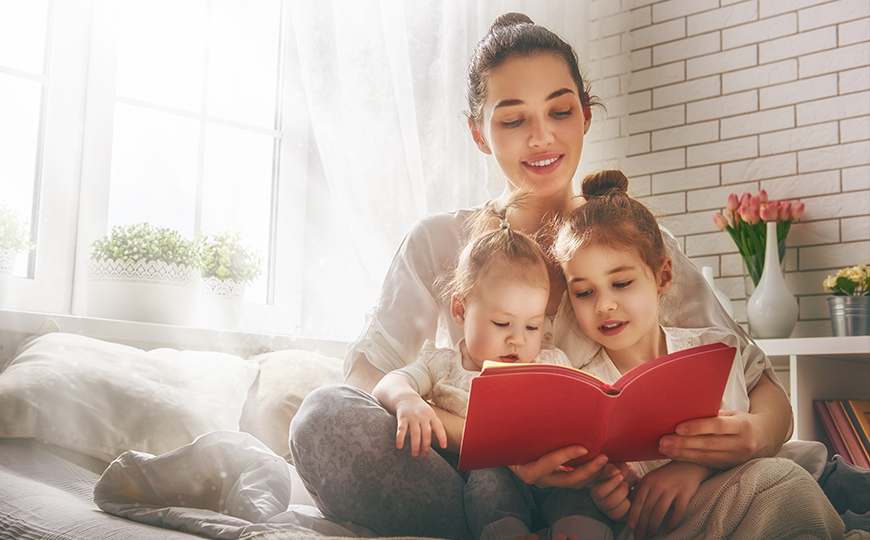
  • Early Childhood Matters, So Let’s Get Family Planning Right!

    Early Childhood Matters, So Let’s Get Family Planning Right!

    [et_pb_section admin_label=”section”][et_pb_row admin_label=”row”][et_pb_column type=”4_4″][et_pb_text admin_label=”Post Text” background_layout=”light” text_orientation=”left” use_border_color=”off” border_color=”#ffffff” border_style=”solid”]

    We all know intuitively that early childhood experiences shape the rest of our lives. Today, scientists can offer research to back up what we already assumed.

    A recent article in the journal Frontiers in Human Neuroscience found:

    that adults with insecure attachments to their parents or caregivers as children tend to perform poorly in tasks and work when under stress or when negative emotions are present. . . .Children whose caregivers don’t respond to their needs or signs of emotional distress learn ‘defensive strategies,’ such as suppressing feelings or using poor coping skills, whose high emotional cost they may pay later in life.

    What does the fact that our early lives matter so much for our adult lives have to do with family planning? Right now, we live in an isolated model of parenting; Families are seen as an isolated unit that chooses to have whatever number of children they want, and then raises those children without outside influences. But without family planning help from the community, families can actually have more children than their time, money, and effort can support. This creates an unhealthy environment for the parents, children, and eventually the community.  

    Because early childhood matters so much for our lives—and the lives of the people with whom we interact—family models should maximize investment in early childhood development that a family and a community can realistically support. Additionally, families should be provided with the family planning resources they need to give their children the best start in life. Then they can work together to give each child the best future possible.

    Let’s change the way we think about family planning. The best models promote smaller families working together to plan a better future for every child.

    [/et_pb_text][et_pb_cta admin_label=”Action Button” button_url=”https://fairstartmovement.org/mission-values-and-vision/” url_new_window=”off” button_text=”Learn More” use_background_color=”off” background_color=”#18aacc” background_layout=”dark” text_orientation=”left” use_border_color=”off” border_color=”#ffffff” border_style=”solid” custom_button=”on” button_letter_spacing=”0″ button_use_icon=”on” button_icon_placement=”right” button_on_hover=”on” button_letter_spacing_hover=”0″ saved_tabs=”all” button_bg_color=”#ea593c” button_border_color=”#ffac9b” button_font=”|||on|” button_icon=”%%20%%” button_bg_color_hover=”rgba(234,89,60,0.8)”] [/et_pb_cta][/et_pb_column][/et_pb_row][/et_pb_section]

  • The Eberly Family

    The Eberly Family

    [et_pb_section fb_built=”1″ admin_label=”section”][et_pb_row admin_label=”row”][et_pb_column type=”4_4″ parallax=”off” parallax_method=”on”][et_pb_text admin_label=”Post Text”]

    We support the Having Kids model because we want to live out our commitment to protecting children, the environment, and the animals with whom we share the planet. We believe that smaller, loving families are critical to our future—to giving children the care and attention they need to thrive and learn, to an earth that can sustain us, to a world where our fellow creatures have a fighting chance to survive and live lives free of human harm. Investing our resources in fewer children means more attention to each child, a lesser impact on an already fragile planet, and a greater fostering of community. And because having fewer children means we have extra resources, we’re able to give to organizations that promote environmental protection, public interest causes, reproductive rights, and animal welfare. We also recognize that the surest way to create change is to start at home, and for that reason we’re are proud to support the Having Kids model and committed to instilling in our son the values it represents.

    [/et_pb_text][et_pb_cta button_url=”https://fairstartmovement.org/adopt-the-model/” button_text=”Adopt the Model” use_background_color=”off” text_orientation=”left” admin_label=”Action Button” custom_button=”on” button_bg_color=”#ea593c” button_border_color=”#ffac9b” button_font=”|||on|” button_use_icon=”on” button_icon=”%%20%%” button_bg_color_hover=”rgba(234,89,60,0.8)” saved_tabs=”all”] [/et_pb_cta][/et_pb_column][/et_pb_row][/et_pb_section]

  • Is Having Kids the Behavior that Most Influences our Lives?

    Is Having Kids the Behavior that Most Influences our Lives?

    [et_pb_section admin_label=”section”][et_pb_row admin_label=”row”][et_pb_column type=”4_4″][et_pb_text admin_label=”Post Text” background_layout=”light” text_orientation=”left” use_border_color=”off” border_color=”#ffffff” border_style=”solid”]

    Is having kids the one behavior that most influences our lives?

    Most parents will tell you that it is. Even if you haven’t had kids, it’s easy to imagine why they would have a huge impact: they change our day-to-day routines and the structure of our love and relationships. But there’s something else going on, another level up, when we think about this question. Chances are that when you, the reader, think about how kids affect our lives, you think about the impacts on what appear to be our personal lives, at home. But the truth is that having kids is probably the one behavior that most influences our lives in the world as a whole—and determines what the world around us is like.

    Take a look at this shocking video, which shows how people having kids has defined the world we live in today. And not all of the influence is good.

    According to Slate, The Global Footprint Network estimates that our global civilization currently uses 1.6 times the resources our planet generates. In other words, it takes 18 months to regenerate the resources we use in one year’s time. Add another 4 billion people (which we are currently on course to do!) to the mix, and we’re likely to be looking at a whole other planet.

    How do we respond to this challenge? The answer may lie in how we think about having kids. As shown above, we might default to thinking about the act of having kids as personal. And that’s perfectly consistent with a universally ingrained one-sided model of thinking about having kids that focuses on and isolates parents.

    What’s the alternative? The Having Kids model, which is designed to let parents think globally about the act of having kids and to work together with other people to make all children’s futures the best they can be. The model is about using the excess that goes into creating large families to instead raise the standard of entry into the world for every child.

    So if you want to change the world, watch the video to learn where to start: at the source. Then adopt the Having Kids model. If we work together, we can change the world for everyone.

    [/et_pb_text][et_pb_cta admin_label=”Action Button” button_url=”https://fairstartmovement.org/model/” url_new_window=”off” button_text=”Adopt the Model” use_background_color=”off” background_color=”#18aacc” background_layout=”dark” text_orientation=”left” use_border_color=”off” border_color=”#ffffff” border_style=”solid” custom_button=”on” button_letter_spacing=”0″ button_use_icon=”on” button_icon_placement=”right” button_on_hover=”on” button_letter_spacing_hover=”0″ saved_tabs=”all” button_bg_color=”#ea593c” button_border_color=”#ffac9b” button_font=”|||on|” button_icon=”%%20%%” button_bg_color_hover=”rgba(234,89,60,0.8)”] [/et_pb_cta][/et_pb_column][/et_pb_row][/et_pb_section]

  • How Can We Unite the Country after the Election?

    How Can We Unite the Country after the Election?

    [et_pb_section fb_built=”1″ admin_label=”section” _builder_version=”3.22″][et_pb_row admin_label=”row” _builder_version=”3.25″ background_size=”initial” background_position=”top_left” background_repeat=”repeat”][et_pb_column type=”4_4″ _builder_version=”3.25″ custom_padding=”|||” custom_padding__hover=”|||”][et_pb_text admin_label=”Post Text” _builder_version=”3.27.4″ background_size=”initial” background_position=”top_left” background_repeat=”repeat” use_border_color=”off” border_color=”#ffffff” border_style=”solid”]

    Scan the news after this divisive U.S. election and you’ll hear calls to unite the country after threats and violence erupt across the nation. As heart-warming as those calls to unite may be, what can be done to truly create real commonalities and agreeability among a populace that may not share the same values and collective goals? We have to start at the source.

    The problem is that fixing this issue is a long-term project. We’re seeing an ever-growing population of disconnected people living in an economically unequal world. They were raised under development and education policies that saw, treated, and divided them as self-interested workers and consumers who never focused on the community as a whole. Because we have become so divided, we have very little in common. In truth, we’re not going to be united easily. The past cannot be undone, and the true cost of these policies must come out in the end. Building true communities can’t be done overnight; it takes generations of hard work.

    How can we reverse this trend and actually bring people together? The answer is pretty simple: Create a future with smaller communities where people have more in common. Imagine a better future, with smaller and truly democratic sustainable communities that are surrounded by nature. Communities filled with people who all got a fair start in life, with every one of them born and raised in loving homes where they learned from the very beginning how to work together with the people around them.

    Having Kids knows how to get there. We prioritize democracy and community, and we’re creating a culture of smaller families working together to plan a better future for every child. We use something called the Having Kids model to move the world away from isolated families toward a long-term, three-sided focus on the objective interests of parents, children, and the community. Simply put, the model shifts resources that incentivize larger families to instead incentivize smaller families that cooperate to give every child a better start in life. For example, the Having Kids model eliminates child tax credits and other benefits for wealthy families after the first child in order to fund family planning-based early childhood development benefits for families that need them.

    Want to unite people? Focus on long-term change, on children, and on having and raising kids who have more in common than we do.

    [/et_pb_text][et_pb_cta button_url=”https://fairstartmovement.org/take-action/” button_text=”Take Action” admin_label=”Action Button” _builder_version=”4.7.7″ use_background_color=”off” background_size=”initial” background_position=”top_left” background_repeat=”repeat” custom_button=”on” button_bg_color=”#ea593c” button_border_color=”#ffac9b” button_font=”|||on|” button_icon=”%%20%%” text_orientation=”left” hover_enabled=”0″ use_border_color=”off” border_color=”#ffffff” border_style=”solid” button_letter_spacing_hover=”0″ button_bg_color_hover=”rgba(234,89,60,0.8)” saved_tabs=”all” button_text_size__hover_enabled=”off” button_one_text_size__hover_enabled=”off” button_two_text_size__hover_enabled=”off” button_text_color__hover_enabled=”off” button_one_text_color__hover_enabled=”off” button_two_text_color__hover_enabled=”off” button_border_width__hover_enabled=”off” button_one_border_width__hover_enabled=”off” button_two_border_width__hover_enabled=”off” button_border_color__hover_enabled=”off” button_one_border_color__hover_enabled=”off” button_two_border_color__hover_enabled=”off” button_border_radius__hover_enabled=”off” button_one_border_radius__hover_enabled=”off” button_two_border_radius__hover_enabled=”off” button_letter_spacing__hover_enabled=”on” button_letter_spacing__hover=”0″ button_one_letter_spacing__hover_enabled=”off” button_two_letter_spacing__hover_enabled=”off” button_bg_color__hover_enabled=”on” button_bg_color__hover=”rgba(234,89,60,0.8)” button_one_bg_color__hover_enabled=”off” button_two_bg_color__hover_enabled=”off” sticky_enabled=”0″][/et_pb_cta][/et_pb_column][/et_pb_row][/et_pb_section]

  • Our Children Deserve a World Filled with Wildlife

    Our Children Deserve a World Filled with Wildlife

    [et_pb_section admin_label=”section”][et_pb_row admin_label=”row”][et_pb_column type=”4_4″][et_pb_text admin_label=”Post Text” background_layout=”light” text_orientation=”left” use_border_color=”off” border_color=”#ffffff” border_style=”solid”]

    All of us have been able to live on a planet where we can bear witness to wild animals living, playing, hunting, and loving in their own worlds. Our children may not be able to do the same — at least not in the same way we have.

    According to a recent World Wildlife Fund report, wildlife populations continue to plummet. And while there is debate about the exact rates of disappearance, even critics agree that the 20th century saw massive loss of wildlife. And the trend is continuing.

    What does that have to do with the Having Kids model? The underlying drivers of things like mass extinctions, anthropogenic climate change, ocean acidification, and crowded cities include family size and consumption. And the solutions to those causes include reordering basic values that underlie our human rights and democratic systems, and thinking about the natural world. We need to be intentional about the way we create communities and consume resources in order to protect habitats and the animals we have all grown to love. The Having Kids model is the only family model that addresses, and balances, all of these things.

    Children have a right to a world with wildlife. Let’s give it to them.  

    [/et_pb_text][et_pb_cta admin_label=”Action Button” button_url=”https://fairstartmovement.org/faqs/” url_new_window=”off” button_text=”Learn More” use_background_color=”off” background_color=”#18aacc” background_layout=”dark” text_orientation=”left” use_border_color=”off” border_color=”#ffffff” border_style=”solid” custom_button=”on” button_letter_spacing=”0″ button_use_icon=”on” button_icon_placement=”right” button_on_hover=”on” button_letter_spacing_hover=”0″ saved_tabs=”all” button_bg_color=”#ea593c” button_border_color=”#ffac9b” button_font=”|||on|” button_icon=”%%20%%” button_bg_color_hover=”rgba(234,89,60,0.8)”] [/et_pb_cta][/et_pb_column][/et_pb_row][/et_pb_section]

  • Smaller Families Becoming the Norm in the U.S.

    Smaller Families Becoming the Norm in the U.S.

    [et_pb_section fb_built=”1″ admin_label=”section” _builder_version=”4.16″ global_colors_info=”{}”][et_pb_row admin_label=”row” _builder_version=”4.16″ background_size=”initial” background_position=”top_left” background_repeat=”repeat” global_colors_info=”{}”][et_pb_column type=”4_4″ _builder_version=”4.16″ custom_padding=”|||” global_colors_info=”{}” custom_padding__hover=”|||”][et_pb_text admin_label=”Post Text” _builder_version=”4.16″ background_size=”initial” background_position=”top_left” background_repeat=”repeat” use_border_color=”off” border_color=”#ffffff” border_style=”solid” global_colors_info=”{}”]

    Recent polls show a dramatic drop in what we consider the ideal number of children to have. According to Gallup and the Pew Research Center,

    In 1971, there was a shift in attitudes, as Americans’ “ideal” family switched from four kids (19%) to two kids (38%), with a mean saying 2.9 kids was ideal. Back in 1936, the mean ideal number of kids was 3.6, with 22% saying four children; 32% saying three children; and another 32% saying two children. Fast-forward from the 1930s to 2013, the most recent data available, and you get a different picture, with 2.6 as the mean ideal.

    Pew attributes much of the change to access to contraception, women’s participation the workforce, and the rising cost of raising kids. Moreover,

    Not only do Americans say smaller families are more ideal, they’re also having smaller families. In 1976, 36% of women in their early 40s had given birth to four or more children, while just 22% gave birth to two children.But according to 2014 data, it’s more common nowadays for women of the same age to have two children: 35% gave birth to two children, while just 12% had four or more.

    What neither Pew nor Gallup mention is what would have happened without the trend toward smaller families, a trend that occurred worldwide. One United Nations prediction showed that the world’s population would’ve risen to 256 billion by 2150 had the global fertility rate remained at its 1995 level of 3.04 children per woman, rather than dropping to 2.52 in 2010.

    The Having Kids model — which promotes families working together to invest more in each child — is on trend. It’s part of a vital evolution in parenting that is making the world a better place. You can be part of this change.

    [/et_pb_text][et_pb_cta button_url=”https://fairstartmovement.org/adopt-the-model/” button_text=”Adopt the Model” admin_label=”Action Button” _builder_version=”4.16″ use_background_color=”off” background_size=”initial” background_position=”top_left” background_repeat=”repeat” custom_button=”on” button_bg_color=”#ea593c” button_border_color=”#ffac9b” button_font=”|||on|” button_icon=”5||divi||400″ text_orientation=”left” use_border_color=”off” border_color=”#ffffff” border_style=”solid” button_letter_spacing_hover=”0″ button_bg_color_hover=”rgba(234,89,60,0.8)” saved_tabs=”all” global_colors_info=”{}” button_text_size__hover_enabled=”off” button_one_text_size__hover_enabled=”off” button_two_text_size__hover_enabled=”off” button_text_color__hover_enabled=”off” button_one_text_color__hover_enabled=”off” button_two_text_color__hover_enabled=”off” button_border_width__hover_enabled=”off” button_one_border_width__hover_enabled=”off” button_two_border_width__hover_enabled=”off” button_border_color__hover_enabled=”off” button_one_border_color__hover_enabled=”off” button_two_border_color__hover_enabled=”off” button_border_radius__hover_enabled=”off” button_one_border_radius__hover_enabled=”off” button_two_border_radius__hover_enabled=”off” button_letter_spacing__hover_enabled=”on” button_letter_spacing__hover=”0″ button_one_letter_spacing__hover_enabled=”off” button_two_letter_spacing__hover_enabled=”off” button_bg_color__hover_enabled=”on” button_bg_color__hover=”rgba(234,89,60,0.8)” button_one_bg_color__hover_enabled=”off” button_two_bg_color__hover_enabled=”off”] [/et_pb_cta][/et_pb_column][/et_pb_row][/et_pb_section]

  • How Does Family Planning Protect the Environment?

    How Does Family Planning Protect the Environment?

    [et_pb_section admin_label=”section”][et_pb_row admin_label=”row”][et_pb_column type=”4_4″][et_pb_text admin_label=”Post Text” background_layout=”light” text_orientation=”left” use_border_color=”off” border_color=”#ffffff” border_style=”solid”]

    How does family planning protect our environment? This is the question researchers at the Worldwatch Institute recently set out to answer. Their findings may provide the key to addressing many of the environmental crises we face today.

    Robert Engelman, project director, found that while their “group assessment of recent scientific literature did not ‘prove’ that family planning promotes environmental sustainability, we found plenty of supporting evidence that it is helpful,” including the effectiveness of increased use of contraception — especially long-acting reversible contraceptives — by young Americans.

    The Family Planning and Environmental Sustainability Assessment (FPESA) provides vital and hard evidence addressing the often-taboo subject of how family planning affects the world’s environments. This information helps support the work of any organization addressing the role of family planning in achieving things like the Sustainable Development Goals, climate change mitigation, the protection of the most at-risk ecosystems, and more.

    As the Assessment suggests, sometimes seemingly unrelated issues — like decisions about creating a family and the future of the world’s environment — are deeply intertwined. Having Kids seeks to make these connections as we work to create a more sustainable future for us all.

    [/et_pb_text][et_pb_cta admin_label=”Action Button” button_url=”https://fairstartmovement.org/having-kids-is-different/” url_new_window=”off” button_text=”Learn More” use_background_color=”off” background_color=”#18aacc” background_layout=”dark” text_orientation=”left” use_border_color=”off” border_color=”#ffffff” border_style=”solid” custom_button=”on” button_letter_spacing=”0″ button_use_icon=”on” button_icon_placement=”right” button_on_hover=”on” button_letter_spacing_hover=”0″ saved_tabs=”all” button_bg_color=”#ea593c” button_border_color=”#ffac9b” button_font=”|||on|” button_icon=”%%20%%” button_bg_color_hover=”rgba(234,89,60,0.8)”] [/et_pb_cta][/et_pb_column][/et_pb_row][/et_pb_section]

  • Let’s Talk About Family Planning Models

    Let’s Talk About Family Planning Models

    [et_pb_section admin_label=”section”][et_pb_row admin_label=”row”][et_pb_column type=”4_4″][et_pb_text admin_label=”Post Text” background_layout=”light” text_orientation=”left” use_border_color=”off” border_color=”#ffffff” border_style=”solid”]

    French presidential candidate Nicolas Sarkozy recently said that “[t]he first cause of environmental degradation… is the number of people on the planet.” His statement came in the context of discussing climate change generally. On a late-night TV talk show, he acknowledged that climate change was “a very serious challenge” and said that “the real challenge is that of demographic change.” 

    Why have leaders in the U.S. been silent on the issue of family planning models? The U.S. population continues to explode, bring along high rates of consumption, an increasingly degraded climate and environment, dysfunctionally crowded cities, and increasingly massive gaps between rich and poor, alongside democracies that no longer work.

    Let’s not wait for politicians. You can make the future safe, healthy, and happy for all by helping to create a new model of family planning where smaller families work together to plan a better future for every child. 

    [/et_pb_text][et_pb_cta admin_label=”Action Button” button_url=”https://fairstartmovement.org/model/” url_new_window=”off” button_text=”Learn More” use_background_color=”off” background_color=”#18aacc” background_layout=”dark” text_orientation=”left” use_border_color=”off” border_color=”#ffffff” border_style=”solid” custom_button=”on” button_letter_spacing=”0″ button_use_icon=”on” button_icon_placement=”right” button_on_hover=”on” button_letter_spacing_hover=”0″ saved_tabs=”all” button_bg_color=”#ea593c” button_border_color=”#ffac9b” button_font=”|||on|” button_icon=”%%20%%” button_bg_color_hover=”rgba(234,89,60,0.8)”] [/et_pb_cta][/et_pb_column][/et_pb_row][/et_pb_section]