The Ohio Supreme Court has ruled unconstitutional a probate judge’s order that an Ohio man who has 13 kids by nine mothers to avoid procreating further because he owes hundreds of thousands of dollars in child support. Polls in Ohio show that many people would have supported the Lorain County judge’s original decision and that people believe the right to have kids is contingent on parents being able to support them.
The court seemed sympathetic to the idea that having kids comes with responsibilities but ultimately found that the order did not sufficiently relate to the legal authority under which the judge issued it. In other words, it would be up to the Ohio legislature to step in and broaden courts’ authority to address poor family planning.
Having Kids has developed model legislation, based on some of the leading research in the field, that would authorize courts nationwide to do this. We have also developed federal legislation that would facilitate funding to improve the way our system protects kids and our communities from poor family planning. Of course, the right to have kids comes with responsibilities. And our failure to ensure those responsibilities through better policy has fundamentally created the social and ecological crises we are experiencing today.
We can do better, and Having Kids is leading the way.
Every child’s right to a socially and ecologically fair start in life is the first and overriding human right. It physically constitutes us as the free and equal people we should be. It is the right that frees us from one another.
That right is the first and necessary condition of human freedom and political legitimacy, and we may pursue it by all means effective. Social justice begins with Fair Start family planning policies, and balancing the right to have children with the community and parental responsibilities that come with that right and protect us all.
Having Kids is an international human rights organization dedicated to improving family planning systems worldwide with a simple idea: Every child has a fundamental human right to a Fair Start in life, ecologically and socially, which overrides all competing interests. Our modeling is the subject of several peer-review works, and it includes clear policy pathways for implementation.
Our biggest crises — health, economic, and environmental — are complex, but they all point back to a single issue: failures in family planning. This is reflected by the nearly 50% of pregnancies that are unplanned in the United States. If we hope to effectively make progress on the crises we face, it is essential that we stop looking at them as separate issues. They are intersectional; we cannot address them individually. And they demand an informed and coordinated approach from this administration.
They begin with family planning.
Family planning is an economic issue: The U.N. has called the United States the most unequal society in the developed world. Right now, nearly 40% of children in the U.S. live in or near poverty. Unequal opportunities translate into unequal lifelong outcomes by the time children reach age 5. Decades of research indicate that better family planning is the most effective way to break the cycle of poverty. It enables future parents to pursue higher education and achieve career stability, allowing them greater lifetime earning power for families that sets children up for greater achievement and welfare outcomes.
Family planning is a health issue: We have seen both COVID-19 and climate-affected environments disproportionately affect the health of low-income and BIPOC communities. This occurs because economic disparities among these groups translate into health inequalities.
Family planning is a climate issue: Unsustainable population growth is undoing the work to curb carbon and other emissions. It is time to look beyond fossil fuels to the primary and fundamental driver of the climate crisis. We must account for a sustainable population growth if we are serious about reversing course on climate and promising a healthy, habitable future for the next generation.
The policies of the United States and other nations will severely harm future generations if we do not make changes now. Improving the way we plan families is the most important investment we can make for the health and well-being for all children.
Here are three things the Biden administration must do in 2021 to address the social, health, and ecological crises we face today:
Respond to the Climate Crisis by Targeting Its Fundamental Driver
The most effective long-term way to mitigate the climate crisis is by promoting smaller families for all. This move can have 20 times the impact of other policy choices. And there are now clear policy levers that would promote smaller families, and well as parental readiness before having children as another means of improving child welfare. Focusing on building resilient future generations would go beyond the Green New Deal, which lacked this key focus. It would move us toward a true social contract to come together as free and equal people, but one correctly designed to be 360-degree intergenerational.
Multiple studies have confirmed the incomparable impact of new family planning policies. Yet governments and industries that are accustomed to unsustainable population growth have instead embarked on policy initiatives designed to push women to have children.
Your administration has the opportunity to lead on this issue, in part by promoting tax reforms that convert traditional child tax credits into Fair Start baby bonds designed to promote smaller and equitable families. In short? Convert incentives for all people to have kids into a steeply progressive tax system that incentivizes everyone to wait until they are truly ready to parent and to work together to have smaller families with a level entry field for every child.
It should be the administration’s policy that the United States will lead in helping the world reach an optimal population range as soon as possible. This population will be built around the human right to nature rather than continued nationalistic and unsustainable growth policies that consider babies to be economic inputs, treat nature as a resource, and exacerbate the climate crisis, inequity, and child poverty.
Respond to COVID-19 by Making Future Generations More Resilient
In a recent dialogue between Having Kids and the CDC, the agency noted the connection between reduced birth rates and the beneficial impact on our ability to respond to COVID-19. In short? Poor family planning hurts public health, creates overcrowding, and sets the stage for the next public health crisis.
We propose reforming federal family planning policies through forthcoming legislation designed to respond to COVID-19. And we urge cementing these changes by reforming Title X to promote a child’s equitable start in life as the guide-star value. Stimulus packages and regulatory reform provide a unique opportunity to stabilize today’s families while protecting future generations.
Become a World Leader in Human Rights-Based Family Planning
Family planning is a universal human right, and the United States can become a leader in the ongoing development of this right around the world. The best way would be to explicitly support a growing coalition’s call for the United Nations Secretary General to issue an informal statement embracing family planning reform as the first and most fundamental means of addressing the world’s key social and ecological crises, and moving toward the U.N.’s Sustainable Development Goals.
By 2100, world population could vary by billions of people depending on whether the average woman in the world has one child more or one child fewer.
Simply stated, the current family planning model used by the United Nations was developed before awareness of climate change, the disproportionate impact of early childhood development on human well-being, and how birth conditions and early development exacerbate inequality and other factors. This old model makes our future less secure, healthy, and equitable.
The right to have children comes with responsibilities for parents and for communities that protect us all. The United Nations is using a decades-old pro-growth family planning model that ignores those responsibilities and hurts kids. That model is fundamentally driving ecological crises and the climate crisis, child poverty, and growing inequity across the globe. That model exacerbates the risk and impact of pandemics and prevents our reaching the U.N.’s Sustainable Development Goals. That non-inclusive model exploits children more than it invests in them, thereby driving its political illegitimacy.
The United States should take the lead in urging the United Nations to abandon its current family planning modeling in favor of a truly future child-centric and human rights-based Fair Start approach. Our recent letter to the heads of the UNFPA and UNICEF detail the change.
We are hopeful for important progress to be made as we usher in an administration that believes in science and the advancement of human welfare. With these three steps, we believe the Biden administration can become a leader in promoting the evolution of our family planning systems to guarantee every child a fair start in life.
Matthew Yglesias’ new book, “One Billion Americans: The Case for Thinking Bigger,” is the thought experiment the title implies: exploring policies that might increase the population of the country threefold by using incentives to create larger families.
Cassie King with Having Kids has a message and invitation for Matthew:
The book has been harshly critiqued by most reviewers for its admiration of China and its placing economic growth before human rights, confusing quantitative growth with sustainable human development, ignoring and naively dismissing the environmental consequences of its proposal (the sort of thinking that created the climate crisis), reinforcing a patriarchal vision of women as mothers, and more.
All kids have a fundamental human right, ecologically and socially, to a #fairstart in life. It’s the first human right. Help us secure it against those who threaten our future.
The right to have children comes with responsibilities on parents and their communities that protect us all. The United Nations is using a decades-old pro-growth family planning model that ignores those responsibilities, enables people like Yglesias to promote economic growth over human rights, and hurts kids. That model is fundamentally driving ecological crises and the climate crisis, child poverty, and growing inequity across the globe. That model exacerbates the risk and impact of pandemics and prevents our reaching the U.N.’s Sustainable Development Goals. That noninclusive model exploits children more than it invests in them, thereby driving political illegitimacy.
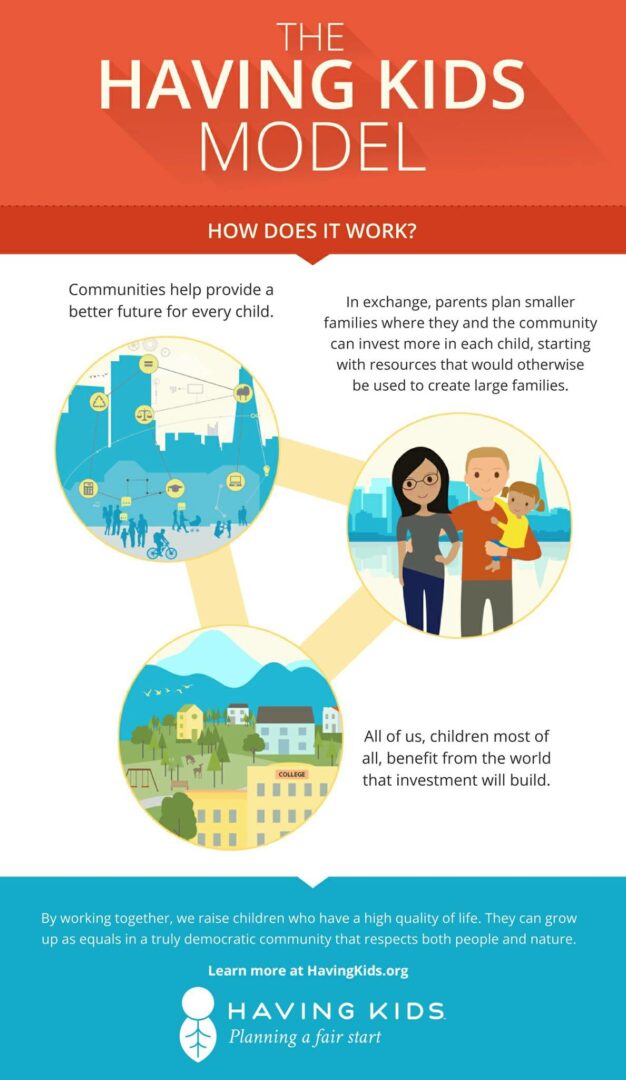
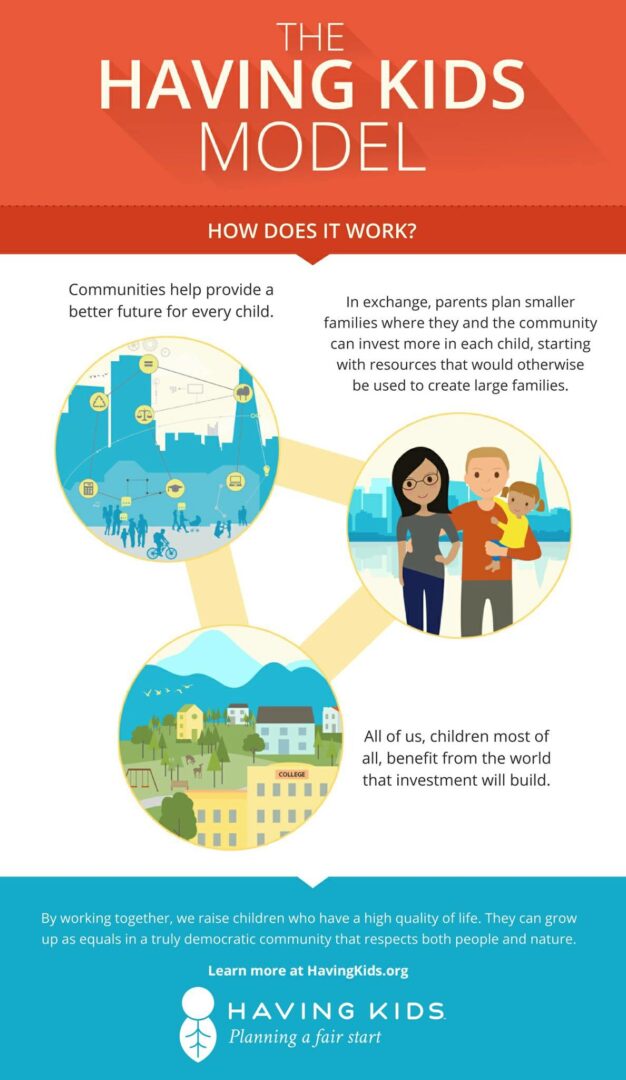
But groups and individuals from around the world are signing on to an effort to change the old model that focuses on what parents want toward a new model that focuses on what all kids need. The new model, called Fair Start family planning, is the beginning of real social justice. The reform can begin with the United Nations secretary general simply acknowledging the need for change.
Sign on, and urge any organization you support or can influence — nonprofit or for-profit — to also sign on. Sign here, or contact us at info@fairstartmovement.org for more information.
The most effective way to protect children, animals, our environment, and equality is by changing from family planning policies that focus on what parents want to policies that ensure future children what they need, both ecologically and socially.
The sooner you speak out, the better our and our kids’ future will be.
There are massive advantages to planning smaller and more equitable families.
It enables greater empowerment for women, more individual attention and more resources invested in each child, greater achievement in school, and more engaged, less crowded communities. But most importantly, research indicated that smaller families are better for kids. Smaller families also leave time, energy and resources for parents to invest in their community, and to ensure that the world their children will inherit is better and more equitable than the one we experience today. This list is by no means exhaustive. The bigger picture is that families and communities benefit. Read more reasons to have a small and more equitable family.
Have you chosen to have just one or two kids? Send us a video and tell us why. Email info@fairstartmovement.org
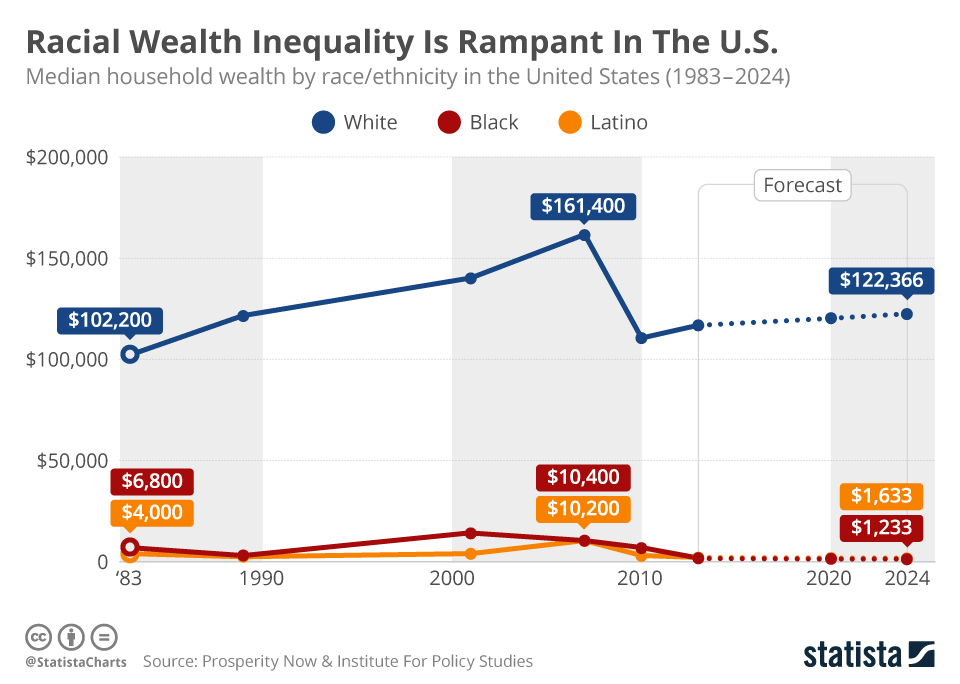
It’s true that many policies that have been promoted under the banner of an attack on systemic racism have – by the accounts from empirical scholars of all political leanings – utterly failed. But is Steele missing the foundational issue that makes any allegation of systemic racism true, regardless of what policies we put forth to eliminate it? Black children, and children of color more generally, are poor – in the extreme – relative to white children.
We cannot coherently talk about racism and policy at all without addressing the core issue – our failure to give all kids a fair start in life – and the specific family planning and redistribution reforms that could actually reverse that failure.
Take action: Every child has a fundamental human right to a #fairstart in life. It is the first human right, the one that makes us free and equal people, and as such it overrides all competing interests. Urge Congress to begin to recognize and legislate around the right.
Pope Francis recently renewed his plea for economic equity in the face of the Covid-19 pandemic, lamenting the failures of free-market capitalism as the massive gap between rich and poor grows. But is he missing a simple truth?
If we want to effectively address economic inequity, as well as extreme child poverty and the climate crisis, we have to start at the source. Universal family planning reforms that ensure every child a fair start in life are the most effective way to create equity, eliminate poverty, and restore the nature created by the god Pope Francis worships.
Promoting that change does not require any changes in the Vatican’s position on contraception or abortion; it simply takes calling for an equity-based standard for policymaking and prioritization in the redistribution of resources. Having Kids has a history of engaging the Vatican on issues around creating a more sustainable and equitable world.
Urge Pope Francis and addressing to make good on his words and support #fairstart reform. Write him by mail and address it to His Holiness Pope Francis, Apostolic Palace, 00120 Vatican City.
Today is World Children’s Day, the special day designed to promote international togetherness, awareness among children worldwide, and improving children’s welfare. Our organization, Having Kids, is writing to you as leaders who have pushed boundaries in unique ways and have distinctive capacities to change universal norms, including the norms that surround how we choose to have children.
More specifically, we write because you both recently made key statements — you, Barack, about the need for “an informed citizenry and social cohesion,” and you, Kamala, about “rooting out structural racism” in the United States. In response, we write with this radical proposition and argue that neither of the things you want would be physically possible without ensuring a state of affairs that reflects this new human right:
Every child deserves a fair start in life, ecologically and socially. That is the first human right, the one that constitutes the communities of free and equal people envisioned by the International Bill of Human Rights. And as such, it overrides all competing norms and interests.
Establishing and promoting such a right would require reorienting family planning systems from their current focus on what parents want to a focus on what future kids need, and reinterpreting Article 23 of the Universal Declaration of Human Rights to prioritize the redistribution of resources to incentivize a new system of cooperative family planning. It would require using the Children’s Rights Convention as minimum standard for family planning. If we do that, the mitigating impact on the 1) climate crisis, 2) the gap between rich and poor, and 3) child poverty could be 10 to 20 times that of the downstream approaches we traditionally use. It’s time to take seriously an approach to family planning that is both ecologically and socially sustainable.
We are writing to ask you to consider supporting this change, which we call the Fair Start transition.
Because Fair Start is the first and foundational human right, we believe that political systems that are not implementing it — and that risk social and ecological collapse as a result — are fundamentally illegitimate. This is a claim we flesh out in peer-reviewed work and recent legal scholarship. What’s a concrete next step you all might support?
Many versions of “baby bond” legislation are being proposed at the state and federal levels. Having Kids would alter this concept to instead move toward leveling the entry field for all kids, through a steep progressive tax and benefit system designed to improve child welfare and equity, and 2) by using these incentives to universally promote smaller and more sustainable families. We believe the latter can help pay for the former, especially in the long run. More specifically, we see the legislation responding to the pandemic as a possible vehicle to begin to implement the transition to Fair Start. Our detailed proposal to Cory Booker is here.
We appreciate your breaking taboos around discussing families and wealth with your public statements recently regarding raising your three biological children to embrace being born affluent and to not feel guilty about that, but instead to “own it.”
We want to suggest an alternative way of thinking about the issue. Today we see 1) massive disparities in wealth and well-being in the United States, with black families having roughly one-tenth of the wealth of white families, and 2) clear and increasing evidence that these disparities are largely inherited on the basis of one’s economic positioning at birth. Inequity at birth and early in one’s life has disproporinate impact on one’s life prospects.
Adding to the injustice, those on the disadvantaged side of the spectrum will feel the impacts of ecological crises like climate change and pandemics like COVID-19, which are both fundamentally driven by the way we plan our families, much more keenly than those on the advantaged side.
The solution is obvious: Rather than continue laws and policies that promote our current way of planning families, we should cooperate to level the playing field for all kids, with more ecologically and socially regenerative family planning models. Regardless of whether you plan to have additional children, your publicly endorsing such a change in law and policy would go far to eliminating the injustice, while at the same time offsetting your children’s advantage by raising the floor for other kids.
Changing the way we plan families can free us. Why? Freedom requires a social contract, and that contract does not work if parents can simply pass disproportionate power to their children, rather than at least starting to move toward giving all new members of society a fair start in the social agreement — as free and equal people deserve. One model for such a change is called child-centric Fair Start family planning. As you think through these issues, would you consider this model and perhaps speaking out publicly in support of it or another justice-focused model that promotes ecological and social regeneration?