
Category: News & Fair Start Headlines

  • Care about Climate, Care about Kids

    Care about Climate, Care about Kids

    [et_pb_section bb_built=”1″ admin_label=”section”][et_pb_row admin_label=”row”][et_pb_column type=”4_4″][et_pb_text admin_label=”Post Text” background_layout=”light” text_orientation=”left” use_border_color=”off” border_color=”#ffffff” border_style=”solid”]

    Post from guest blogger Courtney.

    Like most Americans, I am well aware of the dangers of global warming. The topic is a common subject across media platforms, occupying space on television news, blogs, and Facebook posts. Most people in progressive circles express a fair amount of certainty that thanks to climate change, life on this planet will be very difficult for its inhabitants, even 50 years from now.

    And yet, the context, even one as dire as many of us envision, does not currently play a central role in people’s decision to have children. This seems odd, but it’s a natural consequence of the one-sided parenting model we now operate under. Under the three-sided model proposed by Having Kids, people would frame their decision not only in terms of their own desires, but also in the interest of their children and of the community/society.

    In an environmental context where global warming is a major factor, potential parents should weigh their desire to parent against the wellbeing of their future child, as well as the ability of the community to respond effectively to a changing climate and environment. Such decision-making might result in a person deciding not to have children or deciding to have fewer children — children they would better equip to live in this more challenging world. Either way, the decision would be one that emerged from a broader — and some might say truer — perspective on the situation at hand.

    At Having Kids:

    We promote and protect every child’s right to a fair start in life by replacing unsustainable, parent-centered family planning models with the human rights-based and child-centered Fair Start family planning model. The model suggests a shift in family planning from a subjective focus on just the parents, to an objective focus that considers the interests of the potential child, the parents, and the community.

    It’s all about this: Smaller families working together to give every child a fair start in life.

    Today many families are adopting the Fair Start family planning model. First, they try to give their child a fair start in life by having a smaller family where they can invest more in their child. Often they also foster or adopt one of the many children eagerly waiting for parents rather than creating additional need. Second, they publicly role model their choices. Finally, these families join public advocacy campaigns to shift resources from extractive centers of power like governments, corporations, and wealthy families in order to democratically empower children and future citizens by incentivizing better family planning by all parents. Why? All parents know that the quality of their own child’s life will depend on how other parents decide to have and raise their kids.

    [/et_pb_text][et_pb_cta admin_label=”Action Button” button_url=”https://fairstartmovement.org/model/” url_new_window=”off” button_text=”Learn More” use_background_color=”off” background_color=”#18aacc” background_layout=”dark” text_orientation=”left” use_border_color=”off” border_color=”#ffffff” border_style=”solid” custom_button=”on” button_letter_spacing=”0″ button_use_icon=”on” button_icon_placement=”right” button_on_hover=”on” button_letter_spacing_hover=”0″ saved_tabs=”all” button_bg_color=”#ea593c” button_border_color=”#ffac9b” button_font=”|||on|” button_icon=”%%20%%” button_bg_color_hover=”rgba(234,89,60,0.8)” /][/et_pb_column][/et_pb_row][/et_pb_section]

  • Stanford University’s MAHB Highlights Having Kids

    Stanford University’s MAHB Highlights Having Kids

    [et_pb_section bb_built=”1″ admin_label=”section”][et_pb_row admin_label=”row”][et_pb_column type=”4_4″][et_pb_text admin_label=”Post Text” background_layout=”light” text_orientation=”left” use_border_color=”off” border_color=”#ffffff” border_style=”solid”]

    Recently, Having Kids was featured in Stanford University’s Millennium Alliance for Humanity and the Biosphere’s newsletter.

    As their website explains, the Alliance is unique:

    What happens when natural scientists, social scientists, and humanists work together and discover a new type of intelligence, foresight intelligence:  the ability to implement behavioral, institutional and cultural changes necessary for humans to ensure a sustainable and equitable future for all? What happens when foresight intelligence meets the best of global civil society? Quite simply, we can reduce humanity’s ecological footprint and social inequities before it is too late.

    How does Having Kids add to the Alliance? We bring social scientists and lawyers, among others, who have studied family modeling and who know how to change the parent-centered model into a sustainable and human rights-based child-centered model. Having Kids also adds families to the Alliance who are already leading by example.

    You can be a part of this vital work.

    At Having Kids:

    We promote and protect every child’s right to a fair start in life by replacing unsustainable, parent-centered family planning models with the human rights-based and child-centered Fair Start family planning model. The model suggests a shift in family planning from a subjective focus on just the parents, to an objective focus that considers the interests of the potential child, the parents, and the community.

    It’s all about this: Smaller families working together to give every child a fair start in life.

    Today many families are adopting the Fair Start family planning model. First, they try to give their child a fair start in life by having a smaller family where they can invest more in their child. Often they also foster or adopt one of the many children eagerly waiting for parents rather than creating additional need. Second, they publicly role model their choices. Finally, these families join public advocacy campaigns to shift resources from extractive centers of power like governments, corporations, and wealthy families in order to democratically empower children and future citizens by incentivizing better family planning by all parents. Why? All parents know that the quality of their own child’s life will depend on how other parents decide to have and raise their kids.

    [/et_pb_text][et_pb_cta admin_label=”Action Button” button_url=”https://fairstartmovement.org/model/” url_new_window=”off” button_text=”Learn More” use_background_color=”off” background_color=”#18aacc” background_layout=”dark” text_orientation=”left” use_border_color=”off” border_color=”#ffffff” border_style=”solid” custom_button=”on” button_letter_spacing=”0″ button_use_icon=”on” button_icon_placement=”right” button_on_hover=”on” button_letter_spacing_hover=”0″ saved_tabs=”all” button_bg_color=”#ea593c” button_border_color=”#ffac9b” button_font=”|||on|” button_icon=”%%20%%” button_bg_color_hover=”rgba(234,89,60,0.8)” /][/et_pb_column][/et_pb_row][/et_pb_section]

  • Meaningful Action for Earth

    Meaningful Action for Earth

    Changing the way we plan families is the most effective way to fight climate change. We can’t ignore the need for reform and still claim to care about either the environment or children. Without rational, fair start family planning, we will be condemning countless children to an unfair life at the mercy of a dangerous climate.

    As part of Earth Day 2017, Having Kids is urging Los Angeles and Berkeley to update their historic climate change action plans with a novel but powerful provision: increased funding for family planning.

    Many major cities have climate action plans, and these are increasingly important as the federal government fails to take action to mitigate the effects of climate change. But these cities do not address family planning as an effective way to respond.

    A study by statisticians at Oregon State University found that the greenhouse gas impact of having an additional child in the U.S. is almost 20 times greater than a lifetime of recycling, reducing, and reusing. They also found that each child born in the U.S. will add about 9,441 metric tons of carbon dioxide to the carbon legacy of an average parent. The study concludes, “Clearly, the potential savings from reduced reproduction are huge compared to the savings that can be achieved by changes in lifestyle.”

    Carter Dillard, Having Kids’ co-founder and President, notes: “In light of the exponentially positive long-term environmental impact of family planning, increasing these services must play a key role in continuing to reduce greenhouse gas emissions.”

    “California’s cities should once again lead the nation by recognizing the irrefutable link between investment in family planning programs and the prospects for climate change,” says Anne Green, Executive Director of Having Kids. “Let’s do what’s most effective, help cities in other states do the same, and make up for what is lacking at the federal level.”

    Increased focus on family planning has numerous environmental and social benefits, including decreasing various forms of pollution, alleviating pressure on housing and social services, and reducing traffic. Given the unparalleled results family planning can produce, cities have little reason not to include provisions in major initiatives like their climate action plans.

  • My Kids Deserve a Head Start in Life (Over Your Kids)

    My Kids Deserve a Head Start in Life (Over Your Kids)

    [et_pb_section admin_label=”section”][et_pb_row admin_label=”row”][et_pb_column type=”4_4″][et_pb_text admin_label=”Post Text” background_layout=”light” text_orientation=”left” use_border_color=”off” border_color=”#ffffff” border_style=”solid”]

    Recently, an author chastised several celebrities for refusing to leave their immense fortunes to their children. That sort of thinking is pervasive today, with proponents justifying the vast and ever-deepening divide between rich and poor kids.

    This attitude can also be seen among parents in uber-rich communities who don’t want to share the PTA-fundraising wealth with schools that educate underprivileged kids. Some schools already shame kids whose parents fall behind on school lunch payments. Other wealthy parents want to cut legal aid for children while their own kids get the best lawyers money can buy. Isn’t it enough that a child’s health is already largely determined by her family’s income?

    Those willing to accept inequality among children often say something like this: “Parents who work hard should be able to give their own children the benefit of that hard work.” But whether income always correlates with hard work in today’s world is, at best, questionable. Even if it does, though, and inequality among adults is justified, there is no justification for inequality among children.

    What’s the solution? We must first make a commitment to a fair start for every child. If we want families with more resources and those with less to be able to offer all children a fair start in life, we need to prioritize communities that work together to ensure equality and fairness.

    In order to make that happen, Having Kids is redefining our approach to planning families. We’re moving from isolationist parent-centric models to a holistic child-centric model, and you can be a part of this change.

    [/et_pb_text][et_pb_cta admin_label=”Action Button” button_url=”https://fairstartmovement.org/model/” url_new_window=”off” button_text=”Learn More” use_background_color=”off” background_color=”#18aacc” background_layout=”dark” text_orientation=”left” use_border_color=”off” border_color=”#ffffff” border_style=”solid” custom_button=”on” button_letter_spacing=”0″ button_use_icon=”on” button_icon_placement=”right” button_on_hover=”on” button_letter_spacing_hover=”0″ saved_tabs=”all” button_bg_color=”#ea593c” button_border_color=”#ffac9b” button_font=”|||on|” button_icon=”%%20%%” button_bg_color_hover=”rgba(234,89,60,0.8)”] [/et_pb_cta][/et_pb_column][/et_pb_row][/et_pb_section]

  • Could Millennials Become the Greatest Generation?

    Could Millennials Become the Greatest Generation?

    [et_pb_section admin_label=”section”][et_pb_row admin_label=”row”][et_pb_column type=”4_4″][et_pb_text admin_label=”Post Text” background_layout=”light” text_orientation=”left” use_border_color=”off” border_color=”#ffffff” border_style=”solid”]

    Those who grew up in the Great Depression, fought in World War Two, and built the post-war economy are often called the Greatest Generation because of their response to the threats of their day. Today, climate change is widely considered to pose the greatest threat to human wellbeing. Could millennials become an even greater generation by their response to the threat of climate change?

    The good news is that millennials are already on their way to doing just that by engaging in the most effective climate change mitigation strategy available: having smaller families. Yes, there are other approaches: By adopting available “eco-friendly” actions, including meticulous recycling, an American couple could curb their lifetime carbon footprint by 486 tons. But by simply by having one fewer child, an American woman would reduce her “carbon legacy” (the summed emissions of herself and her descendants weighted by relatedness) by 9,441 tons.

    Millennials are nevertheless being pushed from all corners to have more kids. Dangerous political and religious factions in Washington are limiting access to reproductive health services. Celebrities model and promote large biological families, even when it risks their health. And even our public discourse pushes women to have kids in order to drive economic growth.

    Millennials can still become the greatest generation. They just need to ignore the voices that don’t care about climate change and our world’s environment. Instead, they need to continue embracing the smaller family ethic.

    [/et_pb_text][et_pb_cta admin_label=”Action Button” button_url=”https://fairstartmovement.org/model/” url_new_window=”off” button_text=”Learn More” use_background_color=”off” background_color=”#18aacc” background_layout=”dark” text_orientation=”left” use_border_color=”off” border_color=”#ffffff” border_style=”solid” custom_button=”on” button_letter_spacing=”0″ button_use_icon=”on” button_icon_placement=”right” button_on_hover=”on” button_letter_spacing_hover=”0″ saved_tabs=”all” button_bg_color=”#ea593c” button_border_color=”#ffac9b” button_font=”|||on|” button_icon=”%%20%%” button_bg_color_hover=”rgba(234,89,60,0.8)”] [/et_pb_cta][/et_pb_column][/et_pb_row][/et_pb_section]

  • Doesn’t Every Child Deserve a Fair Start in Life?

    Doesn’t Every Child Deserve a Fair Start in Life?

    [et_pb_section admin_label=”section”][et_pb_row admin_label=”row”][et_pb_column type=”4_4″][et_pb_text admin_label=”Post Text” background_layout=”light” text_orientation=”left” use_border_color=”off” border_color=”#ffffff” border_style=”solid”]

    Millennials are delaying having kids, often because they simply can’t afford them. At the same time, wealthy elites—from Donald Trump to Kim Kardashian—are having larger families, granting each of their children enormous privileges that will give them significant advantages in life. 

    Is it fair that these children start life at a tremendous advantage, while other children lack even basic necessities such as nutritious food, a safe home, proper education, and healthcare?

    In a true democracy, every child would have the fundamental right to a fair start in life. To make true democracy a reality in the world today, we need to work together to ensure that each child has the resources necessary for this fair start. Currently, there are many barriers to this fundamental fairness, from cultural norms that emphasize having kids as a “private” decision to tax and corporate policies that favor the wealthy.

    Having Kids is working to dismantle these barriers by working with families, communities, and corporations to help provide better access to resources so that all children get a fair start. Join the conversation at facebook.com/havingkids.

    [/et_pb_text][et_pb_cta admin_label=”Action Button” button_url=”https://www.facebook.com/havingkids” url_new_window=”off” button_text=”Check us out on Facebook” use_background_color=”off” background_color=”#18aacc” background_layout=”dark” text_orientation=”left” use_border_color=”off” border_color=”#ffffff” border_style=”solid” custom_button=”on” button_letter_spacing=”0″ button_use_icon=”on” button_icon_placement=”right” button_on_hover=”on” button_letter_spacing_hover=”0″ saved_tabs=”all” button_bg_color=”#ea593c” button_border_color=”#ffac9b” button_font=”|||on|” button_icon=”%%20%%” button_bg_color_hover=”rgba(234,89,60,0.8)”] [/et_pb_cta][/et_pb_column][/et_pb_row][/et_pb_section]

  • Turkey’s Call for a Birth War: Another Reason to Rethink Family Planning Systems?

    Turkey’s Call for a Birth War: Another Reason to Rethink Family Planning Systems?

    [et_pb_section admin_label=”section”][et_pb_row admin_label=”row”][et_pb_column type=”4_4″][et_pb_text admin_label=”Post Text” background_layout=”light” text_orientation=”left” use_border_color=”off” border_color=”#ffffff” border_style=”solid”]

    President Recep Tayyip Erdoğan of Turkey has called on Turkish citizens in Europe to have five children each. The goal? To create a new nationalist population boom as a means of attacking the EU from within. There is nothing new about strongmen leaders promoting larger families in order to expand state power and to subjugate women. What is interesting, though, is the absence of a backlash in response to Erdogan from human rights, child welfare, and environmental organizations, despite the detrimental impact a nationalist population boom holds for each of their missions.

    Why? Under our archaic family planning systems, it would be acceptable for Turkish nationalists to have five children as a means of expanding group influence as long as the parents chose to do so, irrespective of the conditions in which the children would be born, the impact on the democracies in which they would be born, and the destruction massive families inflict on our already polluted environment. Erdogan’s call, and the lack of real outcry and backlash, shows the need to rethink family planning models. It’s wrong to have children who won’t get a fair start in life; governments and communities are obligated to help parents create that start. It’s wrong to have children without regard for how they will build or degrade the democratic communities in which we all deserve to live. It’s wrong to have so many children, or children who consume so much, so as to continue to destroy rather than restore the world’s clean, healthy, and natural environment.

    Erdogan is wrong, but he is subtly buoyed up by a backward western family planning model and paradigm. It’s time for a change.

    [/et_pb_text][et_pb_cta admin_label=”Action Button” button_url=”https://fairstartmovement.org/model/” url_new_window=”off” button_text=”Learn More” use_background_color=”off” background_color=”#18aacc” background_layout=”dark” text_orientation=”left” use_border_color=”off” border_color=”#ffffff” border_style=”solid” custom_button=”on” button_letter_spacing=”0″ button_use_icon=”on” button_icon_placement=”right” button_on_hover=”on” button_letter_spacing_hover=”0″ saved_tabs=”all” button_bg_color=”#ea593c” button_border_color=”#ffac9b” button_font=”|||on|” button_icon=”%%20%%” button_bg_color_hover=”rgba(234,89,60,0.8)”] [/et_pb_cta][/et_pb_column][/et_pb_row][/et_pb_section]

  • Are Millennials More Thoughtful About Family Planning than Prior Generations?

    Are Millennials More Thoughtful About Family Planning than Prior Generations?

    [et_pb_section admin_label=”section”][et_pb_row admin_label=”row”][et_pb_column type=”4_4″][et_pb_text admin_label=”Post Text” background_layout=”light” text_orientation=”left” use_border_color=”off” border_color=”#ffffff” border_style=”solid”]

    One recent spate of comments on Reddit suggests that, yes, millennials are quite thoughtful about having kids.

    [M]ost of the people who participated in this discussion feel very strongly that now is not a great time to bring a child into the world. Some of the posters mentioned that at one point in their life they thought they might want to have a family, but that with the state of things, they no longer want to add to the population. Another major theme in this conversation thread was money. With so many millennials in debt with student loans and minimal wages, it’s hard for them to even fathom ever having the money to support another life beyond their own. The general sense is that everyone’s struggling and not in a position to take on more responsibility.

    The article discussing the Reddit thread (quoted above) contrasts these concerns with a more carefree approach to family planning taken by prior generation and wonders which approach is best. But what the article misses—consistent with our ingrained isolationist view of having kids—is the relationship between past and present family planning.

    Are millennials’ choices limited because past generations were so carefree that they had enough children to severely degrade the world’s environment? Are their choices limited because past generations ignored how family planning affects inequality and had kids in circumstances where not all children got the things they needed to be happy in life?

    Did past generations’ abuse of their right to have children limit our rights to have children?

    [/et_pb_text][et_pb_cta admin_label=”Action Button” button_url=”https://fairstartmovement.org/whatwedo/” url_new_window=”off” button_text=”Learn More” use_background_color=”off” background_color=”#18aacc” background_layout=”dark” text_orientation=”left” use_border_color=”off” border_color=”#ffffff” border_style=”solid” custom_button=”on” button_letter_spacing=”0″ button_use_icon=”on” button_icon_placement=”right” button_on_hover=”on” button_letter_spacing_hover=”0″ saved_tabs=”all” button_bg_color=”#ea593c” button_border_color=”#ffac9b” button_font=”|||on|” button_icon=”%%20%%” button_bg_color_hover=”rgba(234,89,60,0.8)”] [/et_pb_cta][/et_pb_column][/et_pb_row][/et_pb_section]
  • The Pope’s Voice of Reason Amid the Chaos of an Exploding World Population

    The Pope’s Voice of Reason Amid the Chaos of an Exploding World Population

    [et_pb_section admin_label=”section”][et_pb_row admin_label=”row”][et_pb_column type=”4_4″][et_pb_text admin_label=”Post Text” background_layout=”light” text_orientation=”left” use_border_color=”off” border_color=”#ffffff” border_style=”solid”]

    The world population is on target to skyrocket from the current 7.4 billion people to almost 10 billion by 2050. Meanwhile, our environment continues to degrade around us, with a mass extinction of other species.  Nevertheless, some countries are pushing for higher population growth rates. China, with the world’s largest population, is considering paying couples to have a second child. Other high-consuming, high-polluting countries are also paying women to have more children, using a replacement rate for their current population levels as a baseline, despite the fact that current levels are completely unsustainable.Subtle cultural forces are also pushing women to have children. Celebrities are role modeling larger families, and in some places, those without children are judged harshly by those around them. One study confirmed that many parents feel moral outrage against childless couples, despite the positive future environmental benefits that childless couples convey on all children.

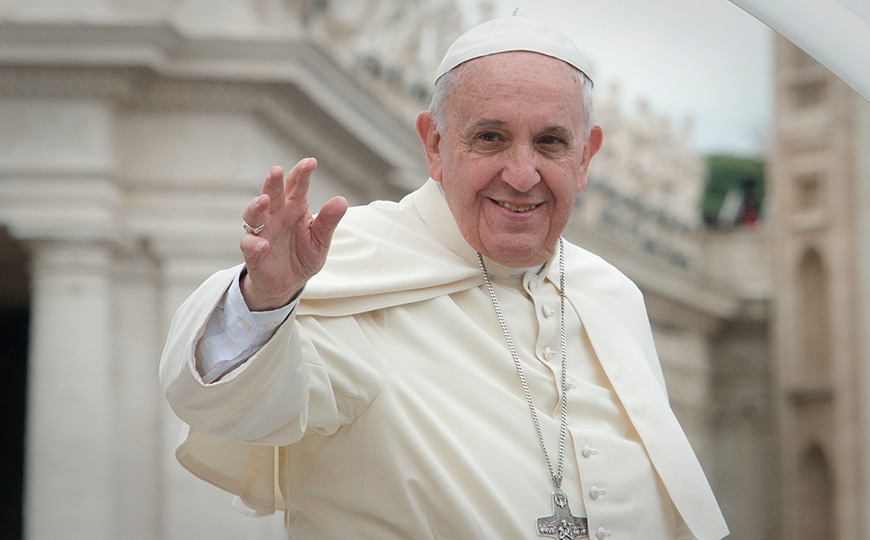
    Amid all of this, Pope Francis has emerged as a voice of reason. He acknowledges the need for smaller families to achieve sustainability and combat humans’ impact on the environment. Even his critics admit that “the Pontifical Academy of Sciences now holds that the world is overpopulated and that couples should have fewer children since that is purportedly the only way to protect the natural environment.” More importantly, the Pope made these comments in the context of a larger call for social justice, reiterating the previous papal position that couples should never have more children than they can bring up properly and calling for distribution of resources based on compassion and love.

    Sound familiar? An easy way to create a happier, more sustainable, and more equitable world would be for families to shift resources, through a variety of public and private channels, that would have been put into having an additional child instead toward incentivizing other families to give their first child a better start in life.

    It’s the Having Kids model, and it’s the most effective model to further all of our basic values at the same time.

    [/et_pb_text][et_pb_cta admin_label=”Action Button” button_url=”https://fairstartmovement.org/featuredfamilies/” url_new_window=”off” button_text=”See Families Who Adopted the Model” use_background_color=”off” background_color=”#18aacc” background_layout=”dark” text_orientation=”left” use_border_color=”off” border_color=”#ffffff” border_style=”solid” custom_button=”on” button_letter_spacing=”0″ button_use_icon=”on” button_icon_placement=”right” button_on_hover=”on” button_letter_spacing_hover=”0″ saved_tabs=”all” button_bg_color=”#ea593c” button_border_color=”#ffac9b” button_font=”|||on|” button_icon=”%%20%%” button_bg_color_hover=”rgba(234,89,60,0.8)”] [/et_pb_cta][/et_pb_column][/et_pb_row][/et_pb_section]