Author: Carter Dillard

  • Tell Unilever: Promote Civility Not Censorship

    Tell Unilever: Promote Civility Not Censorship

    Unilever, a corporation with a roughly $9 billion dollar annual marketing budget, is threatening to pull its advertising from platforms like Google and Facebook if they don’t censor and remove more of the content posted by users.

    We appreciate the move to exercise corporate citizenship by forcing accountability on platforms like Facebook and Youtube. Cracking down on fake news is good. But is Unilever’s standard too broad? What is considered acceptable content? They have massive spending power to influence the content that we and our kids see.

    The company claims it wants to protect children. Are we protecting children and creating a stronger democracy by allowing corporations have a larger voice, as citizens have a smaller voice?

    If Unilever wants civility on digital platforms, it should consider the impact of family planning on our becoming, over time, a developed and civil society. Rather than encouraging parents to ignore their concerns and just have kids, it should encourage smaller and more sustainable families that cooperate to plan a fair start for every child. Instead of promoting censorship after-the-fact, Unilever should promote sustainable families that thoughtfully develop children for a civil, rather than consumerist, society.

    Tweet Unilever CEO Paul Polman at @PaulPolman and politely suggest the following:
    We want civility without the requirement for censorship. Use your influence to promote better family planning and thoughtful citizens, not an infinite supply of silenced consumers.

  • Planning Families With Care and Love

    Planning Families With Care and Love

    Maggie Astor’s article on the thoughtful and caring people forgoing having kids because of climate change raises compelling questions. Should climate change (that even the Pentagon acknowledges) be a reason for the people most concerned about the future stop having kids? Should they do so while others, many of whom deny climate change, continue to have massive families? Do we want a future filled with people raised by those who cared the least about it? Are declining fertility rates an example of our species actually acting to protect itself, and our future, and as such should we be pursuing policies that promote that trend?

    The underlying problem seems to be that our current model of family planning isolates parents in their decision-making, telling them that the act of having a child is nobody else’s business, and thereby preventing collective action and cooperative decision making. Climate change is a good reason, an existential reason about who we should become, to change all of that, and find a better way to work together to plan our families and protect our collective futures.

  • Thirteen Tortured Kids: Watch the Abuse Continue or Take Action?

    Thirteen Tortured Kids: Watch the Abuse Continue or Take Action?

    David and Louise Turpin beat, choked, starved and shackled their own children, year after year, hidden in the plain view of their own community. The children will suffer permanent physical and cognitive damage, some of whom weigh half of what they should, having been taunted with food as punishment, punishment they would be given no matter what they did.

    What’s the worst part? This will happen again and again, to children around the county, because while we will watch these cases like voyeurs, we will do nothing to stop it. Child abuse and neglect in the United States is everywhere, and it will continue. Why? Our current system tries to prevent mistreatment by waiting for it to happen, punishing the parents and hoping other abusers will take note, and waiting for the next case. Children remain invisible until they are harmed and become visible to the state. That is why we don’t find it insane to talk openly about how citizens can detect if people in their community are torturing their children, when it might be saner to ask why someone who tortures a child has kids at all.

    The Turpin case should remind us of this simple fact: Once the abuse happens we have failed. There is no way to undo that harm, for the kids, and for the community that will absorb its impacts.

    This after-the-fact approach to child protection begins at the source of child-parent relations, with a parent-centered family planning model that treats the act of having and raising kids as a hidden, personal, and private matter left to the parents, irrespective of the impact on the children and the community. The Turpins lived that model, one of using children for self-gratification, and even had plans to use their massive family to launch their own reality show like the Duggar family. The Turpins, like many massive families that have kids out of questionable motives (including religious ones), love their kids the way a factory owner loves its products – for the benefits they bring. For these dysfunctional families, family planning is all about the parents, not the child or the impact of the family on the community.

    The good news is that many are starting to question that model, and focus more on preventing harm than reacting to it. Here’s how:

    Courts around the country have at times issued court orders preventing some parents from having more kids. These orders have often been upheld, against challenge, as constitutional and reasonable limits on the right to have children. These brave courts are pushing a norm change that would move us from the old parent-centered and property family planning model to a child-first model focused on assuring children a minimum level of well-being at birth, and the community all the benefits that assurance would bring. This isn’t requiring parents to have a license to have kids – but it is thinking ahead. What’s a good analogy for what these courts are doing? Imagine the norm of free speech had no limits – if speaking freely included the right to incite riots, use subliminal advertising, create and display child pornography. Court are beginning to build nuance and responsibility into the right to have children where, unlike free speech norms and thanks to parents like the Turpins, it is conspicuously absent.

    These courts are establishing this simple principle: Children should not be born into abusive and neglectful situations. Until we can say that, as our shared belief, we will maintain a system that does not value children and the community, but focuses myopically and senselessly on the parents and their exclusive rights of property and control. We will maintain a right to harm others. People do not like giving up their right to control others, but until we can change family planning norms, cases like the Turpins will continue.

    Changing family planning norms, from one where parents ignore the impact they have on others to one based on shared values, will improve the world in many ways beyond preventing child abuse. Moving towards smaller and sustainable families, because parents have begun to act out of concern for the environment their children will inherit and need, is the most effective way to mitigate climate change and create the smaller and more resilient populace required for people to thrive in a more challenging future. It is also a model built around this simple fact: The fewer children parents have, the more time, resources, and energy they can invest in their child, demonstrating their love through action. And that increased investment creates real outcomes.

    Moving to a child-first model also helps women around the world, because the old parent-centered model – applied in the power dynamic of tyrannical patriarchy – has simply become a husband and male-centered model where women are seen as perpetual mothers. Changing family planning models also carries the promise of revering the massive gap between rich and poor by focusing on its genesis, and using cooperative family planning to peg the commonly accepted principle that everyone deserves equal opportunities in life to the less acceptable process of serious resource reallocation.

    It’s no surprise that this change in norms is facing reactionary pushback. Many, including those that see themselves as progressive, will not want to cede their parental control and will oppose moves like legislation that would authorize courts to prevent child abusers like the Turpins from having more kids. They will think child-centered planning will negatively impact underprivileged families, when in fact establishing and implementing a child’s right to a fair start in life provides the moral basis for cooperative resource reallocation in a way that could eliminate poverty. Moreover, model court orders could be limited to the most egregious cases of abuse and neglect only, exclude any form of coercion including jail time and fines (instead using a form of nudge theory), but instead rely on their expressive force and any appropriate non-coercive interventions, like the appointment of guardians ad litem for future children. These orders could also be designed to account for the principles of affirmative action, and structural inequities of race, class, gender, national origin, etc.

    More commonly, right wing extremists and climate change deniers will resist the change the way they resist all encroachments on that which they few as their private property. Many of them are already defending the child-as property systems that enabled the Turpins.

    But failure to take action, through the state, is a reinforcement of parent-centered thinking, and not an option for those who really want to protect children. How can you act to further this change in family planning norms that will prevent child abuse, improve our environment, and target the massive gap between rich and poor? First, you can use your voice, speak out, and break the taboo: Say openly that the right to have kids comes with responsibilities, to the children, the community and the environment. Second, you can promote and help pass legislation that would authorize courts to prevent abusers like the Turpins from having more kids, and move us towards child-first family planning by changing our child welfare system from being reactive to being proactive. Why take public action? Many progressives think that by going child-free, or having one well-cared for child, they have done their part. But the worst possible result would be for the most thoughtful and caring people, the best parents, to exit the process entirely and reinforce the old model of family planning, the model of isolated decision-making and walled off children.

    Third, you can act locally and urge your community to adopt family planning measures, and support for smaller and sustainable families, as part of their climate action plans. Fourth, you can advocate for a federal tax system that proactively promotes equitable family planning rather than reactively offering measly and pronatal child tax credits that ignore every child’s right to a fair start in life.

    Let’s not gawk at the story of the Turpins. Let’s take action to prevent cases like this from happening again, by starting at the source and reforming our family planning systems. We will not be valuing and protecting the most vulnerable among us – children, animals, and the environment, until we do.

  • The Fair Start model, made easy

    The Fair Start model, made easy

    The Atlantic has for some time published a thoughtful series of articles analyzing the reasons people decide to have children. It’s unfair to generalize about such a large body of work, but at Having Kids we think there is a sometimes express and usually implied norm in the articles: That each person has for themselves to decide the timing and number of their children, for their own reasons. The question is posed as: Should I have kids? That reflects the near universal norm underlying family planning today, something we call the Isolation Model.

    We think that’s the wrong question to ask. When parents ask it they are wondering whether they will be able to provide for their child, whether the future world they will bring their child into will be good enough, how the child will impact their lives etc. But they usually don’t see that the answer to that question depends – most of all – on the collective reasons and actions of everyone in the world making that same decision, and having or not having children. Whether you will provide well enough depends largely on your own family circumstances and background, and the systems – cultural, economic, social, political, etc.  – that will assist you in providing. It’s takes a village, as they say. Your child’s future world will be defined by the qualities and quantity of the people in it, something that is mostly determined by family planning decisions today and in the past. Will a child destroy your freedom? That depends on the level of quality at which you parent, and the help you get in the process, both of which depend on the often subtle systems of family planning and parenting in which we live.

    So, the question should not be “should I have kids?” Rather it should be, how should we all plan together to have kids, biologically and otherwise? We can only get what we want, and the future we want for us and for our kids, by working together. One way to do that is to change from the Isolation Model to a collective action model called the Fair Start model. It’s a human-rights based model that’s pretty simple: It treats prospective parents, future children, and the community as equal parties in the process, prioritizes consensual government (or political freedom) as the goal of the process, and models the decisions the parties would make to become free.

    But whatever model we choose, climate change means the time for acting in isolation is over. Thoughtless family planning is the greatest threat to our and our kids’ future. And parents don’t take threats to their children lightly, or stand by while governments do nothing. Having Kids will find parents that care enough about the future to take action, and help them shift our systems of family planning to build the future we all want, and deserve.

    The image is completely blank with a solid white background and no visible objects, text, or distinguishing features.

  • Tell Trump and Congress to Dump Cash-for-Babies, and Give Us Better Family Planning

    Tell Trump and Congress to Dump Cash-for-Babies, and Give Us Better Family Planning

    Trump and his supporters want taxpayers to pay women to have more kids because it will mean more consumers and demand for big business, cheaper labor in the future as workers compete for jobs, and more taxpayers. What looks like a helping hand to parents is actually an attempt to nudge people towards having larger families to reverse a progressive fertility decline in some populations. That decline has been the greatest success of the last half-century’s concerted efforts around the world for sustainable development, women’s empowerment, and environmental protection.

    The tax proposal, which cut similar credits for adopting a child, is part of a larger Republican move that simultaneously cuts off access to family planning services that would allow for smaller families in a country where half of the pregnancies are unplanned, and which recently included one Republican lawmaker trying to limit access to abortions because doing so would produce a glut of more laborers (thereby disempowering individual workers) to fuel the economy. These moves ignore a trend of economic growth in highly developed places like Japan, despite falling population.

    • Their cash-for-babies scheme, like other child tax credit and pronatalist schemes in general, ignore child welfare. How does encouraging people to have more children ensure that each child will be born in anything approaching optimal conditions? Even with an increased tax credit, more kids inherently means less investment in each child. The average cost per child is about $230,000, which is in no way countered by an increase in the tax credit.
    • Their proposal ignores every child’s right to a fair start in life, which is increasingly important to ensure in a world where one percent of the population owns half the wealth. How do pittance tax credits, which treat families like isolated units, close the gap, massive in some cases, between rich kids and poor kids? Don’t all kids deserve the healthcare, education, and nutrition Trump’s kids got? Why wouldn’t they?
    • Their proposal is pure climate change denial, as our situation only worsens, with over 15,000 scientists recently issuing a dire warning regarding the future of our environment. It would only further destroy the polluted and collapsing natural environment our kids are inheriting. Why ignore the clear evidence that larger families drive the worst impacts on our climate, crowded cities, and other forms of environmental degradation?
    • Their proposal is correct to focus on family planning, but makes a crucial mistake. Instead of growing an economy and intensifying inequality, we need to build democracy. And that means ensuring the intergenerational coming together of free and equal people, through the decentralizing of power, diffusing it instead  among future citizens though a family planning system that builds democratic communities where each person belongs and has a voice.

    The fundamental problem with child tax credits and similar pronatalist schemes is that they divorce the decision to have a baby, the creation of a need, from the resources required to fulfill that need, or the physical and emotional means each child deserves. Human history has shown we get the best results by being proactive and planning ahead, not ignoring needs until they fall in our lap. By raising the conditions of entry for all children, we will continue to reduce family size, increase cooperation, and continue our greatest success in sustainable development, women’s empowerment, and environmental protection.

    Instead of a cash-for-babies scheme, we need a child first and truly human-rights based Fair Start family planning system that incentivizes and also assists would-be parents to have children only in conditions that begin to ensure that child a fair start in life, relative to other kids in their generation. We need to continue the progressive evolution of family planning systems (which have failed to account for things like climate change, inequality, the erosion of democracy, etc.) by now linking them to what kids need, before those kids are born. Family planning determines who we will be in the future, and must further the fundamental values of child welfare, fairness, nature and democracy.

    What would child-first Fair Start family planning look like? Recently, Republicans moved to modify tax-advantaged “529” educational savings accounts to allow fetuses to become beneficiaries. Instead, why not work with states to fully fund those accounts for prospective parents and children, including college tuition, through progressively scaled contributions that also require some cooperative and progressively scaled contribution from parents, before they have kids? Doing so would mean a future world filled with happy and healthy children, equal opportunities for all, smaller and more connected communities, and functional democracies in a healthier environment.

    Please contact President Trump and your representatives and senators today. Please politely tell them to drop the cash-for-babies schemes in favor of proactive, child-first and fair start family planning that incentivizes better and cooperative family planning to give every child a fair start in life.

  • Take Action Now to Protect Your Future: #BetterFamilyPlanning

    Take Action Now to Protect Your Future: #BetterFamilyPlanning

    When you read stories about thousands of scientists urging us to take action now to mitigate disastrous climate change, it’s hard to know exactly what to do. Here are some ideas:

    • Start by focusing on promoting better family planning – meaning smaller and more equitable families – for everyone. It’s the first, and probably most effective, action to take. Not only does it have a huge impact on current emissions and other pollutants, but it will determine the quantity people alive in the future, which in turn will mostly determine our collective quality of life.
    • Choose a smaller family where you can use the resources saved to help invest in your community or another family’s planning. Then please speak out about why you made that choice.
    • Tell our President and Congress to start funding for Fair Start family planning, rather than using taxpayer money to pay people to have kids in the hopes of making more future workers, consumers, and taxpayers to fuel an unsustainable economic model.
    • Tell your city or local government to include family planning in their climate action plan, and to start building more sustainable communities now.
    • If you work with or are a member of an environmental, animal protection, child welfare, human rights /democracy or other comparable civil society nonprofit organization, ask them to include better family planning in their mission and strategic planning. We can’t care about the environment, animals, children, or our democracies without caring about improving how we choose to bring kids into the world.

    Please take action now!

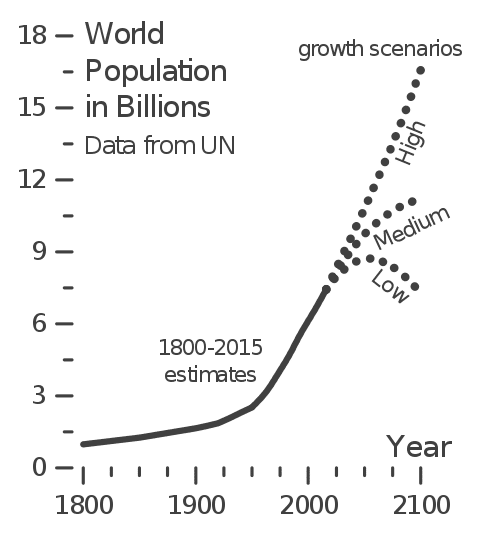
    A line graph shows world population (in billions) from 1800 to 2100, steeply rising after 2000 with three future growth scenarios: high, medium, and low. Data is from the UN, with estimates for 1800-2015.
    By Bdm25 – Own work, CC BY-SA 4.0
  • Protect Your Future from Ivanka Trump and Marco Rubio

    Protect Your Future from Ivanka Trump and Marco Rubio

    Marco Rubio and Ivanka Trump want taxpayers to pay women to have more kids because it will mean more consumers and demand for big business, cheaper labor in the future as workers compete for jobs, and more taxpayers.

    We need better family planning, not a cash-for-babies scheme.

    • Their proposal ignores child welfare. How does encouraging people to have more children ensure that each child will be born in optimal conditions?
    • Their proposal ignores every child’s right to a fair start in life. Don’t all kids deserve the healthcare, education, and nutrition Trump and Rubio’s kids are getting? Don’t you and your kids deserve help getting to that fair start in life? 
    • Their proposal is straight climate change denial. It would further destroy the polluted and collapsing natural environment our kids are inheriting. Why are Trump and Rubio ignoring the clear evidence that larger families have the worst impact on our climate, oceans, other species, etc? Why are they ignoring the way massive overcrowding is destroying our quality of life?

    Instead of Trump and Rubio’s plan to overcrowd America, we want a Fair Start proposal that encourages better family planning: Parents waiting until they are ready to be great parents, having fewer children and investing more in each child, and getting the resources they need to to give every child a fair start in life through a fair division of this country’s wealth.

    Take Action Now

    Contact your Representative and ask them for this simple and better plan: We want tax reform that incentivizes better family planning aimed at giving every child their right to a fair start in life through smaller and more equitable families, not a scheme to create more consumers, workers, and taxpayers for Rubio, Trump, and their corporate sponsors.

  • Family Planning: Time For a Better Ask?

    Family Planning: Time For a Better Ask?

    Today’s paradigmatic demand for reproductive rights, including the rights to contraception and the safe termination of a pregnancy, goes something like this: Men and women have the right to choose the timing and size of their families. And things like President Trump’s recent expansion of the rights of employers to deny women insurance coverage for contraception, as well as his refusal to fund family planning services domestically and abroad, violate these rights.

    Is there another way to make the demand for reproductive rights? Secretary of Defense Jim Mattis has acknowledged that climate change is a threat to our national security, and studies have shown that choosing a smaller family is the most effective way to mitigate climate change. Moreover, these studies focused simply on emissions, not also factoring in the beneficial effects of creating a smaller, better prepared and more resilient population to match the more challenging environment of the future. Could we make a better demand for reproductive rights based on preventing a recognized threat to our national security?

    Here’s another way: If you are a caring person you might feel beleaguered by the constant needs of neglected children, in and out of our communities. Refugees, abused children in failing foster care systems, children living in child-care desserts, children who vitally need federal health insurance, etc. – where did these millions of children come from? Why do we treat children as invisible until they arrive in this world, especially when we now know the disproportionate impact early childhood development has on a person, impacts that last the rest of their lives? Instead of dumping funding and other resources into a cavern of needy children, why not also incentivize parents and communities to work together to plan a fair start in life for every child?

    We have to imagine what the world would look like today if parents in the past had waited a few years more to have kids, had fewer kids, and worked with their communities to improve the conditions into which every child had been born. What if all parents had planned for and worked towards things like health insurance, educational savings plans, organized community day care, etc. – all with the help of others who saw family planning for what it is: the future of the world. That proactive view of helping children presupposes rights to things like access to contraception, and the safe termination of a pregnancy. But it bases those rights upon what children need rather than simply upon what parents want. And by focusing on children it also bases the rights on the interests of the community in its future citizens. Who among us really wants to live in communities filled with people raised by parents who did not plan for or want children at the time, but were forced to have and raise kids because they simply could not prevent them?

    We can talk about reproductive rights and our right to choose. We can also talk about reproductive rights and climate change, national security, the wellbeing of children, the future of our communities, etc.  Is the latter more compelling?

  • 5 Ways Thoughtful Family Planning Can Protect Children, Wildlife, Our Democracy – and the Future

    5 Ways Thoughtful Family Planning Can Protect Children, Wildlife, Our Democracy – and the Future

    This is third in a series of AlterNet articles on population growth.

    The first explored the trend toward smaller families. The second examined a new family planning model that can capitalize on that trend. The current piece – 5 Ways Thoughtful Family Planning Can Protect Children, Wildlife, Our Democracy – and the Future – explores ways to implement that change.

    Click here for the article.

    This article was made possible by the readers and supporters of AlterNet.