

Guest opinion by Ajas Khan
About the Guest Writer

Ajas Khan is a Rohingya youth leader, human rights advocate, climate activist, and humanitarian community organizer from Arakan, Myanmar. He has been living in a Rohingya refugee camp in Bangladesh since 2017. He advocates for Rohingya rights, justice, dignity, education, climate action, and meaningful participation in decisions affecting his community.
He is the Founder and Chief Executive Director of Rohingya Green Nature Society (RGNS), a Rohingya-led, youth-led, community-driven organization working on environmental protection, climate action, youth leadership, women’s empowerment, humanitarian awareness, education, and community resilience.
Ajas is also a published contributor to The Guardian.
In this guest article, Ajas shares his perspective on the significance of the International Court of Justice proceedings concerning Myanmar and explains why justice for the Rohingya must include citizenship, birth equity, political participation and the right to shape their own future.
On the 19th November 2026 the International Court of Justice (ICJ) will deliver their ruling after The Gambia brought a case against Myanmar on charges of genocide. This day is extremely important to the Rohingya people as it marks the end of decades of persecution.
Justice for us means having the right to live without fear, to have an identity, to educate our children, travel, work with dignity and return to our homeland.
Almost 9 years after the 2017 military crackdown in Rakhine State, Myanmar, hundreds of thousands of Rohingya people are still displaced in Bangladesh. Families are living in overcrowded refugee camps and another generation of Rohingya people are growing up with uncertainty around their identity, future and opportunities.
However, the Rohingya crisis did not start in 2017.

It is the result of decades of discrimination and exclusion. The 1982 Citizenship Law meant most Rohingya people were left stateless. Generations of Rohingya people were denied the fundamental right to be legally recognized.
Will the world finally come together to create an environment where Rohingya people can live as equal human beings?
Justice goes beyond the courts.
The ICJ process is an important step in holding countries accountable for upholding international law and addressing the allegations of genocide.
The Gambia’s case has raised awareness around the importance of nations upholding their responsibilities under the 1948 Genocide Convention. It has also highlighted the importance of international collaboration.
However, the ruling alone will not ensure the safe return of refugees, rebuilding of villages or improvement in political and security situations in Myanmar.
The ruling must be followed by international action.
Justice for families means holding those responsible accountable, recognizing Rohingya people’s rights, returning property where possible, reuniting families and ensuring they are not persecuted again.
Most importantly, Rohingya people must return with the right to voluntary, safe, dignified and sustainable repatriation. We would not want to return without guaranteed citizenship, security, freedom of movement and our fundamental rights.
We do not want to return to just the borders of Myanmar. We want to return to somewhere we are recognized, protected and equal.
Equitable Births: No children should be born stateless.
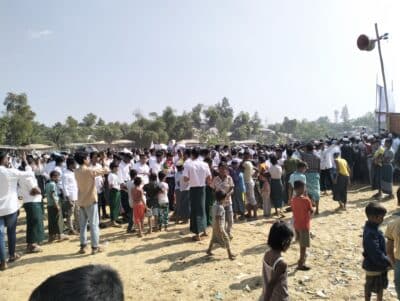
One of the most heartbreaking results of being displaced for such a long time is intergenerational injustice.
Rohingya children are being born and raised in refugee camps in Bangladesh. Many are left with uncertainty around their legal identity, nationality, education and opportunities. They have inherited a crisis they did not create and cannot solve on their own.
This is why equitable births are so important.
Every child deserves to be recognized, protected and given equal opportunities to grow. No matter what their parents nationality, displacement status or birth circumstances are.
Whilst birth registration and nationality are not the same. It is important to ensure children have easy access to birth registration. This will ensure they are recognized, documented and have easy access to their rights.
The international community must ensure Rohingya children are not left invisible.
A child’s future should never be decided by political decisions that denied their parents citizenship.
Equitable Births are an important part of the fight for equality.
We Cannot Wait: Our voices are not being heard.
Another injustice is that Rohingya people are not being heard when decisions are made about our future.
Governments, international organizations, humanitarian organizations and policymakers regularly talk about Rohingya repatriation, protection, education, development and accountability. However, there are limited opportunities for those directly affected to have their voices heard.
Consultation is not the same as participation.
Meaningful participation means having access to decision making processes, opportunities to lead, resources and having influence over policies.
Rohingya women, young people, community leaders, persons with disabilities and refugee led civil society organizations must be recognized as vital to creating sustainable solutions.
Nothing About Us Without Us.
If community members are constantly excluded from the institutions and discussions that affect their future then they will not have meaningful self-determination.
Political participation should not be a privilege for those with recognized citizenship, passports or powerful connections. We should never use our displacement as an excuse to silence our community.
Bangladesh have shown incredible humanitarian collaboration by providing refuge for such a large displaced population. Their continued support should be recognized.
However, the international community must do more than just express concern.
Pressure must be placed on Myanmar to ensure sustainable action. International accountability must be supported. Rohingya communities in Myanmar must be protected and humanitarian support must continue to be provided to those in Bangladesh.
Long term investment must be made in education, skills, livelihoods, leadership and opportunities for Rohingya youth.
Whilst humanitarian support is vital, it should not be a long term solution.
Rohingya people should not be seen as people needing support. We have knowledge, skills, leadership qualities and can contribute to our communities and the world.
Refugee led organizations must have meaningful opportunities to contribute to humanitarian efforts, climate action, community development and advocacy.
Their lived experiences are vital to gaining an understanding of the reality they are facing.
Rohingya Youth Are Part of the Present.

Many Rohingya young people have missed out on opportunities for almost 9 years.
Some cannot go to further education. Others cannot go on international training, development or employment due to restrictions around their displacement and nationality.
Those that can may still face barriers due to documentation requirements.
This prevents an entire generation from contributing to society.
Despite this, Rohingya youth are still organizing community initiatives, advocating for human rights, supporting environmental protection, educating others and creating networks of solidarity.
We should not have to wait for repatriation to be recognized as leaders.
We need to be involved now.
International organizations, civil society organizations and humanitarian organizations must provide accessible opportunities for refugee leaders to contribute as decision makers, researchers, advocates and professionals.
We cannot keep telling young refugees they are the leaders of tomorrow without giving them opportunities to be leaders now.
International Collaboration for Meaningful Change.

The ruling should make international organizations and civil society organizations rethink how they measure impact.
Programmes should not just be measured on how many people they have helped, how many actions they have taken and how many services they have provided.
They should also be measured on how much influence they have given to communities, how many women and young people have been involved in leadership roles, how much more protected children are and how much more capable displaced communities are at shaping their future.
We must move away from talking about those affected and ensure they have opportunities to speak, lead and decide.
Organizations working on equitable births, human rights and inclusive development can help create this change.
Everyone should have equal opportunities. This includes those who have been excluded from citizenship and political recognition.
No community should have to prove they are human to be involved in decisions about their future.
19th November Should be a New Beginning.
No matter the ruling, the international community must not let the world turn a blind eye.
The ruling will not end statelessness, guarantee repatriation or rebuild the lives of millions of displaced people.
What happens next will be just as important.
World leaders must continue to put pressure on for accountability and a rights based solution. Humanitarian organizations must continue to protect displaced families and invest in education and community leadership. Civil society must ensure Rohingya voices are not just seen as stories of suffering but as vital voices in shaping policies and deciding our future.
As a Rohingya youth leader living in displacement, justice means:
I want a future where Rohingya children do not grow up unsure if they belong. I want women to be able to live safely, young people to have the opportunities to achieve their ambitions, families to return home with dignity and our community to have equal influence in decisions affecting our lives.
We are not asking the world to feel sorry for us. We are asking them to recognize our rights and support our fight for equality, justice and human dignity.
We do not want another generation of promises. We want meaningful action, recognized citizenship, equal opportunities and the right to shape our future.
Whilst there may be a ruling in The Hague, justice will be measured by what happens to us.